

The torqued man, p.31
The Torqued Man, page 31
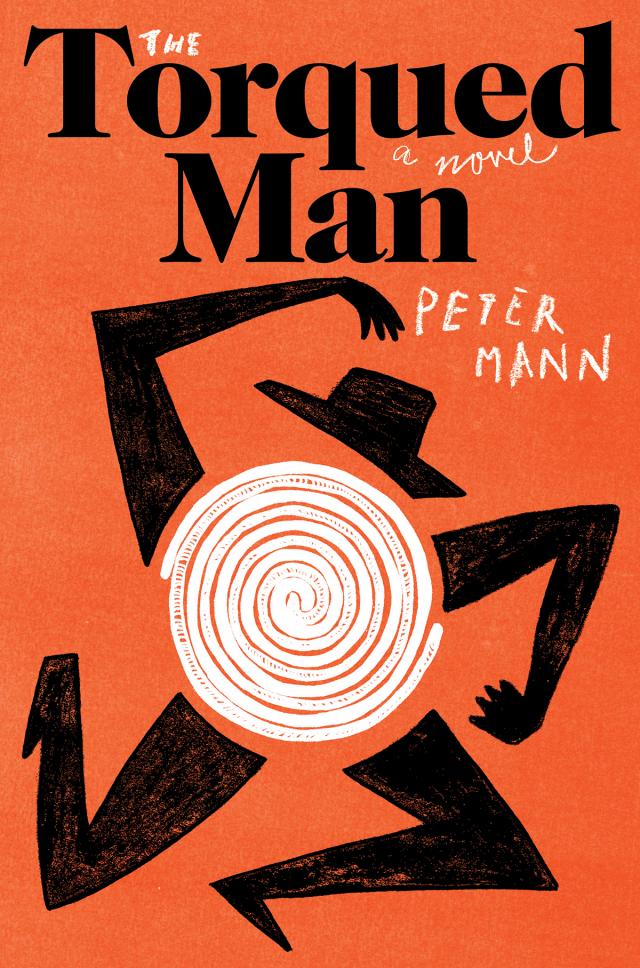


After I confessed, Kommissar Lipke returned with a typewriter and took my statement. I recounted everything the way Pike had written it. From the first murder three years ago of Wagner, whom I stabbed and dumped in the Spree; followed after a hiatus by the killing of Dr. Heinze and his nurse at the Brandenburg hospital; and finally, early last fall, the murder of Grawitz in the public toilet by the zoo. I gave the details Pike had given, all save the killing of Brandt, whose death Lipke never mentioned and must have still been thought an accident. I also left out the smut, which was a complicated subplot I didn’t care to broach. And, since I had not yet finished reading the manuscript—Finn was still frozen in time outside the Hamma factory on his way to Morell’s house—and had seen nothing in the papers indicating otherwise, I could only assume Pike’s bogeyman Morell still lived. Along with his chief patient, who was still very much alive.
The rest I made up. For instance, where was the murder weapon? I told them I threw it in the Havel. How did I happen to find Ernst Grawitz in a lavatory? I had seen him on the K-damm earlier that evening and followed him. Why had I stopped the killings for well over a year and then resumed? I was busy at work, I said. Somewhere, over the course of my confession, it struck me that I had resumed my old vocation. I was, with the help of Kommissar Lipke, translating Pike’s purple Hiberno-English into bureaucratic police German.
After collecting the details, Lipke looked up at me. “Why did you want to kill these doctors, De Groot? Was it simply revenge for your niece? And if so, why did you wait over two years before killing Heinze?”
“No,” I said. “On this point I want to be clear. Originally, I wanted nothing more than to avenge the state-sanctioned murder of an innocent child. But I soon realized the problem was much larger than merely one bad doctor. To kill only Dr. Heinze and his nurse would have been to ignore the murderous nature of the entire medical apparatus of this regime. Therefore, my motive from the start—and you can write this down verbatim and share it with your colleagues in the Gestapo—has been to single-handedly drive a stake into the biomedical heart of the Reich.”
I was sent to Plötzensee Prison to await trial. Compared to my time in police custody, the nine days I spent there were almost pleasant. In fact, my cell was roughly the same size as my Nymphenburger cellar nook, and the last several months of life in Berlin had been so bleak and constrained, I had little trouble adjusting.
A strange calm had come over me. We spend our lives avoiding death, hoping every door we open to the future won’t bring in that unwelcome guest, though we all know he’s sure to pay us a visit. Now that I had finally opened the door to death, and opened it knowingly and on my terms, I felt at peace. The lessons those long-suffering Greeks had tried to teach themselves—about imperturbability, equanimity, and the like—had always been intellectually attractive to me, though I had never experienced anything like ataraxia. Now I think I actually felt it. A freedom from disturbance. My daily meals of stale bread, sour margarine, and cold acorn coffee, which came in a dented metal jug delivered through the door slot, once would have demoralized me. Now they were a source of detached amusement. That I had nothing to read was, instead of a crushing blow of boredom, a mere triviality. For what does the man with only a month to live care that he can’t read another novel?
The only thing I wished for and deeply missed was the ability to write, which is why this moment right here, with the lake breeze on my neck and my pen racing to keep up with my thoughts, feels magnificent. I did, in the absence of writing materials, take to dictating in my head. I narrated several times what I have in the last day recorded here, but I also found myself crafting a précis of my life, an auto-eulogy of sorts. Of course, no one would ever hear it or read it—I would likely never write it—but there is something to the idea that a life, even for the one living it, is only intelligible as story. And I took comfort knowing my story was going to end this way. Even if I hadn’t exactly lived as an enemy of this regime, at least I would die as one. Pike, it turned out, had given me a gift.
Every afternoon from one to three, we were let into the yard. It was a damp gray square with only a few weeds for greenery and the dull yellow sky overhead. But I remember it fondly. For here, in spite of the prohibition on talking, was where we escaped our isolation. The custom was for prisoners to walk the square clockwise, and while silence prevailed in the vicinity of the guards, one could hear dozens of jaw-clenched conversations proceeding out of official earshot.
On my second day in the yard, a familiar voice called my name. I looked over my shoulder and saw James von Moltke give me a furtive wave. His hair had thinned considerably in the months since I’d last seen him. He didn’t exactly smile at me, but there was a light of recognition in his eyes, as though to say, “So you’ve ended up here too.”
With my teeth clamped tight, I told him everything that had happened since his arrest, how the Abwehr had been dissolved and how the chaos raining down on the city streets had swept through the halls on Tirpitzufer. Oster was still under house arrest, I told him, and it seemed Canaris himself had been neutralized.
“Yes, I’ve heard. It’s open season now. And with defeat inevitable, soon anyone with half a conscience will be here. Only by then it will be too late.”
“What are you being charged with?” I asked.
“They haven’t decided. But they know we were talking about a world without Hitler. One way or another, I’m sure the People’s Court will invent a suitable reason to separate my head from my body.
“And what are the charges against you?”
“I killed several high-ranking SS doctors.”
He laughed. I hadn’t intended to say it in a glib or deadpan manner, but Moltke thought I was joking. “That’s a good one, De Groot. But really . . .” he said, waiting for me to tell him the truth.
I explained to him I was serious and told him I had confessed to four politically motivated murders.
“You?” he said, shocked. I told him of my assassination campaign in greater detail, and he seemed both mortified and impressed—though, over the course of our conversations the next week, I gathered more the former. Moltke had not given up his Sermon on the Mount morals and seemed to think the role of the anti-Nazi resistance was to be the voice crying out in the wilderness.
“Murder is murder. God cannot sanction the snuffing of a human life, no matter how evil the wrongdoer. I still do believe that,” he later said to me, though I could sense a hanging “but” in his tone.
“But what about Hitler?” I said, after moving out of range of a guard.
He had spent long hours pondering this very question. “I was against it, and I still do believe it is a sin. . . . But I also believe that it is we, not God, who must live in the world of men, and we must rely on His mercy to forgive us our sins.”
“You sound like a man,” I said, “who is at once a Christian and a lawyer.”
Moltke smiled, but I could tell the matter weighed heavily on him. “And you, Adrian—you are what? A littérateur and an assassin?”
I detected a note of incredulity in his voice.
“Beauty and justice,” I said. “Didn’t Plato say they were virtually the same?”
“I suppose,” replied Moltke. “But he also said poets are liars.”
It was a strange rekindling of our student days—Balliol College green had given way to the gray prison yard, but the same dynamic persisted. Philosophical conversations tempered by teasing and with just a hint of mutual aversion—I to his Christian earnestness, he to my shallow aestheticism. But our lipless conversations were a bright spot in the otherwise cinder-blocked days that I assumed would be my fate until, as Moltke said, they decided to unjoin my head from my body.
Why did it have to come to prison, I wondered, with death looming overhead, for James and me to rediscover each other? The world bends to the arc of a cruel irony.
One afternoon, I confessed to him.
“I’ve killed no one, James. No doctors. No nurses. I’m as innocent as an Easter lamb. And that is also the true mark of my guilt.”
“I know, Adrian,” he said, gently squeezing my hand out of view of the guards. “But it’s not too late for forgiveness.”
Then, after breakfast on the tenth day of my captivity, the turnkey opened the door to my cell and ushered me to the warden’s office.
The warden angrily stamped a set of papers and handed one to the guard. “Get him out of my sight.”
“What’s happening?” I asked. Had the moment come already? But surely they couldn’t execute me without first some kind of a trial.
“The charges against you have been dropped,” explained the warden. “Though if I had my way, I’d keep you locked up for being sick in the head! Now get out of my prison!”
The guard shoved a bundle of my clothes at me, escorted me to the gate, and just like that I was free.
Finn McCool in the Bowels of Teutonia
50
Forest Father
After the brutal business of the destroyed hospital, Finn retreated to the woods, to the still-vast stretch of lakeland spared the flames that wicked night.
He grieved for his young friend and the amorous nun, but he also planned—for from that pile of burning bodies, Finn had plucked an idea. A way forward, a breakthrough, or, as the Teutonians said, ein Durchbruch, which had the virtue of sounding like the crunch of brick and bone such an insight had cost him. He had been so narrowly focused on man-slaying that he’d overlooked the obvious virtues of sabotage. The idea had dropped from the sky and burst like a bomb inside his brain.
He didn’t have to kill the doctor or poison the stew. All he had to do was cut off the supply. Set fire to the factory and send all those precious hormones up in smoke. Why, it couldn’t be simpler. And in no time at all, Hitler would be prostrate and pining for his vitamins.
Finn tried to pull himself into fighting shape. He fed on the last yield of forest plants, already shriveled in the frost, and strengthened his limbs on sodden footpaths, until the only souvenir from his evening at Villa Morell was a slight limp. With each passing day, though, he found it harder to fight off hunger and cold. Realizing he could not get through the winter—let alone carry out his plan—on his own, he decided to overcome his fears and once more seek out the Wilden.
He found their camp this time in the wallows surrounding the Barssee. As he trudged around the icy lake, following hastily carved signs, he wondered why they had chosen to make their nest in this Bog of Allen place of desolation. It was soggy, inhospitable terrain, with hardly any sun and mud that sucked your shoes clean off.
He gave the kestrel’s cry to signal his arrival. But no reply came. Something was amiss. There was no hail of stones, no posted sentries. Only the sharp smell of human shit.
A dozen boys were huddled beneath a miserable lean-to, not at all up to the gang’s usual standards. There was no birch-bark covering to keep out the wet, no hanging moss or dried leaves to insulate the floor. Why, even the hallowed fucking couch was waterlogged and in tatters.
The boys were sniveling and filthy, snot frozen on their upper lips and angry rashes across their cheeks.
“Lads,” said Finn, “what’s become of you?”
The boys looked up at Finn from eyes sunk deep within their sockets. “Hrabeet ist tot.” Their chief was dead.
“Well, who’s next in line?” asked Finn. “Surely you have a succession protocol in place?”
“Of course we do, you geezer, but none of us wants to stomp in a cat’s skull, drink a boot filled with piss, or any of the other rituals Rabbit put in place.”
“Can’t say I blame you, lads. But have you considered having a vote on it instead?”
“We tried that, but none of us was able to secure a simple majority,” said one of the older boys, about thirteen. “No one trusts the other to lead us.”
“It’s a problem we adults face too, I assure you. Speaking of,” said Finn, noticing there was not a boy over fourteen among them, “where are the older members of your crew, the lads with downy mustaches and fully formed libidos, like Hatchet Willi?”
“Dead,” said a few. “Gone,” said the others. They recited a litany of arrests and knife fights and gangrenous infections that had liquidated the senior members of their group. Those remaining were a particularly green crop, with several new recruits who, like young Emil, had been recently orphaned.
“And what’s become of that fine wind hound?” asked Finn. “Why is Sceolang not here wagging her tail?”
“She’s dead too.” At this, one of the boys burst into tears. And Finn, seeing their crinkled faces and thinking of all the dead innocent things he had known, felt the salt water leak out of his own eyes.
“We miss our parents!” cried one of the youngest boys, about nine.
“Quiet, Penner!” scolded his brother. “How many times do I have to tell you the old sods are kaput?”
But the boy’s lament seemed to have opened up the floodgate of grievances.
“I’m hungry!”
“I’m sick of being wet and cold!”
“Why can’t people just be nice to us?”
“Yeah, I’m tired of eating cum and shit!”
“Now, hold on there,” said Finn. “Who here’s been making you eat his evacuations?”
All the boys averted their eyes. Eventually one of them muttered a name.
“Wolfi.”
The orphans told Finn how an older boy named Wolfi routinely preyed on them, destroying their camp, stealing their food, and forcing the most vulnerable into humiliating acts. He was also, Finn learned, the same vicious cunt who had killed his Hund.
“He said he’d fuck us all to death if we don’t do whatever he says.”
“But it’s not fair! He’s not our leader. We didn’t elect him. Hell, we don’t hardly know him.”
“Rabbit would have never let this happen to us,” said one.
“Rabbit was a twisted fucker too, you know,” countered another.
“Yeah, but at least he kept us safe.”
Finn was observing how this Hobbesian discourse would play out, when one of the boys the oldest and most sophisticated of the group jutted a chin in his direction. “What about him?”
All eyes in the lean-to now fell on Finn.
“You mean this funny-talkin’ geezer?” asked another, nonplussed.
“Finn’s not like other adults,” the veteran went on. “Sure, he’s old as hell, but he has a wild spirit. He’s a degenerate, but he’s decent. He’s like a fun, irresponsible uncle who gives you booze and cigarettes, but you never have to worry about him raping you.”
“I appreciate the eulogy,” said Finn, “but—”
“That’s why I say we make him our new leader.”
Several of the boys cheered.
“But what about the rules?” protested one. “Remember, no one over nineteen?”
“Finn’s probably over a hundred!” gassed one of the little fuckers.
Only a hair over forty, he wanted to say, but he resisted the urge to correct.
“Fuck the rules, boys!” said a spirited ten-year-old. “We make the rules now! And I vote for the geezer!”
“Me too!”
“So do I.”
The vote went round the huddle, and before long there were ten votes for Finn and two holdouts.
“It doesn’t matter,” said the oldest. “We have ten of twelve. That’s a majority by any count. The geezer’s our new leader.”
Finn ruminated on this offer. Here were boys, like his late friend Emil, in need of care. They were an unruly, miserable lot, to be sure, but perhaps he could actually help them. Not tame them, no, he wouldn’t want to do that, but maybe curb some of their most repellent antisocial impulses and show them a bit of decency. In exchange, he could have a true Fianna—not that tenuous agreement between him and Chief Rabbit, which was a transactional relationship at best, based on smut and possibly terminated with an act of poisoning. No, instead, he’d have himself a loyal band of pint-sized guerilleros.
At last he spoke. “Lads, I’m honored. Truly I am. And I genuinely sympathize with your plight here in the lawless bogs, derelict of leadership and prey to vicious scoundrels as you are. But I couldn’t possibly accept—that is, unless you agree to a few conditions.”
“You want to piss in our wounds too?”
“No, son, nothing like that. Now, look, I’ll lay out my terms, but I’ll only accept if the vote’s unanimous. That means you’ll have to argue it out until there’s a consensus, you hear? All twelve must be in agreement. And if not, I walk away. We’ll have no tyranny of the majority or stifling of minority voices here. Is that understood?”
The boys assented.
“Good. Then the conditions are as follows:
“First, if I’m to be your leader, then you must give up indiscriminate assaults on the citizenry.”
“What’s that mean?” asked one.
“It means we only steal from the more-or-less wealthy, and we only attack those in uniform or sporting party pins or otherwise revealing themselves to be in need of a stick of hickory to the face.”
One boy raised his hand. “Do train uniforms count as uniforms?”
“Interesting query,” said Finn. “I don’t see why not. It’s really more about the spirit than the letter of the law, anyway.”
“What are the other conditions?”
“The second is that you forswear that soul-deadening smut that’s been known to circulate amongst you. Now, I know I once trafficked in the stuff myself—in order to serve a just cause, mind you—but I should never have even considered letting minds as young as yours anywhere near it. As I see it, that plan’s failure was a gift. But don’t misunderstand me, boys. I’m no puritan. I support the love of the masculine as much as I do the feminine. And you’re all free to indulge your inclinations—or lack thereof—as you see fit, but let’s focus them on warm, willing bodies or, when those are absent, on good, honest depictions of sex acts and engorged genitals with a bit less misery involved.”





