Lewis 01 the blackhous.., p.1
Lewis 01 - The Blackhouse, page 1


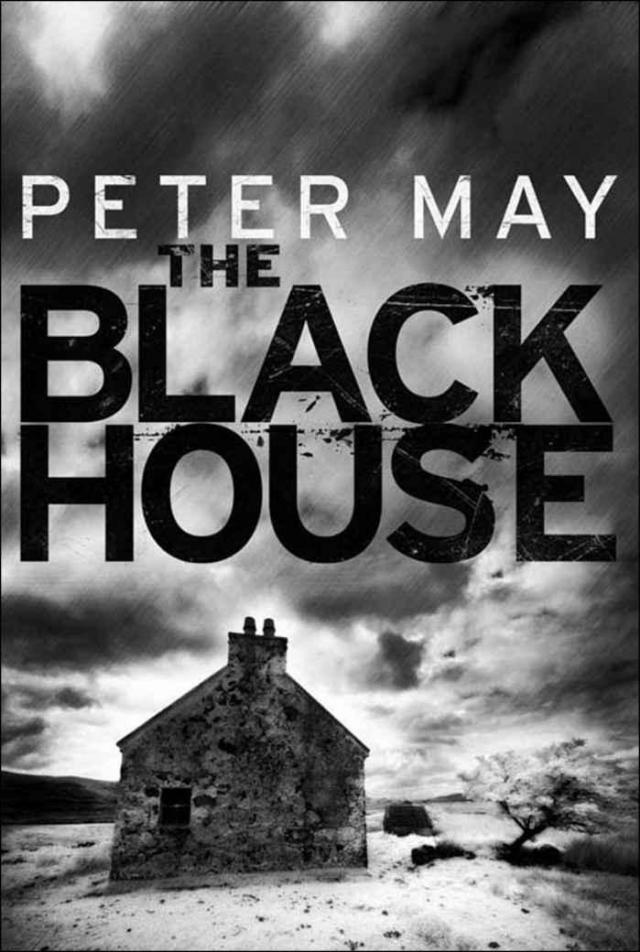
THE BLACKHOUSE
THE BLACKHOUSE
Peter May
First published in Great Britain in 2011 by
Quercus
21 Bloomsbury Square
London
WC1A 2NS
Copyright © 2011 by Peter May
The moral right of Peter May to be
identified as the author of this work has been
asserted in accordance with the Copyright,
Designs and Patents Act, 1988.
All rights reserved. No part of this publication
may be reproduced or transmitted in any form
or by any means, electronic or mechanical,
including photocopy, recording, or any
information storage and retrieval system,
without permission in writing from the publisher.
A CIP catalogue reference for this book is available from the British Library
ISBN (HB) 978 1 84916 384 2
ISBN (TPB) 978 1 84916 385 9
This book is a work of fiction. Names, characters,
businesses, organizations, places and events are
either the product of the author’s imagination
or are used fictitiously. Any resemblance to
actual persons, living or dead, events or
locales is entirely coincidental.
10 9 8 7 6 5 4 3 2 1
Typeset by Ellipsis Books Limited, Glasgow
Printed and bound in Great Britain by Clays Ltd, St Ives plc
PRONUNCIATION
Here is a simple guide to the English pronunciation of some of the Gaelic names and words in the book. ch is pronounced as in the Scottish word loch, and the emphasis is placed on the underlined syllable:
An Sgeir
Eilidh
Niseach
An Skerr
Aylay
Neeshuch
Beag
Fionnlagh
Ruadh
Beg
Feeonlach
Rooagh
Ceit
Gaelic
Seonaidh
Kate
Gahlick
Shawnay
Coinneach
Iain
Seoras
Coinyach
Yan
Shawrass
Dubh
Mairead
Sine
Doo
Myrad
Sheenuh
Eachan
Mamaidh
Slàinthe mhath
Yachan
Mammy
Slange e vah
Eilean
Marsaili
Uilleam
Yaylan
Marshally
Willyam
Machair, pronounced macher, is the Gaelic word for the fertile sandy soil around the coastal areas of the Western Isles of Scotland. It has passed into the English language as a result of international concern over the problem of ‘machair erosion’. Much of the machair is gradually being reclaimed by the sea.
That is the land of lost content,
I see it shining plain,
The happy highways where I went
And cannot come again.
– A. E. Housman,
‘Blue Remembered Hills’
Tri rudan a thig gun iarraidh: an
t-eagal, an t-eudach ’s an gaol.
(Three things that come without
asking: fear, love and jealousy.)
– a Gaelic proverb
For Stephen, with whom I travelled those happy highways.
PROLOGUE
They are just kids. Sixteen years old. Emboldened by alcohol, and hastened by the approaching Sabbath, they embrace the dark in search of love, and find only death.
Unusually, there is just a light wind. And for once it is warm, like breath on the skin, caressing and seductive. A slight haze in the August sky hides the stars, but a three-quarters moon casts its pale, bloodless light across the compacted sand left by the outgoing tide. The sea breathes gently upon the shore, phosphorescent foam bursting silver bubbles over gold. The young couple hurry down the tarmac from the village above, blood pulsing in their heads like the beat of the waves.
Off to their left, the rise and fall of the water in the tiny harbour breaks the moonlight on its surface, and they hear the creaking of small boats straining at ropes, the soft clunk of wood on wood as they jostle for space, nudging each other playfully in the darkness.
Uilleam holds her hand in his, sensing her reluctance. He has tasted the sweetness of the alcohol on her breath and felt the urgency in her kiss, and knows that tonight she will finally succumb. But there is so little time. The Sabbath is close. Too close. Just half an hour, revealed in a stolen glance at his watch before leaving the street lights behind.
Ceit is breathing rapidly now. Afraid, not of the sex, but of the father she knows will be sitting by the fire, watching the embers of the peat fade towards midnight, timed with a practised perfection to die before the coming day of rest. She can almost feel his impatience slow-burning to anger as the clock ticks towards tomorrow and she has not yet returned. How is it possible that things can have changed so little on this God-fearing island?
Thoughts crowd her mind, fighting for space with the desire which has lodged there, and the alcohol which has blunted her youthful resistance to it. Their Saturday night at the Social Club had seemed, just a few short hours ago, to stretch ahead to eternity. But time never passes so quickly as when it is in short supply. And now it is all but gone.
Panic and passion rise together in her chest as they slip past the shadow of an old fishing boat canted at an angle on the pebbles above the watermark. Through the open half of the concrete boatshed, they can see the beach beyond, framed by unglazed windows. The sea seems lit from within, almost luminous. Uilleam lets go of her hand and slides open the wooden door, just enough to allow them past. And he pushes her inside. It is dark here. A rank smell of diesel and salt water and seaweed fill the air, like the sad perfume of hurried, pubescent sex. The dark shadow of a boat on its trailer looms above them, two small rectangular windows opening like peepholes on to the shore.
He pushes her up against the wall, and at once she feels his mouth on hers, his tongue forcing its way past her lips, his hands squeezing the softness of her breasts. It hurts, and she pushes him away. ‘Not so rough.’ Her breath seems to thunder in the darkness.
‘No time.’ She hears the tension in his voice. A male tension, filled at the same time with desire and anxiety. And she begins to have second thoughts. Is this really how she wants her first time to be? A few sordid moments snatched in the dark of a filthy boatshed?
‘No.’ She pushes him aside and steps away, turning towards the window and a breath of air. If they hurry there is still time to get back before twelve.
She sees the dark shape drift out of the shadows almost at the same moment she feels it. Soft and cold and heavy. She lets out an involuntary cry.
‘For God’s sake, Ceit!’ Uilleam comes after her, frustration added now to desire and anxiety, and his feet slide away from under him, for all the world as if he has stepped on ice. He lands heavily on his elbow and a pain shoots through his arm. ‘Shit!’ The floor is wet with diesel. He feels it soaking through the seat of his trousers. It is on his hands. Without thinking, he fumbles for the cigarette lighter in his pocket. There just isn’t enough damned light in here. Only as he spins the wheel with his thumb, sparking the flame, does it occur to him that he is in imminent danger of turning himself into a human torch. But by then it is too late. The light is sudden and startling in the dark. He braces himself. But there is no ignition of diesel fumes, no sudden flash of searing flame. Just an image so profoundly shocking it is impossible at first to comprehend.
The man is hanging by his neck from the rafters overhead, frayed orange plastic rope tilting his head at an impossible angle. He is a big man, buck naked, blue-white flesh hanging in folds from his breasts and his buttocks, like a loose-fitting suit two sizes too big. Loops of something smooth and shiny hang down between his legs from a gaping smile that splits his belly from side to side. The flame sends the dead man’s shadow dancing around the scarred and graffitied walls like so many ghosts welcoming a new arrival. Beyond him Uilleam sees Ceit’s face. Pale, dark-eyed, frozen in horror. For a moment he thinks, absurdly, that the pool of diesel around him is agricultural, dyed red by the Excise to identify its tax-free status – before realizing it is blood, sticky and thick and already drying brown on his hands.
ONE
I
It was late, sultry warm in a way that it only ever gets at festival time. Fin found concentration difficult. The darkness of his small study pressed in around him, like big, black, soft hands holding him in his seat. The circle of light from the lamp on his desk burned his eyes, drawing him there like a moth, blinding now, so that he found it hard to keep his notes in focus. The computer hummed softly in the stillness, and its screen flickered in his peripheral vision. He should have gone to bed hours ago, but it was imperative that he finish his essay. The Open University offered his only means of escape, and he had been procrastinating. Foolishly.
He heard a movement at the door behind him and swivelled angrily in his seat, expecting to see Mona. But his words of rebuke never came. Instead, he found himself looking up in astonishment at a man so tall that he could not stand upright. His head was tipped to one side to avoid the ceiling. These were not big rooms, but this man must have been eig
And then somewhere in the distance he heard his own voice wailing, childlike, in the dark. ‘Funny ma-an …’ The man remained staring at him. ‘There’s a funny ma-an …’
‘What is it, Fin?’ It was Mona’s voice. She was alarmed, shaking him by the shoulder.
And even as he opened his eyes and saw her frightened face, perplexed and still puffy from sleep, he heard himself wail, ‘Funny ma-an …’
‘For God’s sake, what’s wrong?’
He turned away from her on to his back, breathing deeply, trying to catch his breath. His heart was racing. ‘Just a dream. A bad dream.’ But the memory of the man in his study was still vivid, like a childhood nightmare. He glanced at the clock on the bedside table. The digital display told him it was seven minutes past four. He tried to swallow, but his mouth was dry, and he knew that he would not get back to sleep.
‘You just about scared the life out of me.’
‘I’m sorry.’ He pulled back the covers and swung his legs down to the floor. He closed his eyes and rubbed his face, but the man was still there, burned on his retinas. He stood up.
‘Where are you going?’
‘For a pee.’ He padded softly across the carpet and opened the door into the hall. Moonlight fell across it, divided geometrically by ersatz Georgian windows. Halfway down the hall he passed the open door of his study. Inside, it was pitch-black, and he shuddered at the thought of the tall man who had invaded it in his dream. How clear and strong the image remained in his mind. How powerful the presence had been. At the bathroom door he paused, as he had every night for nearly four weeks, his eyes drawn to the room at the end of the hall. The door stood ajar, moonlight washing the space beyond it. Curtains that should have been drawn but weren’t. It contained only a terrible emptiness. Fin turned away, heart sick, a cold sweat breaking out across his forehead.
The splash of urine hitting water filled the bathroom with the comforting sound of normality. It was always with silence that his depression came. But tonight the usual void was occupied. The image of the man in the anorak had displaced all other thoughts, like a cuckoo in the nest. Fin wondered now if he knew him, if there was something familiar in the long face and straggling hair. And suddenly he remembered the description Mona had given the police of the man in the car. He had been wearing an anorak, she thought. Had been about sixty, with long, greasy, grey hair.
II
He took a bus into town, watching the rows of grey stone tenements drift past his window like the flickering images of a dull monochrome movie. He could have driven, but Edinburgh was not a town where you would choose to drive. By the time he reached Princes Street the cloud had broken, and sunlight swept in waves across the green expanse of the gardens below the castle. A festival crowd was gathered around a group of street entertainers who were swallowing fire and juggling clubs. A jazz band played on the steps of the art galleries. Fin got off at Waverley Station and walked over the Bridges to the old town, heading south past the university, before turning east into the shadow of Salisbury Crags. Sunshine slanted across the sheer green slope rising to the cliffs that dominated the skyline above the city’s ‘A’ division police headquarters.
In an upstairs corridor familiar faces nodded acknowledgement. Someone put a hand on his arm and said, ‘Sorry for your loss, Fin.’ He just nodded.
DCI Black barely looked up from his paperwork, waving a hand towards a chair on the other side of his desk. He had a thin face with a pasty complexion, and was shuffling papers between nicotine-stained fingers. There was something hawklike in his gaze when, at last, he turned it on Fin. ‘How’s the Open University going?’
Fin shrugged. ‘Okay.’
‘I never asked why you dropped out of university in the first place. Glasgow, wasn’t it?’
Fin nodded. ‘Because I was young, sir. And stupid.’
‘Why’d you join the police?’
‘It was what you did in those days, when you came down from the islands and you had no work, and no qualifications.’
‘You knew someone in the force, then?’
‘I knew a few people.’
Black regarded him thoughtfully. ‘You’re a good cop, Fin. But it’s not what you want, is it?’
‘It’s what I am.’
‘No, it’s what you were. Until a month ago. And what happened, well that was a tragedy. But life moves on, and us with it. Everyone understood you needed time to mourn. God knows we see enough death in this business to understand that.’
Fin looked at him with resentment. ‘You’ve no idea what it is to lose a child.’
‘No, I don’t.’ There was no trace of sympathy in Black’s voice. ‘But I’ve lost people close to me, and I know that you just have to deal with it.’ He placed his hands together in front of him like a man in prayer. ‘But to dwell on it, well, that’s unhealthy, Fin. Morbid.’ He pursed his lips. ‘So it’s time you took a decision. About what you’re going to do with the rest of your life. And until you’ve done that, unless there’s some compelling medical reason preventing it, I want you back at work.’
The pressure on him to return to his job had been mounting. From Mona, in calls from colleagues, advice from friends. And he had been resisting it, because he had no idea how to go back to being who he was before the accident.
‘When?’
‘Right now. Today.’
Fin was shocked. He shook his head. ‘I need some time.’
‘You’ve had time, Fin. Either come back, or quit.’ Black didn’t wait for a response. He stretched across his desk, lifted a manilla file from a ragged pile of them and slid it towards Fin. ‘You’ll remember the Leith Walk murder in May?’
‘Yes.’ But Fin didn’t open the folder. He didn’t need to. He remembered only too well the naked body hanging from the tree between the rain-streaked Pentecostal Church and the bank. A poster on the wall had read: Jesus saves. And Fin remembered thinking it looked like a promotion for the bank and should have read: Jesus saves at the Bank of Scotland.
‘There’s been another one,’ Black said. ‘Identical MO.’
‘Where?’
‘Up north. Northern Constabulary. It came up on the HOLMES computer. In fact it was HOLMES that had the bright idea of attaching you to the inquiry.’ He blinked long eyelashes and fixed Fin with a gaze that reflected his scepticism. ‘You still speak the lingo, don’t you?’
Fin was surprised. ‘Gaelic? I haven’t spoken Gaelic since I left the Isle of Lewis.’
‘Then you’d better start brushing up on it. The victim’s from your home village.’