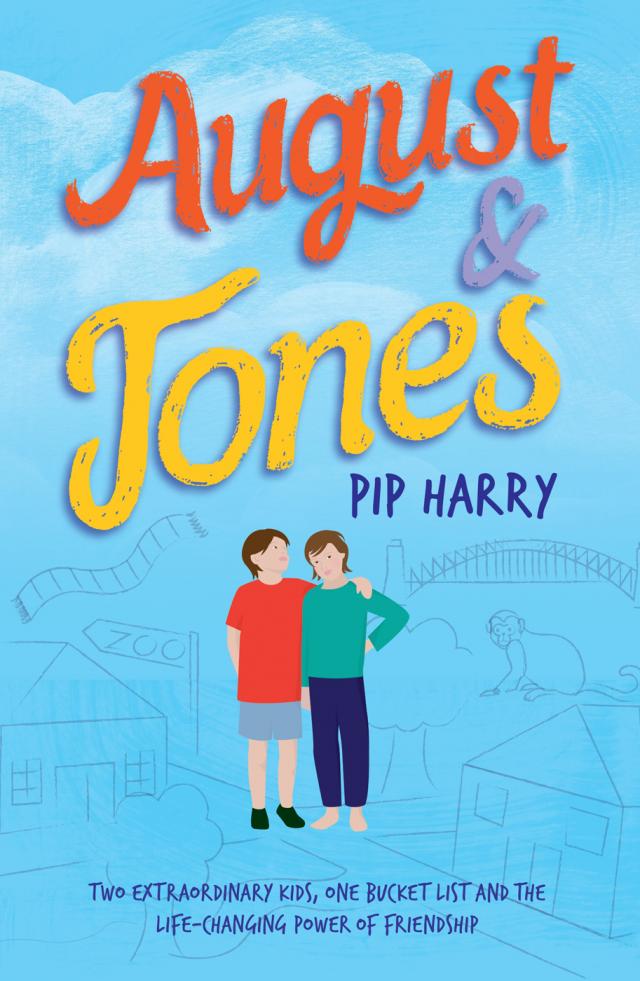
August and jones, p.1
August & Jones, page 1


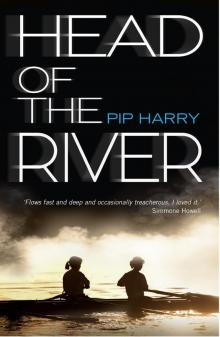
Pip Harry is an Australian author, copywriter and journalist. Her young adult novels include I’ll Tell You Mine, Head of the River and Because of You. Her middle grade novel The Little Wave won the 2020 Children’s Book Council of Australia Book of the Year Award for Younger Readers and her work has been shortlisted for many state awards. In 2022, her middle grade novel Are You There, Buddha? was shortlisted for the NSW Premier’s Literary Awards, Ethel Turner Prize for Young People’s Literature.
LOTHIAN
Contents
About the Author
Title Page
Also by Pip Harry
Dedication
Chapter 1: Jones
Chapter 2: August
Chapter 3: Jones
Chapter 4: August
Chapter 5: Jones
Chapter 6: August
Chapter 7: Jones
Chapter 8: August
Chapter 9: Jones
Chapter 10: August
Chapter 11: Jones
Chapter 12: August
Chapter 13: Jones
Chapter 14: August
Chapter 15: Jones
Chapter 16: August
Chapter 17: Jones
Chapter 18: August
Chapter 19: Jones
Chapter 20: August
Chapter 21: Jones
Chapter 22: August
Chapter 23: Jones
Chapter 24: August
Chapter 25: Jones
Chapter 26: August
Chapter 27: Jones
Chapter 28: August
Chapter 29: Jones
Chapter 30: August
Chapter 31: Jones
Chapter 32: August
Chapter 33: Jones
Chapter 34: August
Chapter 35: Jones
Acknowledgments
Copyright
Also by Pip Harry
Are You There, Buddha?
The Little Wave
Because of You
Head of the River
I’ll Tell You Mine
For Dale – my best friend
and bucket list partner
CHAPTER 1
JONES
I walk around our farm one last time. The shed is empty and when I shout ‘Hellooooo!’ my voice echoes into the rafters, where the pigeons live. Dad sold our farming equipment: his tractor, the quad bikes, feed, mowers, tools, seed, mulch and smelly manure. Everything is gone. Soon we will be, too.
A lizard skitters across the dusty, hay-scattered floor, stops and looks at me quizzically. As if to say, ‘You’re leaving without saying goodbye?’ I tiptoe towards it, but it shoots away and disappears.
Inside, the house is stripped to bones. No piles of books or random craft projects on the kitchen table. No forgotten, half-drunk cups of tea or Mum’s award-winning scones cooling on the counter. No saggy blue couch and temperamental TV. No muddy work boots cluttering up the entry.
I put my palms on the bare walls of my bedroom and remember how it looked before: piles of clothes on the floor, unmade bed, laptop glowing on the desk, lolly wrappers with an ant trail on the side-table, schoolwork, drawings and paintings, scattered hair ties, running shoes with tangled laces.
All my stuff is packed up in boxes marked ‘Jones’, piled into the tray of the ute like a game of Tetris. All that’s left is my mattress and sleeping bag on the floor, where I slept badly last night, wanting to lock the doors and stay here forever.
There are four bumps of Blu Tack where my Home Is Where My Cat Is poster – an adorable sketch of a cat’s face, with a heart for a nose – used to hang.
At least our Persian longhair, Ringo, is coming with us to the city. We used to have two cats, but Paul died from diabetes. The vet said he ate too much. Also, he was old. Those are the two main risk factors. My dad eats too much and he’s old. I hope he doesn’t get diabetes and die.
I’ve already had to sell my alpacas, Lulu and Lola; my goat, Henry; and all our sheep and chickens. I argued that we could surely keep one small chicken for egg-laying purposes. Dad said it wasn’t kind to bring live poultry to an inner-city apartment and our new landlord probably wouldn’t go for it.
‘What about keeping an eleven-year-old girl in a tiny apartment? Is that kind?’
He pretended not to hear me and kept packing.
Dad is also leaving something behind in Cotton. He had to give his loyal farm dog, Peregrine, to his mate Will, three farms down. He cried the day he dropped Perry off, even though we all agreed it was the right thing to do because Perry is a dog that needs to run all day. Sometimes the right thing to do is the hardest.
I accidentally tore that cat poster in half taking it down from the wall, the rip cracking the cat’s face in two. Instead of trying to fix it with sticky tape, I tore it into confetti and shoved it into the recycling bin.
Dust itches the back of my throat and I sneeze loudly.
‘Bless you!’ shouts Dad from across the house.
‘Ready, Jones?’ Mum says, coming into my room. ‘Let’s take that mattress outside.’
‘Do we have to go?’ I ask. ‘I could help Dad with chores, before and after school. It might rain this year. You can’t predict the weather.’
Mum sighs and stops moving for a moment.
‘The house is sold. The land is sold. We tried, but sometimes you have to know when to stop trying,’ she says. ‘Dad has a building job in the city with Uncle Pete. We signed a lease. You start school in Sydney after these holidays.’
She’s checking items off a list she didn’t want to make. None of us did.
Three years of drought left us with two choices: sell up or go bankrupt. That’s what Dad said to Uncle Pete on the phone. I was hiding behind the couch listening in.
Mum and I drag my mattress out of the room, and I pause at the doorway looking at the marked walls and stained carpeted floor. A narrow, smudged window faces a dried-up veggie patch that grew raspberries, strawberries and so many zucchinis we had to give them away. It used to feel magical and special. Now it’s just an empty, ugly room that will soon belong to someone else.
Outside, Dad throws our final pieces of rubbish into the skip parked at the end of our long driveway. The pile is teetering, full over the brim. Our old life is now a big bowl of garbage soup. My parents sold, gave away or donated most of our stuff, saying it wouldn’t fit in the new place. I wanted to hold on to our belongings, so something would be familiar in the city. What I want doesn’t always count. I guess that’s the problem with being a kid.
Dad locks the door behind us, and we stand on the verandah like lost suitcases. Ringo is folded like a ragdoll in the crook of my arm. Magpies chortle and insects hum. Someone is riding a motorbike in the distance. Dad sold his dirt bike because it wasn’t registered for city streets. I’ll miss clinging onto the back, engine revving, bouncing over uneven tracks.
‘One last check?’ Mum says.
I can tell she’s seconds away from bursting into tears. Dad shakes his head.
‘No, luv. We’ve triple checked everything. Let’s drop the keys with Greg on our way through.’
‘The laundry … I think I left a light on.’
‘Leave it, Helen.’
Mum drops her face in her hands, sobbing. My stomach lurches. I hate seeing her cry.
Dad pulls her into his arms. Kirbys have lived in Cotton as long as it’s been a town. My great-great-grandfather moved here from England with his family to start an apple orchard.
‘I didn’t think it would be so hard,’ Mum says, tearfully.
Dad drops his voice. ‘I know. But we decided. Let’s not make it harder than it needs to be.’
Mum nods, wiping her face. She looks exhausted; buried in house inspections, the auction, boxes and paperwork for months.
‘It’ll be all right, Mum, once we get used to it.’
She hugs me tightly, her clothes reeking of cleaning products from scrubbing the kitchen and bathrooms.
‘I’m just being a sook.’
Dad pulls the ute around and we pile up the mattresses and final bags and hold the load steady with a tarp and straps. Ringo hates the carrier, so I wrap him in a soft towel and cuddle him – a trick to calm him down. He goes in fighting anyway, snarling and scratching.
Wedged between Mum and Dad in the front bench seat, I rub a bloody scratch on my finger and listen to him howl, feeling terrible.
‘Music? Audio book?’ Dad asks, as we idle in front of the house that’s no longer ours.
Nobody says anything, so he starts the rumbly engine and drives through the arch of ghost gums to the main road, wheels catching the gravel one last time, our neighbour’s kelpie barking his final farewell from the fence line.
*
After we drop our keys at the real estate office, Dad pulls over at the lookout.
‘One last thing,’ he says.
Mum’s face is stony; she hasn’t said a word since we left home.
‘It’s thirty minutes return, Steve, let’s just go … you said not to make it harder.’
‘We could all do with a walk. Stretch our legs, take a breath, give this place a proper goodbye. Come on, Helen.’
‘I’ll stay here and read my book.’
‘Suit yourself.’
Mum stays in the car and Dad and I get out. I hope she’ll change her mind and catch up with us, but when I turn around there’s no-one following except a brush turkey.
The ground is uneven so I concentrate as we walk up the steep hill. I have 90 per cent vision in my right
The bush around us is crispy-dry, thirsty. There’s no colour or green anywhere and the leaves and grass crunch and crackle under our boots.
‘This place is crying out for a good, long soak of rain,’ says Dad, reading my thoughts. ‘Shame. There was so much life here a few years back.’
At the top of the track, we look out over slabs of grey rock stained with orange lichen. The fields are a dull straw colour and straggly gum trees cling to the side of the hill. It’s still beautiful, but it’s not the view I want to remember.
‘Do you really want to go, Dad?’ I say. This is my last chance to change his mind. ‘You said you’d never leave Cotton or live in the city.’
‘I did say that. But life is about doing things you don’t particularly want to and changing your plans. We’ll make the best of it. We always do. Come on. We better get back before your mum drives off without us.’
‘Can we come back and visit? All our friends are here.’
‘’Course we can. It’ll always be home. No matter how far or how wide we roam.’
We head back to the ute, faster now we’re going downhill and I know the track, singing ‘I Still Call Cotton Home’ at the top of our lungs.
CHAPTER 2
AUGUST
It’s blustery and cold, wind whipping through my thin footy jersey. The ball is headed my way. I try to unstick from my player, but he’s like glue. My legs are muddy, and my knee throbs from tripping while trying to catch a kick from our captain, Rafferty Brown, and ending up sprawled on the ground like a squashed insect.
‘Move the ball, boys!’ Dad shouts from the sideline, where he’s pacing, agitated. He glances at me and rolls his eyes.
‘Find some space, August, for goodness sake!’
Parents are not supposed to yell from the sidelines, there’s a sign that says so, but my dad is the coach, so it’s his job.
He’s been yelling at me on a regular basis since I was a little kid in AusKick and now I’m in the Lane Cove Cats Under 12s team. At home, he makes me do drills with my older brother, Archer, in the backyard or down at the park.
During the AFL season he takes us to games at the Sydney Cricket Ground stadium. The matches last for hours, it’s always freezing, and the only thing I actually enjoy is getting a pie and a soft drink at half-time. I bring a book, but Dad usually confiscates it and makes me focus on the field. Learn something from the professionals. See what real teamwork looks like.
‘August! Get free!’ Dad shouts.
Frustrated, I drop my shoulder into the player marking me and break away at last.
Joe Ng hesitates, then handballs to me. Miraculously, I don’t fumble and drop it in the mud. I look around for someone to handball off to, but all I can see is the red and black jerseys of the opposition.
‘Kick it, August!’ Dad yells.
Panicked I’m about to get the whistle for holding the ball, I kick randomly into a pack of players, hoping someone from my team takes the mark. Of course, it goes straight into the hands of a Manly Bombers player, who has no trouble swiftly booting it halfway down the field towards their goal.
Joe shoots me a dirty look and shakes his head in despair as he runs back to defend. In our team I’m the weakest link. The only thing I’m good at is running fast. But what good is running if you can’t catch or kick?
Dad takes me off and calls Oliver from the bench.
I bump down next to Ravi, who has bad asthma, chug some water and inspect my bloody knee. If I get an oversized bandaid from the first aid officer, maybe I can spend the rest of the game on the bench reading my library book.
‘Watch the play, August, support your teammates,’ hisses Dad as he paces past.
Across the oval, Archer is playing in the Under 15s. He effortlessly takes a flying mark, runs the ball down the field and slots a long-range goal through the sticks. He grins and flicks his curly hair from his face, high-fiving a teammate.
That’s all he and Dad will talk about tonight: Archer’s magic mark. Archer’s miraculous goal. Archer’s chances at making the Talent Development Squad.
Archer, Archer, Archer.
*
‘Can I get a pie?’ I ask Dad as we walk back to the car to meet Archer.
I’m limping, mostly for sympathy, but he hasn’t noticed.
‘Think you deserve a pie?’ he says. ‘For most of that game you looked like you’d rather be in the library.’
I would rather be in the library, I think.
‘Do you even want to make it to finals?’
‘I guess.’
Dad sighs and throws his hands in the air.
‘You guess? Soon we start the Premiership Series and we have to finish top two in our pool to progress. If I put you on the field, can you at least look like you want to be there? It’s not too much to ask, is it?’
‘No. Sorry, Dad.’
He flicks me a $50 note.
‘I’ll get a hotdog with sauce. Get Archer one of those rabbit food salad rolls he eats. See you at the car. Don’t dawdle.’
At the canteen, I line up behind my teammates George and Theo in a huge, hungry queue. Theo is pushing into the kids in front, then pretending it was George. They’re in my class at school and they’re always together. Our teacher, Ms Finnegan, runs their names together, like they’re one person.
‘GeorgeandTheo, are you listening?’
‘GeorgeandTheo, I won’t tell you again.’
‘GeorgeandTheo, put that down immediately!’
Like an animal lower down the food chain, I try to camouflage with the crowd. It doesn’t work. Theo whips his head around and lasers in on me. I brace for impact.
‘I was wondering, August, why are you so bad at footy? When your brother is the Archer Genting,’ Theo says loudly. ‘I mean, what happened there? Are you the runt of the litter?’
I ignore him and wish the line would move faster, but there’s a coach at the front ordering sausage rolls for his entire team.
George sniggers behind Theo but stays silent as usual.
George’s mum and my mum are friends – they used to play tennis every Wednesday. Mum hasn’t been going to the courts lately. She’s always at home on the couch. Anyway, George is more scared of his mum than he is of Theo.
‘That was a pathetic kick today. You almost lost us the game.’
The line surges forward and I exhale in relief as George and Theo are called up to the counter to order. As they walk past, arms laden with hot jam donuts and soft drinks, Theo shakes his head in disgust.
‘I don’t know why you keep turning up to games.’
The reason I keep turning up is I don’t have a choice. Every time I’ve brought up quitting footy, Dad says: ‘One more season, Gus. You’ll come good. You’ve just got to find your passion for the game. Boys need sport. It moulds them into men. You’ll thank me one day.’
I keep turning up because without footy I would become invisible to Dad. Even more than I am now. My faded outline would disappear forever. He would look through me and talk over the top of me, the way he does to Mum and my sister, Lexi.
CHAPTER 3
JONES
Our new place is apartment 6C in the Shirley Road Apartments in Wollstonecraft – a four-storey red brick block on the edge of a train line. Dad struggles to park our ute in the narrow allocated space. When I open the window, all I can hear is the high-pitched screech of metal on the tracks. It hurts my brain.
‘How late at night do the trains run?’ I ask Mum, but she just shrugs.
‘How am I supposed to squeeze into this space?’ Dad says, as he tries to back in, almost knocking off our rear-vision mirrors. ‘It’s designed for tiny hatchback cars. City cars.’
‘I need to pee,’ I say, wishing I’d gone at our service station drink stop an hour ago. My bladder aches.
‘How about Jones and I go up and take a look around while you sort out the parking?’ Mum says.
‘Good idea. I might be a while.’
‘Will you bring Ringo?’ I ask.
Ringo whined and cried all the way to the city, but has finally fallen asleep.
‘Sure, I’ll bring our cat overlord.’