The secret inheritance, p.1
The Secret Inheritance, page 1


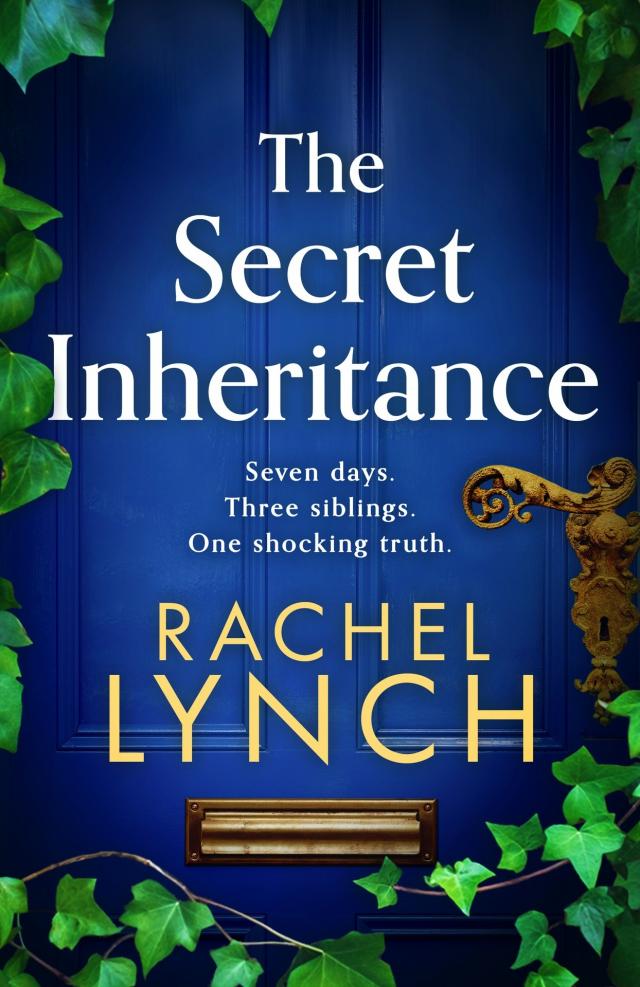
THE SECRET INHERITANCE
RACHEL LYNCH
ALSO BY RACHEL LYNCH
DI Kelly Porter
Dark Game
Deep Fear
Dead End
Bitter Edge
Bold Lies
Blood Rites
Little Doubt
Lost Cause
Lying Ways
Sudden Death
Silent Bones
Shared Remains
Helen Scott Royal Military Police
The Rift
The Line
The Rich
CONTENTS
Chapter 1
Chapter 2
Chapter 3
Chapter 4
Chapter 5
Chapter 6
Chapter 7
Chapter 8
Chapter 9
Chapter 10
Chapter 11
Chapter 12
Chapter 13
Chapter 14
Chapter 15
Chapter 16
Chapter 17
Chapter 18
Chapter 19
Chapter 20
Chapter 21
Chapter 22
Chapter 23
Chapter 24
Chapter 25
Chapter 26
Chapter 27
Chapter 28
Chapter 29
Chapter 30
Chapter 31
Chapter 32
Chapter 33
Chapter 34
Chapter 35
Chapter 36
Chapter 37
Chapter 38
Chapter 39
Chapter 40
Chapter 41
Chapter 42
Chapter 43
Chapter 44
Chapter 45
Chapter 46
Chapter 47
Chapter 48
Chapter 49
Chapter 50
Chapter 51
Chapter 52
Chapter 53
Email Signup
Also by Rachel Lynch
A Letter from the Author
Acknowledgements
ONE
Clara
‘It won’t be long now,’ the doctor whispered.
Clara dipped a mouth-swab into a bowl of cold water and was reminded of giving out lollipops to the children when they were small. But Jude didn’t acknowledge his treat with a giggle or a glance, as she ran it around the inside of his mouth to bring him some relief for his murderous thirst. He didn’t even open his eyes.
The doctor packed away his things, his moment of compassion gone. He’d practically camped here for a whole week.
In the end, the descent into nothingness had come quicker than anyone expected. It was as if Jude had given up. After a lifelong quest to soldier on, no matter what harshness was thrown his way, he’d accepted his mortality and regressed to being a child.
Clara had witnessed only the second half of that journey, from Jude’s supreme eminence as a successful businessman through to his current decline. She’d watched his tragic depreciation from vital master to atrophied dependant.
She leaned over his face as he stirred gently and tried to speak.
‘Hush now,’ she said. ‘There, you don’t want to waste your energy.’
The doctor stopped what he was doing and stared at Jude, who he’d known for fifty years or so. Clara thought she detected water in his eyes, just at the corners, but he looked away and resumed his fussing. Observing the diminishing potency of his client had taken its toll on him.
Clara took the change in behaviour to signal the end. She didn’t expect verbal confirmation of her suspicion, but she sensed the conclusion to Jude’s long story was near. Oncologists, like most medical doctors, found real, human communication awkward but she could tell by the doctor’s behaviour that Jude was losing his final battle.
‘Let him speak if he so wishes,’ the doctor said.
She nodded and went back to refreshing Jude’s mouth which must have felt like the Sahara Desert to him. He opened his eyes and swallowed, though the tumours in his neck made this difficult to achieve and he winced in pain. Clara reached over to his syringe driver and pumped some more morphine into his arm like she’d been shown.
The doctor waited. He’d finished packing away his things and held his bag, ready to leave. Clara looked at him and he nodded to her.
‘Goodbye, Jude. I’ll see you tomorrow,’ he said.
Jude’s breathing eased as the drugs kicked in and Clara stared deep into his eyes. They were like pits of despair and she could tell that he read their thoughts.
There would be no tomorrow.
He grabbed her arm.
It was wholly unexpected, and Clara gasped. She softened and gathered herself quickly.
‘They get stronger at the end. It’s a little flourish of energy. Expect him to become agitated later today,’ the doctor said.
Clara stared at him.
‘He can still hear us,’ she told him, glaring.
Jude squeezed her arm tighter, and she sat back down on the bed beside him to soothe him. She heard the door close and felt a wave of disappointment wash over her. The caring profession had just left the room.
She stroked Jude’s head. His eyes flickered open at her touch and she remembered a time when her fingers caressed his face in a loving embrace, not one of pity. Those days were long gone and after everything, they had nothing to show for it. But his eyes sparkled just as brightly as they had forty years ago, when she’d begun working for the family at Warbury House. Mrs Fitzherbert had passed ten years ago now, and the house had been empty like a mausoleum ever since, despite herself, Michael and Jude still existing inside its walls.
After Beatrice’s death, Jude had slumped into a deep despair. His body had begun to degenerate, though he fought on, despite his heart being sliced in two by life’s cruel plan. Even now, he still wasn’t ready to give up his last breath and leave this world. He had too much to do.
Too much to apologise for.
Clara pondered on his children and stared at her employer, who mumbled under his breath. He was settled now, and she saw that his eyes were still open, as if he was fighting something. They were like portals to a past universe. She saw that he was still in there, perhaps weaker and smaller, but he remained, proud and keen-eyed, like the man she’d known. A father, a grandfather, a husband, a master and a lover.
Some part of her believed he’d never fade away. His spirit was too powerful, his energy too vital, but as she sat here, watching him descend into nothingness, Clara realised that even Jude Fitzherbert was fallible, and he was indeed going to die.
Panic gripped her for a second and she leaned over his face and put her ear close to his mouth to check he was still breathing. She felt a faint rhythmic breath, which tickled her skin and told her he was still holding on.
‘I’m cold.’
It was a whisper.
‘I’ll fetch a blanket,’ she said, rubbing her hands up and down his arms to warm him up but taking care not to break his fragile body.
He was a bag of bones.
He’d worked in his study until he could no longer walk to his desk, and then he’d moved his trade to his bed. Then his writing failed him, and after that, his eyesight. The phone still rang. People demanded his attention even as the cancer spread through his body and he stopped functioning. Money didn’t stop going round and round because one man got ill. Investments – whatever they were – didn’t stagnate because one person couldn’t come to the phone. The world carried on.
He was helped by friends and associates to make the most pressing decisions about his business, and she knew at least one of his children helped him via email and telephone. She supposed that’s how business was done these days. It meant they didn’t have to travel all the way out here to Oxfordshire to make a decision. Jude wasn’t as quick as he used to be, but the old Jude was still inside the shell she saw before her now.
But Clara’s world had changed forever.
She didn’t care for stocks and shares. High risk or low risk to her was more about children’s games than business. Her interest was in real people. Those whom she’d loved and cared for. Money couldn’t love you back. But people would sure enough kill for it.
She stroked his face gently and then got up from the bed to find a blanket. She saw one discarded on the chair, put there for herself to keep her comfortable when she dozed off in the middle of the night, unable to leave him.
She unfolded it and spread it across his body, tucking in the edges. In a moment, he’d be too hot again, so she prepared to whip it off as quickly. It was all part of the pattern of life when it lapsed into chaos. Nothing lasted forever, she thought.
Clara considered Jude’s descent into a child’s form. We come into the world unable to control our bodies, and we depart it the same way, she reflected. When she’d gone through the change of life some ten years ago, she’d suffered with hot flushes one minute, and freezing chills the next. But Jude wasn’t transforming. He was the main star in his own finale. For a second, her memory flashed up scenes from when they’d first met: how his hand brushed hers as he pretended to search for titles in the library, or when dead-heading dahlias in the garden. Any excuse to touch.
‘Children,’ she heard him murmur, and once again she leaned closer to him, feeling his body diminish underneath her as if by the very second.
‘Whose children, Jude?’ she asked.
â€
None of them had come to visit.
She rolled her eyes at the profanity. The cancer certainly hadn’t reached his mouth.
‘Where are they?’ he continued.
‘I’m sure they’ll come,’ she said.
‘Don’t lie to me, Clara. I can tell when you’re lying. I have four fucking children and none of them can be bothered to watch me die.’
This led to a coughing fit and his body moved back and forth. Clara was reminded of the children she’d tended to, when coughs and colds had banished them to their beds many years ago.
‘Three children, Jude,’ she corrected him.
He stopped wriggling.
‘Three children, yes.’
He was silent but she could see his face flushing and knew that he was overheating. It was a never-ending cycle of discreet guardianship, though she never thought she’d be coddling him like the babies she’d raised and lost. She wafted his face a little with a hand-held fan on the bedside table. It had belonged to Beatrice.
He became alert once more and stared beyond her to the window, which overlooked the great trees, which in turn led down to the perimeter.
She’d had his bed moved into this room so he could enjoy the view, and from it, he could see all the way across his estate to the fields beyond, and even to the driveway, which languished empty these days. Warbury House sat atop a small hill and commanded an excellent position to survey all four thousand acres. Jude preferred the view to the front because the back faced the lake, and he didn’t want to be reminded about what had happened there. Of late, though, he couldn’t even sit up enough to see out of the window, so she stood by it for him and described what she saw.
She scolded herself for correcting him. What difference did it make anyway? He was dying. She could have easily ignored him and pretended not to hear, and made herself busy with washing downstairs, continuing with her day.
She was his housemaid and cook, not his wife. She didn’t have to listen to his last-minute ramblings about regret and sorrow. But pity – and something else – tugged at her heart.
‘They’ll come the minute I fuck off,’ he said.
‘I’m sure they will, Jude.’
‘To get my money.’
Clara nodded.
He began to laugh. It started as a chuckle but then worked its way into a crescendo, causing him to go purple in the face. Clara tried to sit him up, to ease the congestion drowning him from inside his chest, but the jerking prevented her from getting a good grip on him. She panicked. He couldn’t get air into his lungs and his eyes were turning red, and his lips blue. He gasped for air, and she shoved her fingers in his mouth to try to open his airways wider.
Suddenly, he took a deep breath and then more followed and his body stopped rattling like an old coal cart. She set him back down and mopped his brow with a flannel.
‘Don’t do this to yourself, Jude. Leave it be. You can’t get all excited,’ she soothed.
He rested a hand on her arm and nodded.
She held his hand.
‘If they turn up now, before I’m dead, kick them out with the trash.’
‘You mean the rubbish? We’re in England, remember?’ she said.
He glared at her.
‘The world has changed. Catch up! We’re all American now!’
Jude had invested much of his money in the markets over the pond. The ones she knew about and the few she overheard him speak about were in Central and South America, which she thought was just full of heat and animals that could kill you, but what did she know? Money, and what it did to people, was something she avoided.
‘Should I put a movie on?’ she asked him.
It would be a Hollywood film, obviously. They watched them together, and commented on how perfect all the actors looked, even when they were over fifty. She’d had Michael, Jude’s butler, set up a projector in his room.
He smiled.
‘I’m sorry, Clara,’ he said.
‘Don’t be, Jude! I love a good movie.’
‘No, I’m truly sorry.’
She patted his hand. An understanding passed between them, and she saw that he was confessing his sins to her, expecting forgiveness.
She left him and took a pile of last night’s bed linen with her. It’d all be thrown into the washing machine, not like when the children were small and she boiled bed clothes and scrubbed them by hand.
Nothing was hard work anymore. Jude was right when he said that value earned had lost its sheen.
By the time she returned to him, armed with several choices of movie, all from the 1970s, Jude was still and at peace.
She placed the DVDs down gently and went to him to check he was comfortable, or if he’d nodded off in an awkward position.
But when she got to his side, she felt something was different. He looked completely at rest, as if all the lines on his face had melted away, and the grimace in his jaw had disappeared. She touched his cheek and knew from the lack of energy emanating from his body, before she moved her finger down to his carotid artery, that he was dead.
A wave of electricity assaulted her abdomen as she experienced an overwhelming sense of guilt that he’d died alone. Soon after that, hot anger burned inside her and made her neck flush.
After all this time, and the thousands of times she’d reassured him, promised him, lied to him, that his children were coming, they still hadn’t and now it was too late. But she knew, as sure as the rising of the sun in the east, over the island in the centre of the lake –
where Jude would be buried – that they’d come for their money.
TWO
Rosie
Rosie stared out of the conservatory window, across her small garden, watching greedy summer birds with their fat bellies pick at treats she’d left out for them. In seven years, she’d transformed the place from a mass of weeds and empty containers, into a cosy retreat, full of aromatic perennials and flowering shrubs together with a pergola which she could escape to whenever she pleased. A perfect haven for her writing.
The arbour wasn’t anything like the grandstand which languished on the island in the middle of the lake at Warbury House, but still, it served the same purpose. It was a place just as magical and where anything was possible. Inside her imagination, she could create any characters she liked and direct them to her bidding. They could love, laugh, cry and kill.
The birds outside sang of happier times, or so it seemed. Their warbling made her think of tragedy, and memories being laid down for future generations. Even when birds were caged they sang, and she didn’t know if that made them stupid or admirably faithful.
Her house was overlooked by other townhouses, and the distant traffic could be heard as it crawled through London, but clever planting and high walls at least gave the impression of privacy. In reality, any number of nosy neighbours might watch her coming and going, through binoculars perhaps – studying her habits, preparing for the exact moment they’d be required to bear witness to her last movements on this earth. Though she was only thirty-eight, Rosie knew she would die alone.
She shivered.
Somebody walking over her grave.
Rosie had always been plagued with an overactive imagination. It was what made her books so popular. She wrote crime novels for a living.
Her daydreaming had been used against her at school. She’d been described by her teachers as a simple child – inadequate and mediocre. All the girls had been brainwashed into believing that fantasy was useless, and aspirational thinking was for those who denied reality. Thanks to the blessed Sisters of St Mary’s, she’d quickly found herself unemployable after graduation, due to her clumsiness and absentmindedness.
Until, that is, she discovered she could sell her stories, and she could break free of her father’s shackles.
Now she peered over the cover of her MacBook Pro to pick up her coffee cup and realised she’d been lost in a paragraph so poignant that it had sucked time out of her body and the coffee had gone cold. She must have been daydreaming for twenty minutes or more.
She was stuck on a phrase, and she checked her thesaurus to see if she could word it better. But despite trying her best to replace three words with one, the sentence still wasn’t working. She closed the laptop and sighed.
Rosie found it difficult to understand how some writers forced themselves to type a certain number of words per day. She couldn’t do it. Her process was organic. She allowed her mind to travel widely and openly, and when she felt ready, she transferred it all to the page without stopping. The kind of people who set targets and stuck to them were not like her. For her, it was important to resist rules, not be bound by them.