

Leaving v5 0, p.1
Leaving (v5.0), page 1


Chapter
Stiff layers of starched white like mile after mile of virgin Arctic snow stretch out over the bed in front of me. Her body, partially submerged, lies as if already dead in the middle of the hospital bed. Once a lively, vibrant person she seems more than willing, perhaps even eager, to abandon life and leave me in this room alone. For days I’ve held her hand and stroked the soft, cool skin of her arm. She appears to think if she lies still long enough the angels will relent and come and take her away, take her away from the torment she’s endured for nearly a dozen of her short thirty years, so far the angels have not shown their compassion.
“I loved you once, and I know you loved me too, at least as much as two friends could love each other”—I whispered as I looked across the sheet at the drawn face of a person not long for a casket.
No response came from the bed.
“We were the kind of friends ya’ turn to, lean on, confide in, and then, I left… and you needed me. I’m sorry; I didn’t know you needed me, I was so many miles away.”
Nothing.
“What would I have done? What could I have said? My guilt tells me I would ‘a found a way, done somethin’ to help you, but I can’t know if that’s true.”
“I can’t justify my failure to help you”—I looked down at the brown speckles contrasting on the cream colored floor—“my failure to save you, and now, all ya’ wanna do is leave and I just can’t help ya’ do that. It shouldn’t be that simple; leaving life isn’t like leaving town; it shouldn’t be that simple.”
“Perhaps you don’t want me here, but I need to be here. I can’t take a chance on failing you again when you might need a friend”—I closed my eyes and saw the smile she used to melt hearts with years ago.
Leaving can become the easiest thing to do.
A mayonnaise white room holds us captive. One contrasting picture hangs on the wall; flowers growing out of an old, rusty tin watering can, a dark tabby kitten peeks around under the spout while another kitten stands on its hind legs and swats at a fly. Hours have turned into days, staring at these sterile, white walls and that picture.
The rhythmic sound of air, phhhht-kahhhhh, phhhht-kahhhh, phhhht-kahhhh, phhhht-kahhhh… over and over by a machine is the most dominant sound in the room. There’s no music and no television, nothing to drown out the rhythm. After these many hours and days have passed, I have, in some ways like her, become dependent on the machine. Nurses, doctors, and family enter the room too frequently and their voices distract from the rhythm. The machine, the noise, has more control than it should. I have no control. I’m helpless. Damn the green lines and red flashing lights which will tell the outcome better than me.
My hands have become unusually cold. I have to sit on my hands sometimes to warm them up. I blame it on this room, this place. Nothing could stay warm in here; it’s a holding cell for death. Icier fingers than mine distract my thoughts as they occasionally stretch out inside my hand, refusing to appreciate my care. She always complained about how cold her hands were, even in the summer, but mine have always been warm. In here, everything turns cold.
Does she know who holds her hand, strokes the skin to keep it warm? Or, does she think it’s someone else, someone she’s hoping to see again, soon? Someone she hopes to see when she escapes the cold of this world.
It doesn’t matter to me if she thinks I’m him.
Day and night slip by the lone window, but the sun avoids my view. Seeing the sun high in the sky is so easy to take for granted. I want to bask in the warmth of the sun I haven’t felt for days. It’s become obvious to me in these quiet moments alone it’s the sun and an easy breeze I miss the most. Memories, or in dreams, after these many days, awake and asleep have become intermixed, I recall us sitting in the grass on top of Flickinger Hill soaking in the sun’s rays and letting the breeze cool off our skin. I’m holding her against me telling her everything is gonna be all right, but that can only happen in my mind, in my memories, in my dreams. I know we’ll never walk to the top of Flickinger Hill together again.
Visitors come and visitors go, some are relatives, many are friends, but still, it’s my thoughts that keep me company. She hasn’t spoken for many days, but there’s really nothing more for her to say, although I don’t like it and in my mind I battle over the loss, I understand.
So many of the visitors are sad, many are crying. Her family, her friends, John, even Ben has something in his eye he won’t admit to and wipe away. He just smiles, shuffles around uncomfortably and leaves quickly. There’s no need to cry, no need to be upset. She’s ready. She’s going where she wants to be.
How did I come to be here? Only ten days ago I was an Army Ranger. My family, my friends, all had become strangers, close only through fading memories. Twelve years ago I left without ever coming back for a visit, not once, until now. The only responsibilities I had were to my unit, the Army, and me.
Now I sit in a sterile white room. Cold, lavender fingers twitch inside my hand.
Chapter 2
Ten days earlier.
The rain coated blacktop glistened under the street light like a pitch black Montana sky with countless twinkling stars shining above boundless farm country. I sit on the squared edge of a curb staring at the shiny, wet menagerie feeling ten again listening to my father pointing out constellations I couldn’t quite picture. In those days I believed every word my father said and hoped someday I’d be able to look and find them too, but this wasn’t the plains, and the sky wasn’t clear. It was northeastern Ohio in the late spring, and a persistent rain drizzled all day. The rain slowed, but the day’s clouds remained hiding the stars and their shining patterns behind the thick rolling curtain.
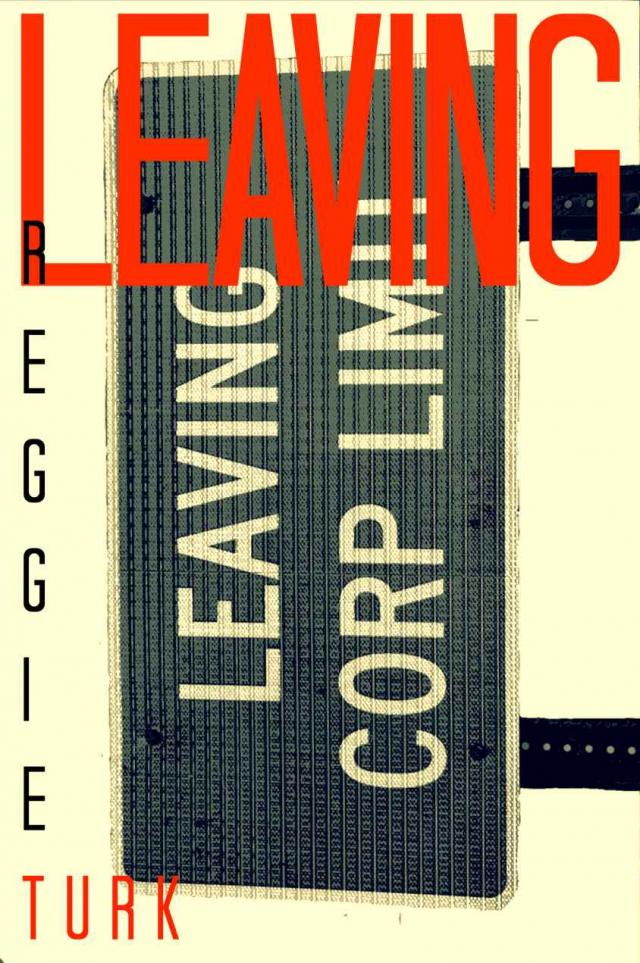
Twelve years, I hadn’t been home for twelve years. Not since I read the large, white capital letters on the government green background, ‘LEAVING’, and headed west for as far as the road could take me. The entrance curving down to the highway was just beyond the sign and didn’t have anything to do with leaving the corporation limit, but it did contribute to a convenient coincidence. I’d read the sign thousands of times on my way home from work, but this time it said something different to me. No, the words hadn’t changed, but the way I read it did. It wasn’t just a fact I was ‘leaving’ the corporation limit that day, it was an epiphany. I’d heard stories of how far the old Lincoln Highway went, but never thought of it as an idea, an answer, until that day. The highway drained eight tanks of gas from my ten year-old Pontiac Sunbird before I reluctantly stopped at the fast-approaching Pacific Ocean.
Two years roaming around San Diego, then the army and stops in Texas, Maryland, D.C., and many nameless places overseas during the last ten years, but none I could call home. I found myself drifting with no place to land and no one to land for and didn’t care for the solitude. Was Ohio still home? I wasn’t sure, but it was a trip I couldn’t put off any longer.
A set of headlights arrived at the stop sign to snap me out of the past and stare me down, but I was defiant, or stubborn as a Martin my mother would say. It’s not an honor, it’s a fact. It’s in your blood. She would continue. God help you and anyone who loves you. She would place her hand on the Bible and close her eyes as if she was praying, but I never believed she actually spoke to God on her occasions of pointing out her families shortcomings.
The car turned and crossed in front of me close enough to spray some street spit off the tires on my face and hands. I refused to move or wipe off the spatter; one of the rules I learned when studying a subject or completing an assignment; ignore the natural responses. Don’t allow a sneeze, a cough, an itch, or any other movement; keep complete control. Staring at my father’s house wasn’t a given assignment, it was more. Tonight, it was a necessity.
Why didn’t I cross the street, and knock on the door? The door of my father’s house—this was never my mother’s house, she never lived here—an important distinction in my mind. A surge of strength traveled through my hands and into my fingers like electricity at the thought of the door coming open and me grabbing my father by his shirt and pulling him outside. Would I talk to him, scream at him, maybe I would pull one back and hit him square between the eyes. I didn’t know what I would do if my father answered the knock on the door, if my father could. Maybe that’s why I sat motionless with my eyes on an aged pale green two-story house as if I was waiting for it to invite me in.
While sitting in my position, I counted seven other driveways along the opposite side of the street. Most of the driveways led to unattached single car garages sitting back between the houses in the backyards. The two-story houses were packed within fifteen feet of each other and were all at least fifty years old. Some were well kept; others were showing their age. Many of the houses were probably being rented like my father’s; while others were probably lived in by older people who’d lived there since the house was built, and would probably die there.
My father’s single car garage was different than the others, although unattached too, it was farther away and facing the opposite direction, east, on an alley which ran north and south, parallel to the street where I sat. I couldn’t see the garage door to see if it was up or down, or if there was a car in it. The property actually had no driveway like the others, because another alley ran east and west along the south side of the house and directly into my position.
Dull headlights bobbed up over a rise at the far end of the alley and coasted down the low grade at me. The brakes painfully squeaked the car to a stop and I realized it was ‘coonstruck’. The front passenger side fender
I stared back, keeping my line of sight below the monster’s angry eye so it wouldn’t temporarily blind me. The glare of the headlight prevented me from seeing who was inside, or even how many. The single eye continued to stare me down long after it needed. No traffic stopping the car from turning left or right, it just didn’t move.
Did the people in the car notice me? Were they wondering why I was sitting on the curb across the street?
Maybe they didn’t notice me sitting there in the shadows still as a statue; maybe they were lovers using this opportunity to sneak in a few kisses.
The persistence of the headlight caused me to squint, but I made no attempt to move. This was my curb I was sitting on, I had claimed it for my own when I decided to sit down and study the house across the street. I may not have had a flag to plant, but what I planted on the curb wasn’t going to move unless it wanted. The car would have to move for me, and after close to thirty seconds it did.
It didn’t matter, I assured myself. I knew it wasn’t who I was looking for.
I was sure it wasn’t him.
My father was gone, buried a month ago. The man whose shadow I walked away from was gone without a chance to get the answers I wanted, and while gone for those years I came to believe I deserved the answers. So many times I thought about going home and confronting him, but one excuse opened the door for another excuse and soon excuses became easier and easier to find.
I wasn’t sure what broke me twelve years ago, what caused me to leave. And after sitting on this curb for hours, staring at my father’s old empty pale green house on Mohican Street, I really wasn’t sure what caused me to come back.
After the car disappeared, my line of sight dropped back down to the blacktop, the menagerie.
Robert Martin had been in the Navy. That’s why his son, me, Jared Martin, joined the Army. My father’s stories drove me naively into wide-eyed awe when I was little. He was too young to be in Korea during the main part of the conflict, but was shipped over after turning eighteen. Agreements were made, but neither side was happy about the conclusion. According to my father, he was trained to be an assassin to clean up loose ends and to make unhappy people more content or eliminate them.
My father told me stories of honor, bravery, and duty. After ten years in the Army, I realized honor, bravery, and duty were indeed parts of all the armed forces, but many of the people who directed the armed forces did not possess those qualities and that many decisions were made for economic and political gain not always because it was the right thing to do. There was a need for more honor, more sacrifice, and more responsibility for the truth and the greater good, not the greater gain. I wasn’t sure which reflection my father gave, the sacrificial, or the selfish. Twelve years ago when I left, I was pretty sure I knew exactly what my father was, but now that luxury was gone. Over the last two decades of our relationship, I found myself questioning many things I thought I knew about him.
Chapter 3
What was she doing here?
Life wasn’t supposed to be like this, at least not her life. Her eyes studied her father’s gun cabinet across the room. Seven of the eight holders were full, only one missing; her father’s favorite gun. The one he used sixteen years, two months and six days ago. Sixteen years, could it really have been that long ago? Her father took his favorite gun and shot his wife, her mother, then turned the gun on himself. She was only fourteen years old that summer.
When she was only ten, she told her mom how it was going to turn out for her. She would marry a man like her father and have kids, a bunch of kids, maybe three or four. They would live in a big white house with a swimming pool in the backyard and a basketball hoop in the front. Not a cheap hoop either, after all, basketball was her favorite sport; it would be cemented down into the ground with a regulation backboard and the foul line and three point arc painted on the drive way. Her life, her family, would be perfect just like theirs.
She laughed at herself over her simplicity. A basketball court was so important to her at that age. Now, a hoop hung, unused, ignored, in the driveway of her rented house, the rim spotted with rust and bent low in the front, and an old piece of rotted plywood with a bite taken out of the bottom right corner substituted for a backboard. It wasn’t what she dreamed of, but the strange part was, and what made her feel the most defeated, she couldn’t remember the last time she looked at it, let alone used it. Children demand so much time when you’re raising them alone and she hadn’t even gotten the three or four children she wanted, just one.
Even a laugh at her own expense felt good; it had been a long time since she laughed at anything. A long time and the clouds hovering overhead didn’t seem to have any silver linings. True, she made some bad decisions and many of those decisions led her to the life she was living now; alone and trapped. But come on, a good break wouldn’t have to hurt anyone else.
Maybe if she left Pennsylvania for a while. Maybe she should go visit her sister.
Her eyes roved over to the gun case again.
I wonder if it was easy. Did it hurt? Or, was it so quick…
It didn’t matter. She knew suicide could never be for her, and then of course there was Sadie. Sadie didn’t deserve to be saddled with any more baggage than she was already given. She was due for a little luck too.
They were both due for a little luck.
Silver linings.
Chapter 4
Fourteen days left.
The sun blasted bright and strong as it cleared the thick growth of trees on the east side of the Amerihost. Like many other things in this town, the town I spent the first nineteen years of my life, this inn wasn’t there when I left. I searched my memory and all I could think of was a lone Ramada Inn dropped somewhere in the middle of the old downtown area. Was the old downtown area still down there? Was the old Ramada Inn? By the wide sprawl of the lights when I arrived last night, I could tell the town had changed. Did it really matter what was there? No. This was a fifteen day leave, not permanent, but maybe, maybe I would still do a little reconnaissance later and find out. Besides, checking the old town out would be a good way to kill some time while I figured out what pulled me back and who I needed to see in fifteen, no, fourteen days.
They buried my father a month ago while I was on assignment in the Middle East and was ‘untouchable’. When told of my father’s death, two weeks after the funeral, I decided to go home.
Maybe it was just to see the grave, look at the marker, and this time stop to say goodbye before I left again.
Maybe I was just back out of curiosity, to see how it felt. How would it feel standing over my father’s grave? Would I feel anything at all? Was my father simply a stranger I was once acquainted with years ago, nothing more? Or, was there a son’s love for a father, a bond that couldn’t be broken even through neglect or time?
Maybe, maybe.
There were loose ends. It would be interesting to see my family again, especially my mother and my two older brothers.
And, of course, there was someone else, Jennifer Collins. The girl I was dating when I left. Was she married? Of course she had to be, but I didn’t know for sure. After all these years, I couldn’t clear things up with my father, but I could clear my conscience with her.
Perhaps later I’d notify my family I was back in town. I hadn’t seen my mother, or Ben and John since I left. Writing occasionally had been enough for me, but it certainly hadn’t been very often. My mom wrote a few letters, usually when there was a death, a birth, or a marriage in the family. She didn’t mention Ben’s divorces. When I left, Ben was married to Sarah, but a couple years ago my mother’s letters mentioned Ben’s wife Kathy; don’t know what happened to Sarah.


