

Black cats of osan, p.1
Black Cats of Osan, page 1


Published in the United States of America and Great Britain in 2023 by
CASEMATE PUBLISHERS
1950 Lawrence Road, Havertown, PA 19083, USA
and
The Old Music Hall, 106–108 Cowley Road, Oxford OX4 1JE, UK
Copyright 2023 © Rick Bishop
Hardback Edition: ISBN 978-1-63624-353-5
Digital Edition: ISBN 978-1-63624-354-2
A CIP record for this book is available from the British Library
All rights reserved. No part of this book may be reproduced or transmitted in any form or by any means, electronic or mechanical including photocopying, recording or by any information storage and retrieval system, without permission from the publisher in writing.
Printed and bound in the United Kingdom by CPI Group (UK) Ltd, Croydon, CR0 4YY
Typeset in India by Lapiz Digital Services, Chennai.
For a complete list of Casemate titles, please contact:
CASEMATE PUBLISHERS (US)
Telephone (610) 853-9131
Fax (610) 853-9146
Email: casemate@casematepublishers.com
www.casematepublishers.com
CASEMATE PUBLISHERS (UK)
Telephone (0)1226 734350
Email: casemate-uk@casematepublishers.co.uk
www.casematepublishers.co.uk
All images are from author’s collection unless otherwise stated.
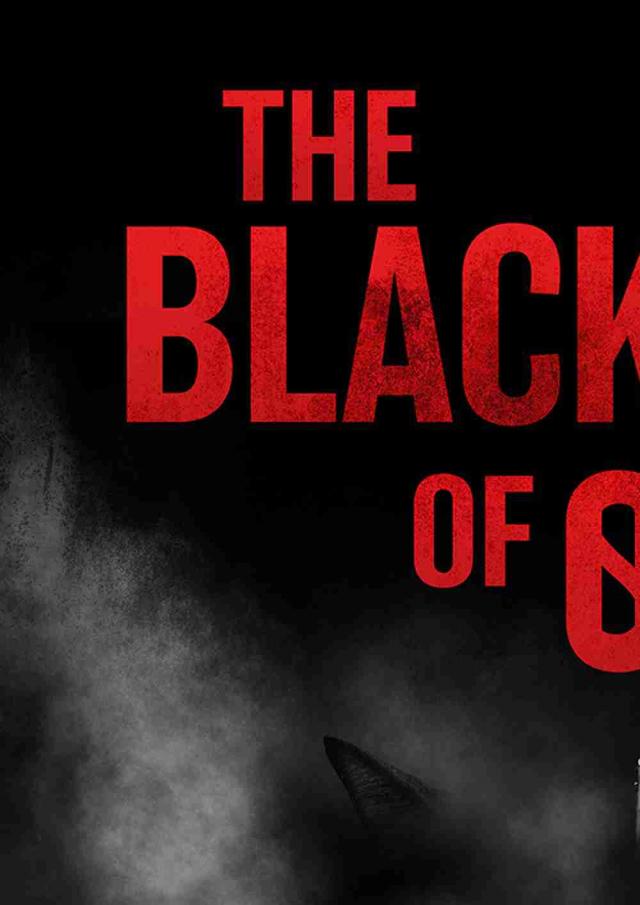
Cover Image: Black Cat Artwork by Si Blick.
DEDICATION
This book is dedicated to those few select pilots drawn to the challenge of what they thought was mastering an inanimate object, only to discover a very deep respect and eventual love for the unique, multiple personalities the Dragon Lady personified;
and
The dedicated Dragon Lady maintainers, field service representatives, and physiological support personnel, whose professionalism and unwavering attention to detail enabled the unmatched reliability and performance of America’s premier air-breathing spy plane.
We Fly Alone
We fly alone,
Long passages, many hours
… while someone below awaits our return.
We fly to places uninvited,
Facing uncertainty and peril
… while someone below awaits our return,
Hours turn into days,
And days into years.
A life has passed,
And now we’re more alone than ever
… while someone above awaits our return
Col. Art Saboski (Ret.) 2019
U-2 Pilot
In Memory of a fellow U-2 Pilot’s Departed Wife
Contents
Acknowledgments
Contributors
Preface
Introduction
1 A Star is Born
2 Black Cats
3 Lieutenant “Oscar” Black Cat
4 First Tour
5 Learning the Ropes
6 The Countdown
7 The Quest Begins
8 The Movers and Shakers
9 “Between Life and Death”
10 The “Drivers”
11 Sallying Forth
12 1984—Trimester One
13 Trimester Two
14 Trimester Three
15 The Final Trimester
16 Black Cat Metamorphosis
Epilogue
Appendices
Glossary
References
Acknowledgments
It’s been over 30 years since I walked away from a passion that held me in its grips for 13 years. It was an emotional separation that still affects me to this day and I sometimes wonder if, had I persevered for another five years to the limit of my service allowed in the military, I would have been permitted to fly the “Dragon Lady” just one more time? When I reminisce on that highlight of my life, I remember more than a few challenging flights but most of all I recall the cherished friendships that ensued due to the very close relationships within our tight fraternity of hand-picked professionals, both military and civilian. While serving as a “Black Cat,” there was only one priority—100-percent mission accomplishment—under sometimes very harsh conditions. To that end, all personnel, regardless of rank, pulled together as one to launch and recover a single pilot whose responsibility it was to complete a difficult nine-hour, and possibly much longer, reconnaissance mission. When away from the stricter dictates of Stateside fraternization taboos, rank was never considered when supporting the mission and, therefore, familiarity led to friendships developed between the ranks that would last a lifetime.
First and foremost, I must convey my sincere gratitude to Col. (Ret.) Dave Young, who was a living legend as a CIA (the Agency) and Air Force “Deuce Driver” to all U-2 pilots during the 1970s–90s era and was the inspiration behind the Black Cats designation as the first commander of Detachment 2 in Osan, South Korea. Dave worked with the Agency in overseeing early Top-Secret U-2 operations flown by the 35th Squadron, Republic of China Air Force (Taiwan), pilots, called the Black Cats, from Taoyuan Air Base in Taiwan. His razor-sharp memory was a wealth of first-hand information concerning those clandestine overflights, while ironing out some of the errors that have appeared in print concerning them. A special thanks to Chris Pocock, renowned expert and author of everything U-2, for hooking me up with Dave and saving me considerable embarrassment on a research oversight.
Next, I must also express my sincere gratitude to my two “proofreaders” who examined each chapter as they were completed. First, my very talented co-pilot from earlier air force days, now a retired senior captain of Southwest Airlines, Jay Miranda. As a long-time civilian, and lifelong friend, I asked Jay to assure the technical jargon used in the script could be easily understood by those without an aviation background, while also checking for spelling and grammar errors. I am likewise very indebted to retired U-2 “Deuce” pilot, Lt. Col. (Ret.) Jim “Bubba” Lloyd III. He was not only my most trusted pilot during my year as the Black Cat operations officer (Opso) but, years later, as my Opso during my command of the 99th Strategic Reconnaissance Squadron at Beale Air Force Base. Bubba went on to command our first U-2 contingent to Saudi Arabia on 17 August 1990 in support of Operations Desert Shield/Desert Storm. He possessed top-secret/codeword clearances in private industry for decades after mine was relinquished to our government and, as such, became my trusted “security advisor.” As he was my closest U-2 buddy, I depended on him for keeping me out of Leavenworth Prison, making small rocks out of large ones, as a result of writing this book, and I treasure our lifelong friendship.
Photography was a very important aspect of this book and I am especially indebted to the accomplished artist and photographer Si Blick for the stunning cover image as well as his numerous high-definition photographs. Additionally, the original 35-mm and high-quality digital photography provided by the maintainers and Deuce drivers provided authenticity and considerable depth to the text.
Of course, I would be remiss in not offering my sincere gratitude to my mentor, Paul F. Crickmore, an accomplished aviation author and acknowledged literary SR-71 expert, for his sincere friendship and guidance. Without his help, I may not have found my way to Casemate Publishers to offer this rather unique script that eventually led to the actualization of my three-year effort. Likewise, I have to express my gratitude to all in the Black Cat fraternity that responded to my request for their memories of serving in Osan, not only during the short 1979–84 era that I enjoyed, but also before and beyond that timeframe. I am truly honored to relay their stories in the pages that follow.
Last, but certainly not least, I want to thank my very supportive wife of 40 years, Virginia. She not only experienced first-hand many of the events described throughout this book but encouraged me to carry on my affair with the “Shady Lady” and the extreme demands of mission requirements that ruled our early lives together. Not only has her patience and understanding built a strong foundation for our future endeavors that I will never be able to repay, but she has put up with my absence many hours weekly as I finished this, my last book. Thank you, Giny!
Contributors
I am greatly indebted to those listed below for offering their unique “Black Cat” experiences while serving at Detachment 2, Osan, South Korea. Their individual efforts and esprit de corps in support of the mission were directly responsible for the unparalleled success of the “Dragon Lady” while also forming the backbone of this book. They are listed by their last name in alphabetical order with their military rank omitted.
Steve “Fing-B” Brown
Bruce Cucuel
Frank “Fuzzy” Furr
Mason Gaines
Bill Gras
James “Bubba” Lloyd
Bill “Bugger Bill” Mercier
Jeff Palmer
Don “Pick” Pickenpaugh
Kevin Riebsam
Arthur “Be No” Saboski
Don Shafer
Charles “Stew” Stewart
John “Swanee” Swanson
Rick Switzer
Charles “Chuck” Wilson
Dave Young (First Black Cat commander)
Preface
It has been a few years now since my first attempt at writing was published. I must admit I’m very pleased with the success and acceptance of the book, not only by the general public but by many very critical and knowledgeable individuals in the aviation community as well. At this point (2022), Shady Lady has garnered a multitude of five-star reviews on promotional websites an
I devoted a large portion of Shady Lady to the various locations around the world, known as Detachments (Dets), from which top-secret U-2 operational missions were flown. Each location had a set of unique characteristics and strictly adhered to protocols to minimize the inherent dangers associated with every flight in the “Dragon Lady,” lasting anywhere from nine to 12-plus hours. While I described each Det in detail, due to the sheer amount of time that I spent at one particular location, I dedicated the longest chapter in the book to it alone, quipping therein that I could easily write a book on my multiple 70-day operational tours as a pilot and one-year stint as operations officer, known as the Director of Operations (DO), while serving there.
In writing this book, I felt compelled to not only recount some of my personal experiences but the personal stories of those critical players who made this Det so successful, sometimes under very trying conditions. It spans my involvement in the “Selectively Manned” U-2 Program from 1978 to 1991 and illustrates the dedication to the mission that could only be accomplished by this fantastic aircraft and the officers, enlisted, and civilian experts that were dedicated to her every need. This book covers many of the idiosyncrasies associated with this unique location that made complex high-altitude reconnaissance missions look routine while, in fact, they could be fraught with danger.
I will take the reader behind the scenes to experience day-to-day intelligence-gathering operations that could evolve from tediousness to exhilaration and celebration to tragedy, sometimes within hours. Moreover, because of a detailed flight log kept throughout my flying career, and a detailed journal of my experiences as DO in 1984, I was able to highlight the many personalities of a singularly unique and talented fraternity of “Special Duty” pilots that mastered the dragon within the Lady, whose idiosyncratic personality is renowned for her well-earned reputation as the world’s most dangerous operational aircraft to fly. Also emphasized are the highly qualified hand-selected cadre of dedicated maintenance specialists, Physiological Support Division technicians, civilian factory technical representatives, and other specialized personnel whose dedication made the U-2 Dragon Lady the acknowledged premier high-altitude reconnaissance platform in the world then and to this day.
This is our story as experienced and seen through my eyes and their first-person testimony. It is meant to be a tribute to the most highly tasked and successful Det in the history of the U-2 Program, if not the entire Air Force—the “Black Cats” of Det 2, Osan Air Base, South Korea.
Introduction
Known by relatively few outside the intelligence, surveillance, and reconnaissance (ISR) community are the locations of “Black World” aviation assets. Every location or facility starts out as a top-secret entity but after a while becomes impossible to hide, even though all operations may have been cloaked in late-night darkness. In the case of the “Dragon Lady,” the inability to hide the thunderous take-off power of her highly modified J75 turbojet engine, which was rumored to be capable of “awakening the dead,” soon led to her discovery no matter where she was residing! Such a location was the top secret CIA desert landing strip adjacent to Groom Lake, Nevada, code named either ‘Paradise Ranch’ or ‘Watertown.’ Previously utilized by the Atomic Energy Commission as a nuclear testing facility, both code names devolved into ‘The Ranch,’ thus cloaking the complete lack of water or paradise and eventually acquiring the name of Area 51.
Within the U-2 community, operational locations (OLs) were usually the first step in deploying the Dragon Lady to a new location. These OLs were closely guarded secrets, sometimes even kept from the pilots until they arrived in the specific operational region. To the personnel at the squadron levels, these locations seemed to sprout up overnight in order to conduct anywhere from one to numerous top-secret missions, as directed by the highest national command authorities (although they were thoroughly planned in advance at the higher headquarters level). This, the smallest operational entity within the black world, comprised the minimum number of personnel required to accomplish the mission. The OL could vary from a remote, single-runway desert location, with pilots and support personnel living in tents (very rare) to “borrowed” sophisticated facilities allowing the comforts of on-base billeting, a hotel, or even an occasional embassy (even more rare)! The senior ranking pilot was always placed in charge, although not a strict “commander” on written orders.
Because of the demand for the Dragon Lady’s leading-edge intelligence-gathering capabilities in hotspots around the world, some of these OLs were enlarged and upgraded, eventually metamorphosing into detachments. These Dets, with a full complement of logistical-support personnel, were capable of operating one or more U-2s and thus becoming a more permanent location with the commander serving a one-year tour of duty. Depending on the workload (sortie rate) expected from the Det, the manning usually consisted of a commander, operations officer, four pilots per aircraft, two staff navigators, one flight surgeon, three Physiological Support Division technicians, and a vast array of maintenance personnel as well as civilian technical representatives (“tech reps” to the pilots or “field service representatives” to the maintainers) to care for the Lady’s every need. A detachment supporting two aircraft could require a minimum of one hundred personnel to launch and recover the Lady as well as maintain the exotic equipment required to perform each mission. Even more personnel were required to tie the loose ends of logistical and administrative demands. And this was just the beginning. After the mission launched, hundreds of other personnel worldwide, working in shifts over 24 hours, were required to collect, interpret, and disseminate the vast volume of top-secret intelligence generated by each flight. The Dragon Lady, well renowned for her unequaled photographic capabilities, also carried state-of-the-art signals intelligence to collect and locate voice communications and electronic emitters as well as all-weather measurement and signature sensors, capable of pinpointing fixed and/or tracking dynamic targets. Besides onboard recording capabilities, throughout the early 1970s and into the 1980s, the various forms of these collections were also downlinked in real-time, to be followed by simultaneous downlink and global-spanning uplink technology to secure sites around the world (starting in the early 1990s).
My intent, throughout this book, is to offer an in-depth look at the largest and most successful Dragon Lady detachment in the air force, flying almost daily top-secret missions, during my days as a pilot, operations officer, and squadron commander in our close-knit U-2 fraternity. I felt obliged to relate the stories of day-to-day operational missions that, if accomplished flawlessly, never made the headlines so sought after by the press, nor leaks sought after by our adversaries. There are playful moments, serious confrontations, and disastrous events that formed the personality of the Det, realized through the high caliber of those so dedicated to its success. This is our story of that era and about the select group that was a major part of the U-2 Dragon Lady’s legacy of long-standing success, presently approaching 67 years of continuous service to the defense of the United States of America. It is a narrative spanning three production runs along with constant airframe, powerplant, and sensor upgrading over the years that made her a “national asset” and a living legend second-to-none in today’s covert world of air-breathing aerial reconnaissance.
CHAPTER 1
A Star is Born
In the decade following WWII, there was nothing in aviation history that could compare to the performance leap incorporated into aircraft design by the small group of engineers at the top-secret Lockheed Advanced Development Projects, nicknamed the “Skunk Works,” led by the most brilliant aeronautical engineer of his time, Kelly Johnson. After intentionally being left out of the initial government bidding process for the role that U-2 eventually filled, Johnson devised a plan to “skunk” the design concepts offered by his rivals at Fairchild, Martin, and Bell aircraft companies for a radical new aircraft.
Post-WWII, the aviation and space programs of both the Americans and the Soviets had benefitted from employing German scientists who, only several years before, had been developing technologies to use against the former Allies. While America generally “drafted” many grateful and lustrous scientists, there was some question as to what their less-fortunate colleagues, interned in Russia, might have up their sleeves. Therefore, Russian strategic capabilities and intent were the cause of some anxiety within the Pentagon as well as the CIA and White House.


