The complete stories of.., p.1
The Complete Stories of Robert Louis Stevenson, page 1



Frontispiece from Katharine D. Osbourne’s
Robert Louis Stevenson in California (CHICAGO, 1911).
2002 Modern Library Paperback Edition
“Stevenson in the OED” and revisions to the Introduction and Notes copyright © 2002 by Barry Menikoff
Biographical note copyright © 2001 by Random House, Inc.
All rights reserved under International and Pan-American Copyright Conventions. Published in the United States by Modern Library, an imprint of The Random House Publishing Group, a division of Random House, Inc., New York, and simultaneously in Canada by Random House of Canada Limited, Toronto.
MODERN LIBRARY and the TORCHBEARER Design are registered trademarks of Random House, Inc.
Grateful acknowledgment is made to Northwestern University Press for permission to revise and expand the Introduction and Notes and reprint the glossary, all by Barry Menikoff, from Tales from the Prince of Storytellers (Evanston, IL: Northwestern University Press, 1993). Copyright © 1993 by Northwestern University Press. Used by permission of Northwestern University Press.
Grateful acknowledgment is made to Oxford University Press for permission to reprint selected excerpts from definitions quoting Robert Louis Stevenson from The Oxford English Dictionary (Second Edition, 1989). Copyright © 1989 by Oxford University Press. Reproduced by permission of Oxford University Press.
LIBRARY OF CONGRESS CATALOGING-IN-PUBLICATION DATA
Stevenson, Robert Louis, 1850–1894.
[Short stories]
The complete stories of Robert Louis Stevenson: Strange case of Dr. Jekyll and Mr. Hyde and nineteen other tales / edited, with an introduction and notes, by Barry Menikoff.—Modern Library pbk. ed.
p. cm.—(Modern Library classics)
eISBN: 978-0-307-79684-4
I. Menikoff, Barry. II. Title. III. Series.
PR5481 .M46 2002 823′.8—dc21 2002066022
Modern Library website address: www.modernlibrary.com
v3.1
ROBERT LOUIS STEVENSON
Robert Louis Stevenson, a versatile and prolific writer best remembered for his novels of romantic adventure, was born in Edinburgh on 13 November 1850. The son of a prosperous civil engineer who specialized in the construction of lighthouses, he was expected to follow the family profession but ended up studying law at Edinburgh University. Still, when he was a young man his agnosticism and bohemian existence led to painful clashes with his strict Calvinist parents. Stevenson spent much of his life battling a severe lung disease (probably tuberculosis) and traveled constantly in search of a climate that would prove congenial to his health. His first full-length book, An Inland Voyage (1878), grew out of a canoe trip he took through Belgium and northern France; a later tour through the wilds of southern France produced Travels with a Donkey in the Cévennes (1879). Stevenson journeyed to San Francisco in 1879 to marry Fanny Osbourne, an American divorcée ten years his senior. The Silverado Squatters (1883) recalls the couple’s eccentric honeymoon at an abandoned silver mine on Mount Saint Helena. After returning to Europe in 1880 the Stevensons moved about, living in Switzerland, France, and England.
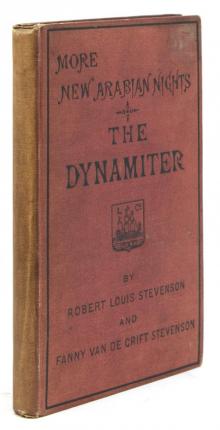
“Fiction is to grown men what play is to the child,” Stevenson once said. He launched his career as a storyteller with “A Lodging for the Night” (1877), a short story set in fifteenth-century Paris that recounts an episode in the life of French poet François Villon. He went on to write ghost stories, medieval romances, moral allegories, tales of psychological horror, and fables drawn from Scottish folklore. In 1882 he brought out New Arabian Nights, an extravagant series of adventures that pays tribute to one of the favorite books of his childhood. G. K. Chesterton remarked, “I will not say that the New Arabian Nights is the greatest of Stevenson’s works; though a considerable case might be made for the challenge. But I will say that it is probably the most unique; there was nothing like it before, and, I think, nothing equal to it since.” Stevenson’s other compilations of short fiction include More New Arabian Nights: The Dynamiter (1885) and The Merry Men and Other Tales and Fables (1887). “[Stevenson’s] short stories are certain to retain their position in English literature,” judged Arthur Conan Doyle. “His serious rivals are few indeed. Poe, Nathaniel Hawthorne, Stevenson; those are the three … who are the greatest exponents of the short story in our language.”
The publication of Treasure Island in 1883 brought Stevenson enormous acclaim. Written as an entertainment for his twelve-year-old stepson, the rousing tale of pirates and buried treasure proved universally popular. “Over Treasure Island I let my fire die in winter without knowing that I was freezing,” recalled J. M. Barrie, and Henry James predicted, “Treasure Island will surely become—it must already have become and will remain—in its way a classic.” “[Stevenson is] a master of narrative,” observed V. S. Pritchett. “He places his scenes at a fitting distance from each other, with an unflurried order and particularity, so that we do not blunder into them but are quietly brought to the point where the view is best.… He is a writer of brilliant beginnings. He catches the sensation of being athletically alive, which is especially the gift of youth. In Treasure Island this sense of physical action is wonderful and youth’s dominant preoccupation with its own fear and courage plays naturally upon it. The timidity, the pride, the caution, the heady excitement of youth, its day dreams and admirations, are wonderfully rendered.” Novelist William Golding agreed: “When one turns to Treasure Island, one sees immediately that Stevenson was the professional knowing precisely what effects he wanted and how he was going to get them. Every chapter is shaped and fitted into the general structure like the timbers of a ship.”
Stevenson soon enhanced his reputation with Strange Case of Dr. Jekyll and Mr. Hyde (1886), a psychological thriller that sprang from the deepest recesses of his own subconscious. A brilliantly original study of the dual aspects of human nature, it endures today as the quintessential Victorian parable of good and evil. “Robert Louis Stevenson has become immortalized by way of his private fantasy—which came to him, by his own testimony, unbidden, in a dream,” observed Joyce Carol Oates. “The visionary starkness of Strange Case of Dr. Jekyll and Mr. Hyde anticipates that of Freud: there is a split in man’s psyche between ego and instinct, between civilization and ‘nature,’ and the split can never be healed.” Vladimir Nabokov considered it “his most wonderful book,” comparing Stevenson’s “shilling shocker” to Madame Bovary and Dead Souls as “a fable that lies nearer to poetry than to ordinary prose fiction.”
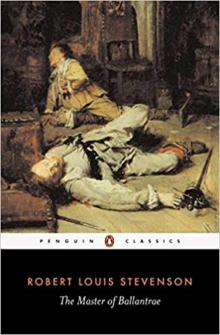
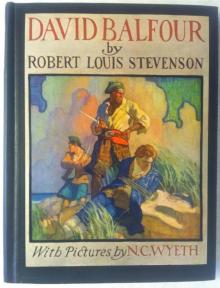
A few months later, in another burst of creative energy, Stevenson completed Kidnapped (1886). Set in the Scottish Highlands during the aftermath of the Jacobite rebellion of 1745, this classic of high adventure interweaves the drama of Scottish history with the psychological moral growth of its adolescent hero, David Balfour. J. M. Barrie rated Kidnapped “the outstanding boy’s book of its generation,” and Mark Twain wrote to Stevenson, “My wife keeps re-reading Kidnapped and neglecting my works. And I have not blamed her; I do it myself.” V. S. Pritchett reflected that “Kidnapped is far more than a boy’s book.… [It] contains a universal statement about the loyalties and uncertainties of youth.” And Stevenson biographer Ian Bell noted, “Kidnapped says as much about Stevenson as any autobiography. In David Balfour and Alan Breck he gave substance to two sides of his own character, adventurer and rationalist, man of duty and man of passion.” Stevenson subsequently turned out three more tales embedded in the fierce loyalties and violent enmities of Scottish history: The Master of Ballantrae (1889), Catriona (1893), and the unfinished Weir of Hermiston (1896).
Though perhaps best known for his fiction, Stevenson was also a celebrated essayist as well as a popular poet. In collections such as Virginibus Puerisque and Other Papers (1881), Familiar Studies of Men and Books (1882), and Memories and Portraits (1887) he offered idiosyncratic views on everything from dreams, umbrellas, political activism, and jingoistic Victorian mores to the art and craft of fiction. “[Stevenson’s] essays are tremendously bold in their biographical and interpretive outlines,” said the Times Literary Supplement. “[They attest to his] human curiosity, his intimate, affectionate embroilment with behavior and character, his wonderful phrase-making and inventiveness of language.” As a poet Stevenson enjoyed his greatest success with A Child’s Garden of Verses (1885), an extraordinarily evocative picture of the joys and heartaches of childhood that appealed to both imaginative children and nostalgic adults. His other volumes of poetry include Underwoods (1887), Ballads (1890), and Songs of Travel (1896).
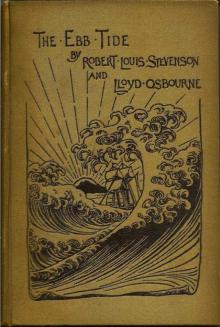
In 1888 Stevenson set sail from San Francisco for the South Pacific, where he spent the last six years of his life. In the South Seas (1896), a posthumously issued travelogue, vividly recounts his journey there. During this period he collaborated with his stepson, Lloyd Osbourne, on The Wrong Box (1889), a black comedy involving a mismanaged trust fund and a recalcitrant corpse; The Wrecker (1892), a story of modern crime and adventure on the Pacific; and The Ebb-Tide (1894), a dark tale probing the nature of evil that anticipates the fiction of Joseph Conrad. In addition he published Island Nights’ Entertainments (1893), a collection of short stories that included “The Bottle Imp” (1891) and “The Isle of Voices” (1893), two tales based on Polynesian superstitions, along with “The Beach of Falesá” (1892), a masterful meditation on the growing gulf between native Polynesians and the white imperialists who had invaded their world. He also completed two works of nonfiction: Father Damien (1890), a famous defense of the Belgian priest who devoted his life to the care of lepers, and A Footnote to History (1892), a piercing examination of political turmoil in Samoa. Robert Louis Stevenson died of a cerebral hemorrhage at his estate in Vailima, Samoa, on 3 December 1894. The next day Samoan chieftains honored Stevenson, whom they hailed as Tusitala, or “Teller of Tales,” with burial in a tomb atop Mount Vaea. The Letters of Robert Louis Stevenson, an eight-volume compilation of his correspondence, was issued in 1994 to mark the centenary of his death.
“Stevenson can claim to have mastered the whole gamut of fiction,” judged Arthur Conan Doyle. “No man has a more marked individuality, and yet no man effaces himself more completely when he sets himself to tell a tale.” And John Galsworthy stated, “As a teller of a tale Stevenson is the equal of Dumas and Dickens.… Hehad but one main theme, that essential theme of romance, the struggle between the good and the bad, of hero against villain.… Stevenson was so vivid and attractive as a person, so picturesque in his travels and his ways of life, so copious and entrancing in his essays and his letters, and so pleasing as a poet, that his general self overshadows him as a novelist. But compare with his novels all the romantic novels written since … and you will see how high he stands. Next to Dumas, he is the best of all the romantic novelists [and] of British nineteenth century writers, he will live longer than any except Dickens.” His biographer, David Daiches, concluded that “Stevenson produced some of the most memorable fiction in our language.… He transformed the Victorian boys’ adventure into a classic of its kind.”
CONTENTS
Cover
Title Page
Copyright
BIOGRAPHICAL NOTE
INTRODUCTION by Barry Menikoff
THE COMPLETE STORIES OF
ROBERT LOUIS STEVENSON
NEW ARABIAN NIGHTS
THE SUICIDE CLUB Story of the Young Man with the Cream Tarts
Story of the Physician and the Saratoga Trunk
The Adventure of the Hansom Cabs
THE RAJAH’S DIAMOND Story of the Bandbox
Story of the Young Man in Holy Orders
Story of the House with the Green Blinds
The Adventure of Prince Florizel and a Detective
THE PAVILION ON THE LINKS
A LODGING FOR THE NIGHT
THE SIRE DE MALÉTROIT’S DOOR
PROVIDENCE AND THE GUITAR
STRANGE CASE OF DR. JEKYLL AND MR. HYDE
THE MERRY MEN AND OTHER TALES AND FABLES
THE MERRY MEN
WILL O’ THE MILL
MARKHEIM
THRAWN JANET
OLALLA
THE TREASURE OF FRANCHARD
ISLAND NIGHTS’ ENTERTAINMENTS
THE BEACH OF FALESÁ
THE BOTTLE IMP
THE ISLE OF VOICES
UNCOLLECTED STORIES
AN OLD SONG
THE STORY OF A LIE
THE BODY-SNATCHER
THE MISADVENTURES OF JOHN NICHOLSON
NOTES
SCOTS GLOSSARY
STEVENSON IN THE OED
INTRODUCTION
Barry Menikoff
On 14 October 1877 the New York Times published a short story, “A Lodging for the Night,” with no signature other than the name of the English magazine that had printed it a month earlier. The editor clearly had an eye for good copy, for three more stories were lifted from their English magazines over the next few years. Thus the New York Times has the distinction of being the first publisher of Stevenson’s fiction in America. Some years later, just after Stevenson died, a Times reviewer recalled that first experience, raining plaudits on the newspaper for its perspicacity and shrewdness of judgment. Of course that was many years ago, when the retrospectives and encomiums were still fresh, and when every literate person shared a common conviction that Robert Louis Stevenson, whom the gods loved, was already a classic of English literature. Stevenson today is quite possibly the most anomalous figure in literary and cultural studies. In truth, Stevenson’s versatility and productivity astonish anyone who happens upon the volumes of essays, travels, novels, plays, poetry, criticism, and correspondence that constitute one of the most extraordinary bodies of work in nineteenth-century English letters. But the variety and complexity of that work were nothing more than a mirror of the man. Stevenson was intellectual, bohemian, and consummately romantic. It is unreasonable to think he would not transmute the intensity of that personality into his work. Walter de la Mare said it best: “We actually see him in every line he ever wrote—that long face, those dark dwelling eyes, that straight hair, those tapering fingers.”
Virtually all of Stevenson’s contemporaries recognized that his claim on immortality—fame was not even the question—was made in his fiction, and particularly in the short story, a genre he defined both in theory and in practice. From George Saintsbury and Henry Seidel Canby at the turn of the century to V. S. Pritchett and Sean O’Faoláin more recently, Stevenson was synonymous with this new form. In 1914 Frank Swinnerton called him “among the best English writers of short stories.” Five years later TLS reassessed the body of his work: “In the short story his art found a province narrow enough to dominate.” Edith Wharton in 1925 considered him one of a modern English triumvirate, along with Henry James and Joseph Conrad. And John Buchan, at the end of the decade, affirmed all these judgments: “Stevenson was one of the best story-tellers that ever lived. He was a kind of bard who spoke in prose rather than verse, with all the bard’s swiftness of narration and sudden bursts of lyric beauty. He was a great short-story writer.” Stevenson’s influence on the short story was pervasive. He became part of the consciousness of the modernist sensibility, and the poles of his short-story art can be seen in two later masters of the form—Jorge Luis Borges and Graham Greene.
The Complete Short Stories of Robert Louis Stevenson is for a new generation of readers, still open to experience and enthusiastic about the possibilities of magical art. In “Providence and the Guitar,” Stevenson’s brilliant riff on the theme of art and life, Léon Berthelini is a second-rate performer with an inflated sense of self-importance and a dated style. Nonetheless he is a genuine artist: he delights and instructs a younger couple who are having a marital conflict over the artistic life but are struggling resolutely to hold on to each other. Léon’s wife advises the younger woman that a good man may be hard to find, and it is worth keeping the father of your child, even if he is not a very good painter. Painting, after all, is not everything. Léon, with his guitar, performs the noblest service of art—the affirmation of life. And Stevenson, the supreme performance artist, silently nodding in the direction of the reader, confirms both the reality and importance of the entire enterprise.
1
Few developments in contemporary fiction since the Second World War match the extraordinary rise in the status of the short story. Many of the most acclaimed writers in England, Ireland, Canada, and the United States are primarily short-story writers, who are recognized and acclaimed for their work in a genre that has historically been considered a second sister to the novel. But it would be a mistake to imply that the short story suddenly emerged from nowhere, or that nobody had paid it much attention before. On the contrary, it has an extensive and impressive history. We need only recover the origins of the form in the last quarter of the nineteenth century to recognize that the impulse that gave rise to its development was not fundamentally different from that which makes it such a viable form today. The short story evolved in tandem with the modern novel. They had in common a single objective: to reduce the size of the book and concentrate the art of the fiction. There is no question that a certain fatigue had set in with the reading public, as well as with the writers themselves. It is hardly coincidental that the two most successful fiction writers of the last two decades of the nineteenth century were Robert Louis Stevenson and Rudyard Kipling. The latter declared an end to the triple-decker novel, and the former considered it a feat of strength to complete one. For the Victorians, of course, at least the High Victorians, the tripledecker represented an achievement emblematic of high seriousness and moral integrity. To fill up three complete volumes with complicated stories that reflected the variety and multiplicity of ordinary lives was almost a vocation. Although it is a commonplace that the Victorian serial anticipated the contemporary soap opera in its kaleidoscope of characters, involuted plot, melodrama, and sentiment, it is equally true that the major Victorians were serious writers whose subjects were not conditioned solely by the marketplace. They were also driven by their compulsion to dramatize their profound if not obsessive themes.