

The summer between, p.1
The Summer Between, page 1
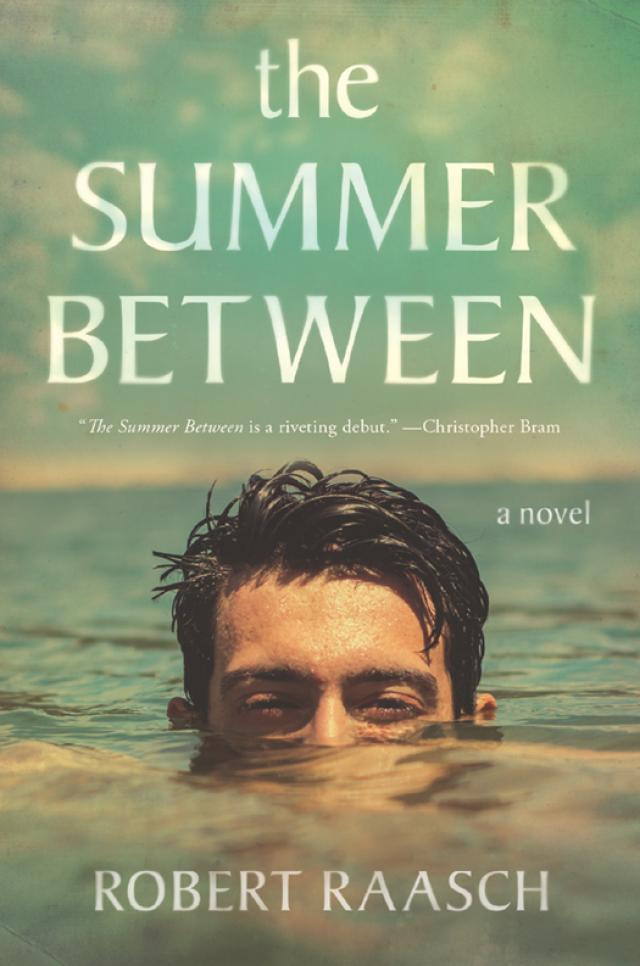


This book is a work of fiction. Names, characters, businesses, organizations, places, events, and incidents are either a product of the author’s imagination or are used fictitiously. Any resemblance to actual persons, living or dead, events, or locales is entirely coincidental.
Published by Greenleaf Book Group Press
Austin, Texas
www.gbgpress.com
Copyright © 2024 Robert Raasch
All rights reserved.
Thank you for purchasing an authorized edition of this book and for complying with copyright law. No part of this book may be reproduced, stored in a retrieval system, or transmitted by any means, electronic, mechanical, photocopying, recording, or otherwise, without written permission from the copyright holder.
Distributed by Greenleaf Book Group
For ordering information or special discounts for bulk purchases, please contact Greenleaf Book Group at PO Box 91869, Austin, TX 78709, 512.891.6100.
Design and composition by Greenleaf Book Group and Mimi Bark
Cover design by Greenleaf Book Group and Mimi Bark
Cover image used under license from ©Shutterstock.com/Juan Diego Ospina
Publisher’s Cataloging-in-Publication data is available.
Print ISBN: 979-8-88645-220-4
eBook ISBN: 979-8-88645-221-1
To offset the number of trees consumed in the printing of our books, Greenleaf donates a portion of the proceeds from each printing to the Arbor Day Foundation. Greenleaf Book Group has replaced over 50,000 trees since 2007.
Printed in the United States of America on acid-free paper
24 25 26 27 28 29 30 31 10 9 8 7 6 5 4 3 2 1
First Edition
For my mother
They always say that time changes things, but you actually have to change them yourself.
—ANDY WARHOL, The Philosophy of Andy Warhol
CONTENTS
Title Page
Copyright
Dedication
Chapter 1
Chapter 2
Chapter 3
Chapter 4
Chapter 5
Chapter 6
Chapter 7
Chapter 8
Chapter 9
Chapter 10
Chapter 11
Chapter 12
Chapter 13
Chapter 14
Chapter 15
Chapter 16
Chapter 17
Chapter 18
Chapter 19
Chapter 20
Chapter 21
Chapter 22
Chapter 23
Chapter 24
Chapter 25
Chapter 26
Chapter 27
Chapter 28
Chapter 29
Chapter 30
Chapter 31
Chapter 32
Chapter 33
Chapter 34
Chapter 35
Acknowledgments
About The Author
Chapter 1
There are days you don’t think you’ll survive, and then—without warning—you do. With a translucent orange windbreaker tied around my waist on the sort of early summer evening when the warm sun stood in battle with an incoming chill, I jogged the dirt path skirting the riverbank. Marked by a “Carter/Mondale ’76” decal and a graffiti tag professing “Good Vibes,” there stood the park’s one operable drinking fountain. As I pressed the button, an arc of water sent the wad of chewing gum cupped within the drain plate spinning like a roulette ball. I leaned in for a sip. A sulfurous stream carrying the stink of rotting eggs shot through the seam of my lips. Prepared to spew, I swallowed. Out of the corner of my eye, I spotted the willowy contour of Elena dressed in a red jumpsuit, paisley headscarf, and aviator shades, skipping toward the children’s playground.
“Nutball! Don’t drink that shit! It’s polluted,” she yelled.
“Yo, Freakazoid,” I replied. “I just jogged two fast miles. I’m thirsty.”
“My knees are cracking. I skipped dance class today and need to stretchhh,” she sang, hopping up on a weathered bench. Elena placed her hands on the bench’s seat and kicked up her left foot, announcing, “Three-legged dog. I’m into yoga now. Andy, let’s swing!”
Like five-year-olds on sugar highs, we raced past the monkey bars and the jungle gym. “Wheee!” Elena said, revving the swing to maximum speed. We swung like a pendulum until my sneakers skidded us to a stop.
“Oh my God, that was … cathartic! Andy, why did you summon me? Do you have something scandalous to tell?”
“Can you believe graduation is in three days? Maple Ridge High can kiss my ass.”
Elena gazed at me as if suddenly I’d grown two heads.
“I do have something to tell you.” Like Moses on the mountaintop, I raised my arms and spoke: “I’m gay, bisexual, or whatever you want to call it.”
Then, to diffuse my panic, I nose-dived my face within an inch of hers. “Well, say something!” I pleaded, making googly eyes.
Elena stuttered and backed up, “Wha? Andy … but you don’t act gay.” Her eyelids fluttered as the data registered in her brain. “Are you bi? Or gay?” she asked, enunciating the words as if speaking to a toddler.
“I’m not really sure.” I shrugged and yanked up my shorts.
“I feel like I’m not supposed to be pissed off, but wow. Damn. I mean, did you know this when we dated?”
“Nope. Honest. It wasn’t confirmed,” I said, regretting my use of the word confirmed. Elena looked shocked and annoyed all at once. A tear trickled down my cheek.
“Don’t cry,” she said, coming toward me for a hug. We roosted with my head on the cusp of her shoulder, and I was bathed in the floral citrus of Charlie perfume.
“Well, I guess I’m a little relieved,” Elena said. “It wasn’t what we expected it to be—making love. I mean, Andy, it was nice, but hey … was I an experiment? Your lab rat?”
“No.”
“I feel a little stupid, like I should have known. Or you should have told me.”
“I’m sorry.”
“Frankly, I’m pissed.” She scowled and then softened. “Are you happy? I want you to be happy.”
“Pending,” I said, shrugging.
Elena reassured me I had her support. But her quietness on the drive home meant I’d tossed a grenade. Rarely mute, Elena tended to turn down her volume when the wheels inside her head kicked into overdrive. I had candy-coated my confession and made it shorter for convenience. I didn’t share with her that there were endless moments when I was terrified, unsure if I’d survive the life of an outcast. A sinner. A faggot.
I pulled up to Elena’s house just before sunset, eager to end the night. With the engine running, I shifted the gear to park and corrected my hangdog slouch while staring out the windshield. We sat in awkward silence. In slow motion, Elena unlocked her seatbelt, causing the buckle to snap toward the passenger door with rapid speed. Laughing soundlessly, I twisted my body toward hers. Elena leaned over for a kiss but abruptly backpedaled into a fumbled hug before making a theatrically soft exit.
When I arrived home minutes later, I retreated to my room, stacked four Elton John albums on the turntable, lowered the volume to a hum, and poured myself a drink. Wasted after four fingers of scotch, I passed out in the middle of “Someone Saved My Life Tonight” and woke to the refrain of “All the Girls Love Alice.”
I got up to turn off the record player and the floorboards creaked, alerting my mom, Lia, who yodeled up the stairwell, “Andy, honey, everything okay?”
“Insomnia, Mom,” I fired back.
I peered blearily at the clock radio. It was six a.m. Shit.
I lay in bed for another hour with the covers over my head, until I heard the front door close and the rev of Lia’s car. In the clear, I crawled out of bed, poured a cup of coffee, and retreated to the den to watch TV. The moment a fly ball hit Wally in the eye on a rerun of Leave It to Beaver, Elena phoned.
“Meet me at Dunkin’ Donuts for coffee.”
My stomach was in knots, but I cold-rinsed my face and tossed a light sweatshirt over wrinkled denim shorts. The curled soles of the flip-flops I slipped into (worn holdovers from the previous summer) forced me to walk like a duck.
When I entered the donut shop ten minutes later, a ricochet of sunlight blinded my vision, causing me to drive the gap between my big and second toe into the metal post of the “Please Seat Yourself” sign. I bowed in pain until I saw Elena waving from the corner booth, her face all smiles. Was her call to action nothing more than a peace offering?
The purple headscarf she sported was a cascade of chevrons. In the center of the table sat three jelly donuts on a paper plate and two cups of coffee. My former girlfriend cleared her throat and then fired a volley of questions.
“Did you pretend I was a boy when we made out?”
“No.”
“Have you had sex with a man?”
“Once.”
“Really? Don’t tell me. No, tell me. I need to know.”
“Um …”
“Did you fool around with any guys in our class?”
“No.”
“Which guys in our class do you think are hot?”
I winced, not sure she needed to know. “Adam.”
“Adam is pretty hot. When will you tell your mom?”
“I will never tell Lia.”
And just like that, the pressure I had frantically taken on since my playground confession vanished. Elena’s anger had passed.
In May of junior year, our transition from dating to friends had been equally nondramatic. I had taken the lead on ending our flailing romance but ended up stammering through a tortured alibi that ended with, “It’s me, not you.”
Mid-apology, Elena cut me off. “Andy, at our age this was inevitable. Better it happens now than later. Let’s give it a go as meilleurs amis.”
“I have no clue what that means.”
“Meilleurs amis? Best friends, you dork.”
Today in the donut shop, Elena continued her interrogation with a piece of jammy blueberry donut pasted to her lower lip. “Ex-girlfriends get special privileges. It’s an unwritten rule. I need to know. Do I know the guy you boned?”
“Boned? Oh, boy.”
“Sorry. Is boned not an acceptable word? Is shagged better? And did you shag just one?”
“Are you sure you want to hear the gory details? And it was only one person, smart-ass,” I said, sticking out my tongue. “It’s weird telling you. It’s been a roller-coaster of … emotion since last night.”
“Spill. I’m a big girl.”
“Swear on your life not to tell anyone? No joke. This is a big secret, Elena.”
“Jesus Christ, Andy, you weren’t molested as a child, were you?”
“Hell, no. I’m just saying you’re the only person who will ever know.”
“Can’t you tell Ollie?” she asked. “That you’re gay, I mean. Aren’t you and Ollie bosom buddies? He’s outrageously liberal. He could handle you being a homo.”
“Could you say bi, please?” I said, whispering the words. “Ollie already knows. Elena, this is only half of it. There’s a second part. Ollie is the first guy I slept with.”
“Wait, what? Ollie Stork is gay? Andy, he’s our fucking high school teacher.”
“Bi, he’s bi, whatever—who cares what he calls himself. Elena, you can’t say anything to anyone. Now, never. Ever,” I added, tangling my words.
“Wow, Andy. I mean, for shit’s sake, wasn’t Ollie married, getting a divorce? You slept with him?”
“It just kind of happened.”
“Who came on to whom?”
“When he took me to that play, Gemini, as a birthday gift—”
“Hell, that was only two weeks ago.”
“Afterward, we were driving home and talked about the main character who was gay. Ollie asked if I could relate in any way. That’s when I told him I thought I was bi. Then he said he was too. Elena, it shocked the shit out of me. Long story short, a few nights later, I spent the night.”
“No offense, but Ollie? Fucking weird. Ollie’s old. Andy, he’s like thirty. You’re eighteen. Isn’t that creepy?”
“I mean, I guess. Okay, it was a mistake … I think.”
“I mean, I adore Ollie, but … did he prey on you?” She wiped crumbs from her mouth as she stared me down, awaiting an answer.
“No. I was flattered. Elena, he genuinely likes me.”
“Andy,” she sighed, rolling her eyes. “Many people like you. But they don’t have sex with you.”
Chapter 2
Elena Dolores Plesko was ethereal. When she spoke, her hands swirled through the air as if she held a magic wand that punctuated each meaningful word with a gesture.
Elena stood apart from the more popular schoolgirl kittens who wandered the halls of Maple Ridge High, flaunting feathered hair streaked with every shade of blond. Her brown hair was softly curled into a precise, sensible bob. She wore eyeglasses when pretty girls didn’t. Not just glasses, but oversized orange-brown circles that rested on the bridge of her nose. The first thing anyone noticed about Elena was the vividly patterned scarves she wrapped around her forehead. If biblical Samson gained power from his hair, then Elena’s swaths of shimmering fabric did the same trick. Blessed with the carriage of a dancer, chest out, arms lowered and convex, she appeared to glide rather than walk. Each cascading tailpiece flowed down the center of her back, evoking a budding Martha Graham. In our relationship, Elena was a peacock and I the placid owl.
Sophomore year, just as Elena had begun to style herself a punk rocker wrapped in safety pins and black tights, the death of Baba Plesko reversed the trend. Melancholic over the loss of her paternal grandmother, Elena treasured the vast collection of colorful scarves Baba had left behind. Embracing the peculiarity of the inheritance, Elena felt compelled to wear each of the two hundred and fourteen scarves in rotation. Believing their spirits were intertwined, Elena felt that wearing Baba’s scarves on her head kept her grandmother close.
If Baba Plesko was the force behind Elena’s eccentricity, Luba Plesko was the champion of her daughter’s strength. Orphaned as a teenager, Elena’s mother Luba emigrated from one of the Eastern European countries—Czechoslovakia, Latvia, Yugoslavia—I forget. She moved in with her father’s cousin, a young widow who had inherited a modest house in Boonton, New Jersey. Four and a half years later, in 1958, academically gifted Luba earned her bachelor’s degree from Caswell College for Women. One short week after graduation, Luba secured a position as a junior teller at a local bank several years before women won the right to open a checking account in their own name.
Many late afternoons, Luba walked in the door to find Elena and me doing homework on their kitchen table. She’d set down a bag or two of groceries and then reach inside to pull out a snack—a handful of raw almonds and two ripe peaches—placing them between us on a folded cloth napkin. Elena admired Luba for shopping daily at the A&P, deciding each night’s meal based on the freshness of the produce. “This is how women in Europe shop,” she’d boast.
Luba would tie a frilly apron over her pantsuit before methodically arranging the dinner ingredients on the kitchen’s pearly-green Formica countertop. Though her stylishly frosted shag hairdo rode her head like a football helmet, a mod flash of tangerine polished her lips. As with Baba, you could easily spot traces of Luba in Elena, each carrying a bohemian sturdiness foreign to Maple Ridge.
The Plesko residence reeked of exotic cooking spices that clung to the wallpaper and dusted the carpet. A plethora of plants decorated each room: pots of greenery in every size, ferns suspended in macramé harnesses, prickly cacti within glass terrariums layered with earth-toned sand. While Elena and I studied, Luba would busily chop peppers or yellow onions, being careful not to disturb us. Before whacking cloves of garlic with the side of a knife, she’d say, “Children, cover your ears. Big apology.” Luba often invited me to stay for dinner, particularly on goulash days, the darling of her culinary canon.
Luba had met Ham, short for something, at a birthday party organized by Baba Plesko twenty-three years earlier at a Hoboken tavern memorably named The Rose and the Thorn. With a stooped posture, Ham wore his prematurely grey locks side-parted, radically grazing his shoulders. The hip, shaggy math professor sported a bushy mustache and lambchop sideburns. Ham’s pale-yellow teeth were evidence of being raised in a country without fluoride, but he made up for it with the biggest smile you’d ever seen. Within a year, Luba and Ham had married. Within two, Luba had given birth to Dora, a tomboy from the start who later went on to study lepidopterology at the University of Plattsburgh. Elena had arrived three years after Dora. Luba and Ham parented with a style that was relaxed, even for the unhinged ’70s. Reluctant capitalists, at heart they were Euro-hippies who left decisions about curfew, alcohol—even weed—to the discretion of their daughters.
Chapter 3
On a spring afternoon, when the outside temperature spiked to eighty-one degrees, I sat in my flimsy black polyester graduation gown until the vice principal droned, “Andrew Jackson Pollock” into the microphone. I strutted across the stage to shake his hand and then grabbed my diploma and boogied limbo-style under the arch of blue and gold helium balloons created by the events committee. On the side stage, under a banner declaring “Class of ’78,” I joined Elena, who had received her diploma before me alphabetically. Chin raised, stomach bowed in ballet third position, she whispered, “We did it. We’re blowing out of this shithole.”
When the final name, Paul Michael Zelinski, was announced, Elena and I turned on our heels and paraded out of the stinking hot auditorium. As we left, I spotted my mother.
“Lia!” I yelled, seeing her wave from the second row.


