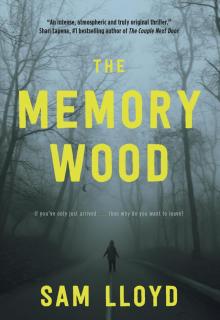
The memory wood, p.29
The Memory Wood, page 29


The witch, Annie, is on her knees by the far wall, loading logs into the wood stove. Watching her, Elissa thinks of the old fairy tale: how Gretel shoved her captor into the oven and released Hansel from his cage. The comparison is so absurd she almost laughs, but there’s no breath in her lungs for that.
Knees cracking, Annie climbs to her feet. ‘This fucking wind,’ she mutters. ‘This fucking cold.’ Finally, her eyes meet Elissa’s. ‘You see him?’
‘Yes.’
Annie gestures to a footstool. When Elissa sits, the old woman grins. ‘Round here, you’re a lick of fresh air. You do as you’re told, and that’s good. I think you want to help us, don’t you? I think you want to do the right thing.’
Slowly, Elissa nods her head.
‘I’m pleased. Because we like you, girl. We want to invest in you.’ She leans closer. ‘What did he say? When you took him the food?’
‘He asked if I was real.’
Annie grunts. From a wall cupboard, she grabs a packet of pills, popping two from the plastic packaging. ‘Here,’ she says. ‘Take these. They’ll help with your arm.’
The witch watches her swallow them, before adding, ‘He visited you, didn’t he? Down in the cellar. Came there on the pretext of befriending you.’ She pauses and her face crinkles. ‘It’s OK, you don’t have to say anything. There’ll never be anything, ever in this life, that you can conceal from me.’
Elissa stiffens. The last time she heard those words they came from the ghoul. He’s watching her from across the room, smoke drifting from his nostrils.
‘Elijah didn’t want to be your friend,’ Annie says, lowering herself into a rickety chair. ‘He was just checking out the competition. He ever tell you that’s not his real name? Elijah was his little brother. I’m guessing he didn’t share what he did to the poor boy.’
Every time the witch speaks Elissa’s grasp on the situation feels like it’s collapsing. Facts she’d thought irrefutable suddenly seem in doubt.
‘We can’t stay here long,’ Annie says. ‘And we can’t leave you behind. I’d like to take you with us, but we don’t have room for two. It’s you or him.’
Hearing that, Elissa thinks of the promise she made when she first woke beneath the Memory Wood: to survive this horror, whatever the cost.
‘That boy,’ Annie continues. ‘He’s a survivor. He values his life above all else. He’ll do whatever it takes to keep it.’
‘So do I,’ Elissa whispers. ‘So will I.’
She means it, too. Right now, she can think of nothing she wouldn’t do to see her family again.
‘Those times he visited you, down in the cellar,’ the witch says. ‘He ever tell you about the others?’
‘He told me about Bryony.’
‘He tell you what happened to her? How she died?’
Elissa’s throat closes up. She shakes her head.
That boy. He’s a survivor. He values his life above all else. He’ll do whatever it takes to keep it.
‘Those pills will make you drowsy,’ Annie says, getting up. ‘If you stretch out on the floor, you might catch a few hours’ sleep. Later, I want you to take him another meal.’ Returning to the cupboard, she opens a drawer and removes a knife. The blade is six inches of sharp steel.
‘If I were you,’ she adds, her turquoise eyes glimmering, ‘I’d take this along. Because, believe me, if he gets the chance to improve his situation, he won’t hesitate.’
That tongue pops out, probing yellow teeth. ‘Like I said, we can only take one.’
KYLE
Later, Papa visits. He stands in the doorway for a bit, smoking his cigarette. When he steps inside and notices the overturned food bowl, his forehead creases.
‘It wasn’t me,’ I tell him. ‘I’m not being difficult. She dropped it.’
‘Huh,’ he replies. ‘What a bitch.’
‘It wasn’t on purpose.’
‘You don’t think?’
A silence grows between us. ‘She was real,’ I say. ‘I saw the flames and…I thought I’d killed her.’
‘You didn’t,’ Papa says. ‘Not yet.’
I raise my head fully. ‘Not yet?’
‘Annie’s in there right now, explaining how things are. She’s clever, that Elissa. Ruthless, too. Some of the things she’s been saying…’
He pauses, spits.
‘What things?’
‘Oh, stuff about you. Annie told her about Eli. About what you did.’
My blood crashes in my ears. ‘Papa—’
‘Save it.’ He drops his cigarette to the floor, grinding it out with his heel. ‘I probably shouldn’t even be here, warning you like this.’ Retrieving the tray and its contents, he steps out and shuts the door.
Back at the safe house, when I called Papa from Ben’s phone, I fooled myself into thinking that this would be easy, that Gretel was already dead, that I could slide back into my old life without a price.
She’s clever, that Elissa. Ruthless, too. Some of the things she’s been saying…
Tilting my head, I listen for any hint I might not be alone. Outside, wind saws at the grass. It’s impossible to tell if anyone’s close, so I’ll have to trust my instincts. They’re not always as bad as I make out.
I know I’m a liar. Often, to survive, I’ve had no choice. I realize how fickle Annie can be; returning without a back-up plan would’ve been stupid. And while my IQ might not be as high as Gretel’s, I’m certainly not dumb.
Putting my free hand behind me, I reach under my T-shirt. The carving knife is fixed against my spine with strips of Elastoplast. I stole it from the safe-house kitchen after phoning Papa.
It takes me a few minutes to release it, working the handle back and forth. I examine the steel, careful – as always – to avoid my reflection. Scooping some dirt from the floor, I rub it on to the blade, dulling the shine. It’s dark in the tool shed, but I can’t take any chances. As I work I think of Gretel, sitting in the warmth while I’m tethered out here like one of Noakes’s dogs.
She’s clever, that Elissa. Ruthless, too. Some of the things she’s been saying…
Placing the carving knife within reach, I prepare myself for what’s coming.
ELISSA
I
When she wakes, the witch is standing at the stove, stirring something in a pan. The ghoul is in his chair, smoking another roll-up. It’s a domestic scene from a horror movie, so surreal it’s almost comedic.
With effort, Elissa pulls herself up. Her right arm feels like it’s wrapped in barbed wire. Her fingers are so swollen they look like they’ll burst at the slightest pressure. Her back throbs. Her legs feel tingly and light.
She can’t even see as well as she could. Unless she concentrates, the ghoul and the witch morph into blurry-faced bodachs, exuding malevolence like toxic gas.
Her thoughts turn to Elijah, chained inside the shed. He lied to her about so many things; even, it seems, his real name. And when he had the chance to save her, he chose instead to let her rot.
That boy, he’s a survivor. He values his life above all else. He’ll do whatever it takes to keep it.
But just like she told the witch, she’s a survivor too. She’s reached the point where nothing, however barbaric, is off limits. Her strength might be failing, but her resolve remains strong. She recalls the knife the witch showed her, and the obvious implication. She’s only thirteen. She shouldn’t have to think about such things. But if she wants to be fourteen, fifteen, eighteen – if she wants to grow up, lead a useful life – then perhaps it’s the only way. Killing Elijah would be a cost she’d bear all her days. But here, now, it’s not an act from which she’d retreat. She has a duty – to her mum, to her grandparents, to herself – to survive this.
At the stove, Annie pours the contents of the saucepan into a bowl, which she places on a tray. Then she fetches the knife from the countertop. ‘Decision time,’ she says, facing Elissa.
What if I say no?
What if I refuse to go outside?
What if I lie down, close my eyes and pretend this isn’t happening?
All those thoughts and more flash through Elissa’s head. She opens her mouth to speak. Instead of protesting, she climbs unsteadily to her feet.
II
Outside, the wind is a living thing, beating the grass into submission. A few miles out to sea, an oil tanker carves a white wake, the only other evidence of humanity. Elissa watches it as she walks. If she dropped the tray and raised her good arm, would anybody see? Even if someone did, she’s just a girl waving at a distant ship. Impossible to deduce her true plight from that.
As she approaches the tool shed, awkwardly carrying Elijah’s meal, she feels curiously absent of emotion. If fearlessness is a side effect of Annie’s pills, perhaps she owes the witch some gratitude.
Her breathing is elevated; her heart is crashing in her chest. When she blinks, or turns her head too fast, the landscape stutters like an image inside a zoetrope. In her mouth, her teeth feel sharper than before. Her tongue passes over their ridges, releasing an effervescent rush of sensation.
Elissa halts outside the shed door. Before she can open it, she’ll need to put down the tray. Crouching on the grass, she feels a wet sting of pain beneath her dress, halfway along her right thigh. When she straightens, the feeling disappears, leaving nothing but a warm trickle down her leg. Abruptly, she remembers what’s hidden there. And with that mystery solved, she opens the door.
III
From darkness and shadow, details emerge. The bodach sits in the corner, tethered by her old chain.
It’s a shame, Elissa thinks, that not all bodachs are kept like this, tied up in the dark where they can’t do any harm. Then she remembers that the pale-faced shape watching her isn’t a bodach at all, but the one she calls Elijah. She remembers something else, too: that he stole that name from the brother he killed.
Her eyes flick around the floor, looking for a safe spot. But nowhere in here lies beyond the perimeter of that chain. Retrieving the tray from the grass, she gingerly crosses the threshold.
Elijah looks tired and dishevelled, but his eyes remain bright. Forget Hansel and Gretel; right now, Elissa feels like Red Riding Hood approaching the wolf. ‘I brought you some food,’ she says. ‘I’ll try not to drop it.’
‘Thanks,’ he croaks. Then, ‘Can you bring it closer?’
Elissa hesitates, trying to stabilize her vision.
‘What’s wrong?’ he asks. ‘What did they tell you?’
She shrugs, shakes her head.
Elijah glances at his manacle. His attention wanders to something at his side. ‘It’s funny,’ he says. ‘All this – everything that’s happening. In a way, it’s like the world’s most intense chess game.’
She knows what he means, but she can’t agree. ‘This isn’t a game, Elijah.’
‘I know that, silly.’
‘Elijah isn’t even your real name. Is it?’
‘I…’ His shoulders quake. ‘It was a way of remembering him.’
Carefully, Elissa sets down the tray. Again, she feels a tiny pinprick of pain.
That boy, he’s a survivor. He values his life above all else. He’ll do whatever it takes to keep it.
Sweat rolls into her eyes. She blinks it away. ‘You know, I never really figured out if I could trust you.’
‘I can’t blame you for that,’ he says. ‘I wouldn’t trust me either. But nothing I ever told you was untrue.’
She knows that’s a lie. It’s so obviously a lie she can hardly believe he said it. When he drags over the tray, she sits down a short distance away, spreading out the folds of her dress.
‘Are you OK?’ he asks as he eats. ‘You seem, I don’t know. A bit weird.’
‘They gave me something. For the pain. It’s made me a little…’ She raises her right arm, flexing and unflexing her swollen fingers. ‘Spaced.’
With her left hand, she reaches under her dress.
Elijah blinks, his eyes fixed on her face.
‘He’s not your papa, is he?’ Elissa says. ‘I thought he was, but he isn’t.’
‘I used to pretend he was. I pretended so well I ended up believing it. It’s funny how that happens, don’t you think? How you can make things come true if you think them hard enough.’
Elissa takes a shuddery breath. It feels like a butterfly is beating its wings inside her chest. Under her dress, her index finger touches the knife.
Elijah finishes eating. He carefully puts down his bowl.
‘They took you, didn’t they?’ she says. ‘When you were a boy. Took you and your brother. Just like they took me.’
Again, Elijah glances off to the side, as if he’s searching for something. Perhaps he’s avoiding a bad memory. ‘Yes.’
‘You told me something, right when we first met. It’s taken me until now to remember. “I’m only twelve years old,” you said. At the time, I was so scared by what was happening that I hardly even picked up on it.’ She pauses. ‘Is that how old you were when it happened?’
He swallows noisily. Then he moans, a sound like nothing Elissa has ever heard. In that moment, her mind clears of confusion and she recognizes Elijah for what he is – a victim, one who has shared her nightmare, but for a period lasting decades. Elissa can imagine the horrors through which he’s lived, but not the scale. Little wonder he fabricated such a complex fantasy. ‘There’s something I have to tell you,’ she says, lowering her voice. ‘Something they tried to make me do.’
Elijah stares at the far wall. He mutters something, too faint to hear. His shoulders begin to tremble.
‘I won’t do it,’ she tells him. ‘Not to you. You lied to me, back in the Memory Wood, but I lied to you too. The letter, the phone, destroying your chessboard. I’m sorry, Elijah. I’m sorry I did those things. I just wanted to get away. You understand that. Don’t you?’
‘I wanted to get away too,’ he whispers. ‘At least, I thought I did. Now…I don’t think I can. I don’t think I have a choice any more.’
‘You always have a choice.’
‘Not if I want to live.’
He lifts his head. Tears roll down his cheeks.
An artery pulses in his throat.
‘Elijah—’
Behind her, the wind catches the door and slams it, plunging the shed into darkness. Elissa freezes, Elijah’s expression burnt on to her retinas.
‘Queen’s Gambit,’ he hisses.
When he lunges forward, she doesn’t even have time to scream.
MAIRÉAD
She gets the call as journalists are filing out of the latest media briefing.
Beforehand, to emphasize the point that this remains an investigation into Elissa Mirzoyan’s disappearance, Mairéad placed a huge photograph of the girl on a pedestal beside the mic table. Even that didn’t focus the minds of the attendant press pack. All the questions were about Kyle Buchanan. And now, in what seems a quite extraordinary security lapse, he’s missing.
Admittedly, Kyle hadn’t been charged with any offence. Despite his vulnerability, the psychiatric team hadn’t applied for a Section 4, which could have detained him. Neither of his doctors believed he was a flight risk.
Working fast, Mairéad establishes the following facts; Kyle was definitely inside the house at 17.30 during shift rotation. According to Ryan Havers, the relieving officer, he went out to the garden at around 17.50.
That, in itself, wasn’t unusual. Nor was there any reason to chaperone him. If anything, Dr Beckett believed that short periods of solitude might be beneficial. At 18.05, Ryan checked outside. Finding the garden empty, he raised the alarm.
In the control room, Mairéad fields calls from her chief constable, her DCC and their opposite numbers in the West Mercia force. Already, the media know something’s up, even if they don’t know exactly what, and they’re pulling in every favour to find out. Should Mairéad pre-empt them? Release a statement, along with an updated photograph of Kyle?
Her phone buzzes. It’s Rita Ortiz.
‘Beckett told me what happened,’ the psychiatrist says. ‘I take it you haven’t found him.’
‘Not yet. And unless you’ve got something specific, I’m afraid I can’t talk.’
‘I’m sure it’s been done,’ Ortiz replies, ‘but I just wanted to ask: Did you check the officer’s phone? Kyle was playing on it a couple of hours before he went missing. I was worried he might see a news report, so I confiscated it. But maybe he called someone.’
‘Thank you,’ Mairéad says, and hangs up.
Two minutes later, Sergeant Ben Hollingsworth is roused from sleep. A check of his phone log confirms a single outbound call, made at 14.21, lasting ninety-six seconds. Mairéad speaks to the officer directly and learns that the call must have been made while Hollingsworth was making a snack. He falls over himself to apologize.
‘Don’t resign just yet,’ she tells him. ‘You might have given us our first decent lead.’
She doesn’t need a warrant to access phone-tower records – her team files an automated request to the provider. While they wait for the data to arrive Mairéad slips outside and phones Scott. When her husband answers, she can’t say anything, and it turns out she doesn’t have to. He knows, without her having to speak.
‘It’s OK,’ he says. ‘Love, it’s OK.’
Mairéad stays on the line, connected by a lot more than silence.
KYLE
I
Blood on my hands. Blood on the knife.
Gretel lies a short distance away, face down in the dirt. On her shoulders, I see my bloody handprints, but perhaps that’s just my imagination: with the door closed, it’s pretty dark.