The two loves of sophie.., p.1
The Two Loves of Sophie Strom, page 1


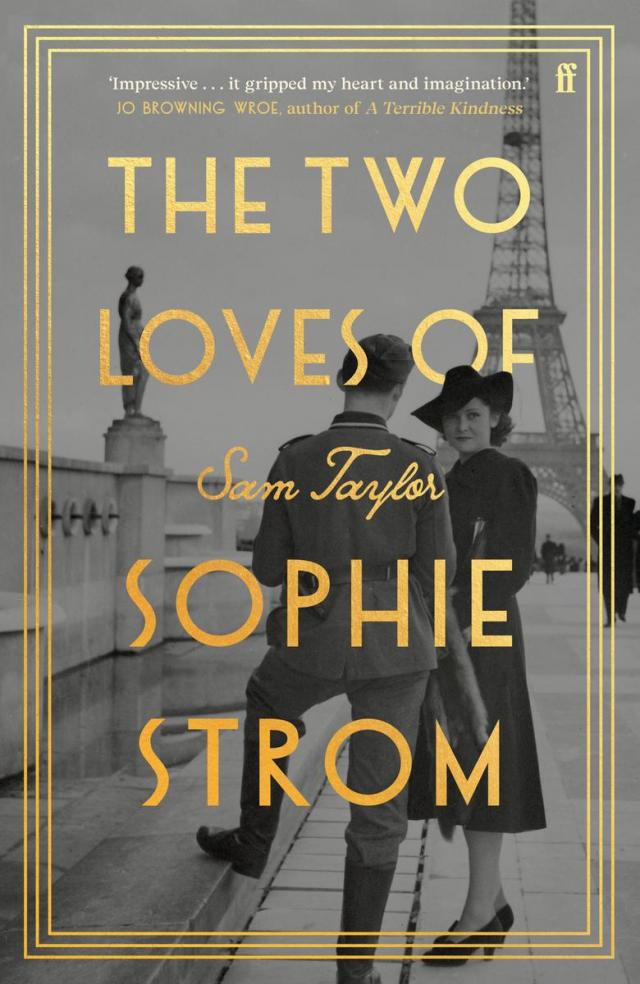
THE
TWO LOVES OF
SOPHIE STROM
Sam Taylor
for Kathy, at last
and in memory of my dad,
Keith Taylor (1945–2021)
The dreamer … is like two separate people closely linked together by some important thing in common.
freud
In each of us there is another whom we do not know.
jung
Contents
Title Page
Dedication
Epigraphs
Part One: Vienna
1933
March
April
September
October
1934
March
May
June
July
1934–1938
1938
January
1935–1938
March
April
May
Part Two: Paris
1940
June
September 1939
June 1940
July
November
December
1941
June
July
December
1942
April
June
July
Acknowledgements
About the Author
By the Same Author
Copyright
Part One
Vienna
1933
March
Afterwards, when he thought back to that evening, the last he would ever spend in the apartment on Prinzenstrasse, Max Spiegelman couldn’t be sure if what he remembered was real or a dream. Half of him felt certain it had truly happened; the other half suspected it was something his imagination had woven from the tangled threads of sadness, loss and desire.
It was late afternoon: sun disappearing behind rooftops, the first hint of chill in the air. Max and his best friend Josef Müller were walking home after a game of football in the Augarten. Max had to yell to make himself heard over the drone of traffic and the thump of the scuffed leather ball that Josef was bouncing against the concrete; he was reminiscing about the goal he’d scored to win the game that afternoon. Josef said nothing in reply, just stared glassy-eyed at the ball. He’d been strangely quiet all afternoon.
The sweat on the back of Max’s neck was starting to cool. On the other side of the street his father’s musical instruments shop glimmered red and gold. Max’s parents lived in the apartment above the shop, and Josef’s in the flat above theirs, so the two boys always walked home together. They waited for a tram to pass then ran across the road. A car horn honked, a man shouted. When they reached the opposite pavement, Max noticed a girl sitting at the Bösendorfer Imperial grand piano that dominated the shopfront. He couldn’t hear the music she was playing but by watching her hands he could tell it was a simple piece. He found himself staring at the tendons in her neck as they fluttered beneath her skin.
Max was thirteen years old. He’d always liked girls but in the past year he’d begun to be troubled, even haunted by them. The girl in the window had long dark hair tied in a ponytail, and a few stray hairs curled over her exposed nape. Her ears were pretty, Max thought. He felt as if he were breathing underwater. He stepped closer and saw his own reflection, half-obliterated by the colours of dusk, and that was when he noticed that Josef was no longer beside him. Max looked around but his friend had vanished. He wondered vaguely if Josef was angry with him. Then he looked back at the girl and realised he could hear the jaunty, repetitive, half-familiar melody coming faintly through the glass. What was that song?
He was close to remembering when his concentration was broken by the sound of raised voices. He turned and saw three boys, older than him, in matching beige shirts, running in his direction. He couldn’t tell if they were laughing or hostile, if they were shouting to one another or at him, but some instinct propelled him towards the arched passageway between SPIEGELMAN MUSIKINSTRUMENTE and SCHNEIDER APOTHEKE. He walked quickly through the cobbled shade and the sound of the boys’ yelling died away, along with the other city noises.
From the inner courtyard Max climbed the exterior iron staircase that led to his parents’ apartment. He walked inside, dropped his school bag on the floor, kicked off his shoes. The yellow walls of the living room glowed a flickering orange in the sunset. The air smelled sweet, almost edible. His mother must be baking a dessert. As he walked through the living room, he ran his hand along the smooth lid of her piano. The comforts of home.
Frau Spiegelman was in the kitchen, wearing an apron, muttering to herself as she looked at a recipe book. Flour on her hands, red circles on her cheeks. This was not Max’s favourite version of his mother; he preferred her when she was playing music or getting ready to go out because there was a serene precision to her gestures then. Cooking brought out her nervous side.
‘Mmm, apple strudel,’ Max said. ‘Is it a special occasion?’
She looked up at him distractedly. ‘Oh Max, there you are. Yes, we have guests tonight. I told you yesterday, remember? The Schattens will be coming, with—’
‘Ugh, not the Schattens!’
‘Don’t be rude,’ said his mother mechanically. ‘And they may be bringing Karl, so you’ll have to entertain him.’
In his mind’s eye Max saw Karl Schatten’s massive body and square head, his small cold eyes and sneering lips, those fists the size of cannonballs. He felt a lurch of dread.
‘Karl doesn’t like me.’
‘Have some compassion, Max! He was there when it happened. After everything he’s been through, of course he’s going to act out a little bit …’
It was true that Karl’s younger brother Oskar had been killed the year before, and that Karl had witnessed the accident, but Max had once heard Karl making a sick joke about his brother’s death, so he did not believe for a second that the school bully was grief-stricken. But there was no point trying to tell his mother that.
She was washing her hands now and her words came in little bursts from between tensed lips. ‘Anyway … he might not come … Apparently he has a Scout meeting on Wednesdays …’ She dried her hands on a tea towel and looked up at the clock on the wall. ‘Goodness, is that the time? Max, go downstairs and tell your father he needs to get changed! He should have closed the shop twenty minutes ago …’
There was a trapdoor in the floor of the kitchen. Max opened it and descended the wooden stairs to his father’s office. It was the usual mess – desk littered with piles of paperwork, instrument cases strewn across the floor – but Max liked it here. In many ways he preferred it to the shop. To Max, each room was like a version of Franz Spiegelman: the shop, with its thick carpet and elegantly displayed instruments, its smell of polish and money, was the respectable face that his father presented to the world; the office was the Papa of home, the unshaven man who played the trumpet in his pyjamas and winked reassuringly when Mama was angry.
There were two doors out of the office: the one to the left led to the courtyard outside, the other to the shop. Max opened the door to the right and saw Franz Spiegelman at the far end of the showroom, trying to look interested as he listened to a woman with very short hair speak rapidly in a foreign accent. Max tiptoed towards them, afraid to interrupt, and noticed the woman’s daughter leaning against the wall by the entrance, watching him with a half-smile. There was a book in her hand, but she wasn’t even pretending to read it. He stopped and stared at the carpet, blushing hotly. It was the same girl he’d seen earlier. The one with the pretty ears.
‘Maman,’ said the girl, interrupting the cascade of words.
‘Oui?’
‘I think it’s time to go. This gentleman has to close his shop.’ The girl spoke in faultless German. She was facing her mother now, so Max was able to observe her in profile: swanlike neck, bony nose, rosebud lips. ‘And his son is waiting to speak to him.’
Everyone turned to stare at Max: the girl looked amused, the woman surprised, his father embarrassed. ‘Max? What are you doing here?’
Max had to cough and clear his throat before he could speak. ‘Mama says you have to come and get ready. For tonight.’
His father stared at him blankly. He must have forgotten about the dinner party. To underline the urgency of the situation Max surreptitiously made a shape with his right hand: thumb and index finger a few inches apart, the gap steadily closing. It meant: Mama’s getting upset. In the periphery of his vision he was aware of the girl watching him. His father understood and quickly made his excuses as he ushered them towards the door: ‘Ah! Sorry, ladies, duty calls. But it was delightful to speak with you both …’ The woman asked Max’s father if he knew of a good music school in the city, and while he answered her the girl turned to face Max. They were almost exactly the same height. ‘What do you play?’ she asked in a friendly voice.
Max thought of football and frowned. ‘What do you mean?’
The girl smiled and he noticed that her front teeth were slightly crooked. She gestured at the shop behind him and said: ‘You don’t play an instrument?’
‘Oh,’ said Max, feeling stupid. ‘Yes. The violin. And you?’
‘She plays the piano, Max,’ his father said gently, and it was only then that Max realised the adults had stopped talking and the two of them were watching Max and the girl, waiting for them to finish their conversation. ‘That’s why they were looking at the Bösendorfer.’
Max blushed. ‘Oh yes. Of course.’
‘Perhaps we could play a duet together sometime?’ the girl said to Max, gripping her book tight to her chest. She looked straight in his eyes as she said this and he had to remind himself to keep breathing. Her eyes were grey and yet simultaneously somehow multicoloured, like a rainbow seen through mist.
‘Yes,’ said Max, struggling to think of a way to convey the full extent of his enthusiasm for this idea. ‘Yes … okay.’
‘Come tomorrow if you like,’ his father said graciously to the girl’s mother. ‘These two can practise while we try to find something to suit your budget.’
Max felt dizzy from looking in the girl’s eyes, so he glanced down at the cover of the book she was holding. Goethe’s Faust. Max felt a little intimidated. The woman must have said something that Max didn’t hear, because his father was now telling her the shop’s opening hours. ‘Drop by whenever you like.’ Herr Spiegelman looked distractedly at his watch. ‘But I’m afraid I really do need to—’
‘Yes, of course,’ the woman said, hurrying outside and pulling her daughter by the arm. As his father locked the glass door, the girl turned around and waved at Max. He waved back.
‘Sorry about that, Max,’ his father said, winding the handle that lowered the metal shutters. ‘She just wouldn’t stop talking … Ugh, what is wrong with this thing?’
The shutter mechanism had jammed. Mama’s voice called, shrill and panicky, from above. Father and son exchanged a glance. ‘Never mind, I’ll deal with this later.’ They walked to the office and began climbing the stairs to the kitchen. ‘So … guests?’
‘The Schattens,’ said Max. ‘Arriving at seven.’
‘Ah, the Schattens. They’re not bringing that brute of a son with them, are they?’
‘They might be. Frau Schatten’s supposed to call.’
‘Oh dear. Well, my fingers are crossed for you, Max.’
‘Who were they, Papa?’ Max asked as he followed his father through the open trapdoor.
His father turned, puzzled. ‘Who were who?’
‘That woman with the foreign accent. And the girl.’
‘Oh, she’s some artist, apparently. French. Just moved to Vienna. She was looking for a piano for her daughter, so I let her play the Bösendorfer. But as soon as I mentioned the price …’ Franz Spiegelman closed the trapdoor and smiled knowingly at Max. ‘You seemed very taken with—’
Just then, Max’s mother appeared in the kitchen. The circles on her cheeks were larger and redder than before, and she started to chide her husband for his tardiness. Franz stroked her arms and looked into her eyes. ‘Don’t worry, Liebchen, everything will be fine. I’m going to get changed now.’ He kissed her on the lips and went upstairs, and just for a moment Ana Spiegelman looked calm.
Then she noticed her son standing beside her. ‘Max, what are you doing? Get washed and changed! Karl isn’t coming, but it’s already so late. At this rate you’ll still be eating your supper when they arrive, and I can’t have you looking like that in front of our guests.’
An hour later the rabbit stew was simmering and Max was tuning his violin by the living-room window, gazing out at the street below. He had eaten his supper alone as the sky darkened to violet. Now the streetlights were shining on Prinzenstrasse and inside the apartment the lamps had been lit, casting parts of the living room into evening gloom. Often this time of day would make Max feel melancholy, but today he was still bathed in the afterglow of euphoria: that girl had practically asked him out! Well, not out, but she had wanted to see him again. And she was pretty. Intelligent too, he could tell. Only then did it occur to him that he’d forgotten to ask her name. Oh well, he could ask the next time he saw her …
Franz Spiegelman came downstairs in a crisp white shirt. Before adjusting his tie in the mirror at the foot of the stairs, he winked at Max and made a movement with his right hand as if stroking an invisible cat. All is well, thought Max. He began playing ‘Ode to Joy’.
Ana Spiegelman appeared on the stairs a few minutes later. Max stopped playing and turned to look. ‘Will I do?’ she asked her husband shyly.
She was wearing a white dress with large pink flowers on it, high heels, earrings … What else had changed? One by one, Max noted the subtle differences. Her hair was down, falling in waves over her shoulders, softening her face. Then there was lipstick, eyeliner, a hint of powder, thickened lashes. She was wearing perfume too, a scent Max associated with nocturnal adult pleasures: forbidden, mysterious. Franz went over and whispered something in her ear. He kissed her neck and she smiled. Max looked away. He used to be happy when his parents hugged and kissed because the air was so much lighter than when they argued, but now his chest tensed. An image of the girl leaning against the wall in the shop flashed into his mind and it was a relief when the doorbell rang.
Herr and Frau Schatten came inside, along with a gust of cold air. Max was glad that Karl wasn’t with them, but he still felt awkward. Their younger son Oskar had died the previous summer. He’d been run over by a car on Prinzenstrasse and Max’s mother had been the first to console Frau Schatten. The Schattens lived just around the corner on Trauergasse, so Ana and Katharina had become friends despite having nothing in common.
The four adults exchanged greetings and a silence descended. Herr Schatten was a watchmaker but he looked more like a funeral director: a tall, sombre man whose face appeared to have been carved from wood. He stood close to the door with his hat on and nodded at Max as if they were passengers on the same tram. But Frau Schatten, who was short and round and alarmingly loud, spotted Max and ran over to him like a goose after bread. ‘Max! Little Max!’ she exclaimed, pressing him to her ample bosom. ‘Oh, but I shouldn’t call you that anymore because you’ve grown.’ She held him at arm’s length. ‘You must be … fourteen now, is that right? Thirteen? Ah yes, you were in the year below poor Oskar, weren’t you? You look like him, actually. You have the same eyes. Such kind eyes …’ Max froze with panic as Frau Schatten’s own eyes suddenly filled with tears. For a moment she looked like an opera singer about to launch into a tragic aria, then she dabbed at her face with a handkerchief while the others crowded around sympathetically. ‘Yes, yes, I’m fine, sorry, I know it’s embarrassing when this happens.’ Max made a hand signal to his father: What should I do? Franz made a flicking gesture with his little finger and Max escaped up the staircase.
Around nine his parents came to his room to say goodnight. Papa smelled of wine and told Max he had no idea how lucky he was not to have to listen to Katharina Schatten for hours on end. He gave his son a brisk hug, then went back downstairs to entertain the guests. Mama knelt beside Max’s bed and stroked his hair. Her eyes were mistier than before. She gave a wobbly smile, then hugged him. Max got a mouthful of hair and had to turn his face to the side so he could breathe. She was gripping him much more tightly than she normally did and he could feel strange spasms in the muscles of her back. ‘Mama?’ Max whispered after a minute or so. ‘Are you all right?’
She released him and sat back, smiling, eyes glistening. ‘I’m fine,’ she said, in a too-bright voice. She turned away for a few seconds and Max saw her take a handkerchief from her sleeve. What was it with all these weeping women tonight? After a few seconds she turned back to him and said: ‘I think it was just—’ Her voice caught. ‘It was seeing Katharina get so upset … about Oskar.’ She swallowed and there was a long silence. ‘I know I get annoyed with you sometimes, Max, but—’
‘I know,’ he said, trying to pacify the storm of emotion he could sense brewing behind her eyes.
‘Ich-liebe-dich.’ She said it very quickly, the words bursting from her mouth with the involuntary force of a sneeze, then screwed up her face as if she was in pain. ‘Very much. You won’t ever forget that, will you?’
‘No, Mama.’
It was strange: she sounded as if she knew, as if she were saying goodbye to him. Or was that only how he remembered it afterwards?
There was a brief silence, punctuated by the sound of Frau Schatten’s staccato laughter from downstairs. His mother sighed. ‘Don’t worry, I’ll ask them to keep the noise down. Although it shouldn’t be so bad with the door closed.’