

Kicking the can, p.1
Kicking the Can, page 1
part #1 of Chris Drummond Series


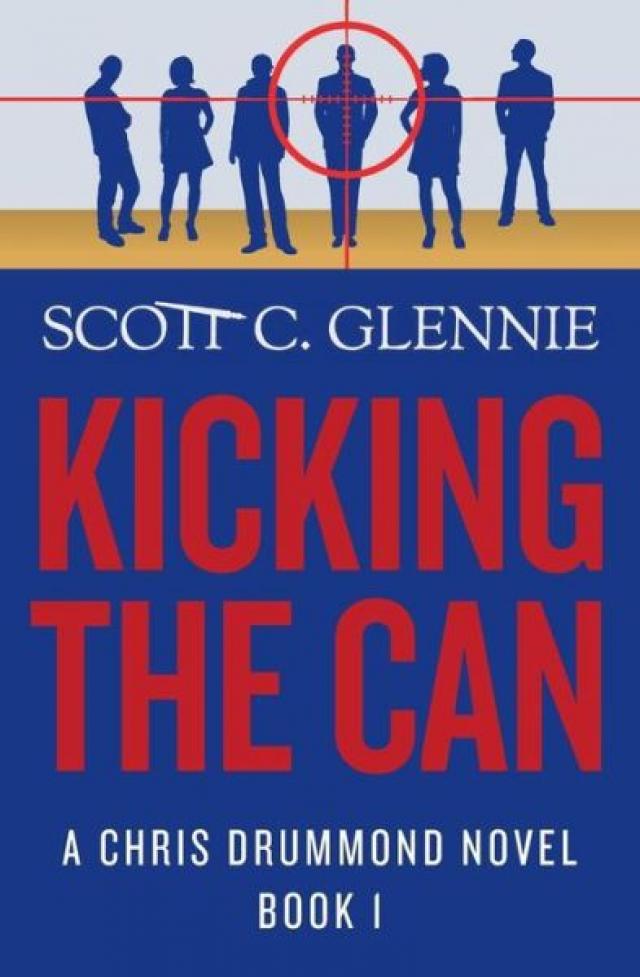
KICKING THE CAN
A Chris Drummond Novel
Book 1
by
Scott C. Glennie
Copyright © 2013 Scott C. Glennie
All rights reserved.
ISBN: 1492815071
ISBN-13: 9781492815075
Library of Congress Control Number: 2013917568
CreateSpace Independent Publishing Platform
North Charleston, South Carolina
CONTENTS
PROLOGUE
THE CAN
CHAPTER 1
CHAPTER 2
CHAPTER 3
CHAPTER 4
CHAPTER 5
CHAPTER 6
CHAPTER 7
CHAPTER 8
CHAPTER 9
CHAPTER 10
CHAPTER 11
CHAPTER 12
CHAPTER 13
CHAPTER 14
CHAPTER 15
CHAPTER 16
CHAPTER 17
CHAPTER 18
THE CALL
CHAPTER 19
CHAPTER 20
CHAPTER 21
CHAPTER 22
CHAPTER 23
CHAPTER 24
CHAPTER 25
CHAPTER 26
DRUMMOND’S TEAM MEMBERS (MONTHS AND YEARS EARLIER)
CHAPTER 27
CHAPTER 28
CHAPTER 29
CHAPTER 30
CHAPTER 31
CHAPTER 32
TEAM BUILDING
CHAPTER 33
CHAPTER 34
CHAPTER 35
CHAPTER 36
CHAPTER 37
CHAPTER 38
CHAPTER 39
CHAPTER 40
CHAPTER 41
CHAPTER 42
THE WHITE PAPER
CHAPTER 43
CHAPTER 44
CHAPTER 45
CHAPTER 46
CHAPTER 47
CHAPTER 48
CHAPTER 49
CHAPTER 50
CHAPTER 51
CHAPTER 52
CHAPTER 53
CHAPTER 54
CHAPTER 55
CHAPTER 56
CHAPTER 57
CHAPTER 58
CHAPTER 59
CHAPTER 60
CHAPTER 61
CHAPTER 62
CHAPTER 63
CHAPTER 64
CHAPTER 65
CHAPTER 66
CHAPTER 67
CHAPTER 68
CHAPTER 69
THE STAKES
CHAPTER 70
CHAPTER 71
CHAPTER 72
CHAPTER 73
CHAPTER 74
CHAPTER 75
CHAPTER 76
CHAPTER 77
CHAPTER 78
CHAPTER 79
CHAPTER 80
CHAPTER 81
CHAPTER 82
CHAPTER 83
CHAPTER 84
CHAPTER 85
CHAPTER 86
THE INCURSION
CHAPTER 87
CHAPTER 88
CHAPTER 89
CHAPTER 90
CHAPTER 91
CHAPTER 92
CHAPTER 93
CHAPTER 94
CHAPTER 95
CHAPTER 96
CHAPTER 97
CHAPTER 98
CHAPTER 99
CHAPTER 100
CHAPTER 101
CHAPTER 102
CHAPTER 103
CHAPTER 104
CHAPTER 105
THE DECISION
CHAPTER 106
CHAPTER 107
CHAPTER 108
CHAPTER 109
CHAPTER 110
CHAPTER 111
CHAPTER 112
CHAPTER 113
CHAPTER 114
CHAPTER 115
CHAPTER 116
CHAPTER 117
END OF BOOK ONE
CAST OF CHARACTERS
A NOTE FROM THE AUTHOR
PROLOGUE
Max Rawlings inhaled—one, two, three sniffs, through the nose, without exhaling—topping off his lungs, satisfying his body’s craving for more oxygen. Pulling in his stomach muscles, compressing his diaphragm, he squeezed out the air. Breathing exercises had been part of training. It was November 26, and traffic was thick crawling along Eighth Avenue toward the New York Times Building. He depressed the clutch and revved the engine, spiking the tachometer of his motorcycle above 5,000 rpm. The machine’s responsiveness steadied his nerves. Adrenaline washed through his body. He’d be a hero soon enough, an American waging jihad for democracy, not Allah. He relished the exhilaration as much as the financial payoff—a suitcase of “dead presidents.” It had taken fifteen city blocks to maneuver his motorcycle, now two car lengths behind the target. The traffic slowed, and stopped, as it reached the traffic signal at Fortieth Street.
He turned into the left lane to come alongside the yellow taxi cab. Lining up with the passenger in the rear seat, he stopped. Placing his boots on wet pavement, he stood, flexing his thigh muscles to balance the motorcycle. He removed his right hand from the grip and tucked it into his jacket pocket, the lining cut away. He found the familiar stock of a MAC-10 fully automatic pistol, known on the street as “spray and pray,” secured around his neck and shoulder by a nylon lanyard and duct tape.
With his left hand, he unzipped his coat in one swift motion, a technique rehearsed hundreds of times. Rotating his right arm outward, pivoting on the metal gun stock locked against his armpit, he cleared his coat with the machine pistol. He leaned into the car, cocking his right wrist, preparing for the ferocity of the weapon. In an eight-inch sweeping motion—left to right—he sprayed the yellow coffin. The body of the journalist, held in place by a shoulder harness, was ripped to pieces in a barrage of lead. The driver slumped against the steering wheel—horn blaring—chunks of gray matter littered the front passenger seat.
Rawlings sped off, running the red light. In fifteen seconds, he had darted through three blocks of traffic without pursuit.
THE CAN
1
Chris Drummond turned off the engine and set the emergency brake. He heard the familiar thrump-thrump, thrump-thrump as the remaining cars descended the steel ramp boarding the ferry. Drummond watched as the attendant secured the car barrier at the front of the vessel. The embarkation announcement pealed on the PA. The vibration and whine of diesel engines intensified. Soon a river would flow out of The Wenatchee as she made her thirty-five-minute commute to Bainbridge Island.
Sarah Drummond coughed. Drummond could see his daughter’s reflection in the rearview mirror—wan and frail—unlike the vitality of her classmates at Western.
“Honey, do you need a tissue?” Barbara Drummond asked.
“I have one in my purse. I’m going topside for the view.”
“Do you need me to walk you?”
“No, I’m fine, Mom.” She unbuckled her seat belt and opened the car door, cautious to avoid banging it against the vehicle wedged next to them. Though she had difficulty traveling even short distances from her parents’ home, though she was dependent upon a nebulizer to stabilize her breathing, nevertheless, she craved independence. Other women had designer handbags. She breathed designer air.
“Dinner at a nice restaurant was supposed to be a celebration,” Drummond said, when the door closed.
“I’m sorry your oral defense didn’t go well. I know how hard you worked on your thesis. You could have canceled. We would have understood.”
“Professor Koontz is blind. She believes the United States should adopt a government controlled, Canadian-style health care system. I knew she would abhor the hybrid model I proposed for health care reforms, even though it builds on Obamacare, legislation she rigorously supported. Besides, her dislike for bean counters is legendary. Do you know what her opening statement to me was?”
Barbara shrugged.
“You can always pick a consultant from the lineup…cufflinks. I bet your medical clients love that haircut—rock star turned IBMer, gorging on taxpayer entitlements. I’m a criminal because I wear cufflinks and work as a consultant.”
Barbara smirked.
“It’s not funny. I wanted the three of us to have dinner as a family. We don’t get many opportunities to be together…It’s just, there wasn’t much enthusiasm. You and Sarah seemed subdued. I thought it was just the wine you two had before dinner.”
“I don’t need to be lectured, not tonight. Since the emotional state of our family is not obvious to you, let me fill in the blanks. It broke Sarah’s heart to withdraw from Western. She’s been on IV antibiotics twice in seven weeks. She’s taking eleven pills a day, plus her other therapies. She realizes she can no longer be independent. When they advised her to get on the UNOS list, it hit home. Her dreams are gone, and she’s clinically depressed.”
“Many patients her age do well after lung transplant surgery,” Drummond said. “The surgical outcomes are improving each year. Her life expectancy should…well, you know, she still has time.”
“Except UNOS denied her two weeks ago.”
Drummond felt his anger flash.
“Why didn’t you tell me?”
“You were wrapped up in your thesis defense. We wanted to wait.”
“How can I trust you when you keep things from me? You should have told me.”
Barbara ignored his statement.
“Why didn’t she qualify? She met the clinical criteria.”
“Because her blood wo
“Is that true? Did you know?” Drummond searched Barbara’s face for honesty.
“I suspected…but I didn’t know it would affect eligibility. It’s a quality of life issue. Coping with her health status has not been easy. Try living with the realization a complete life is reaching age thirty, if you’re lucky. It’s a hell of a lot for a twenty-one-year-old to deal with. I’ve been praying you would realize we need you at home, now more than ever. Sarah could be gone tomorrow. We should be thankful for each day she’s alive.”
2
House Speaker Hank Bennett had been deliberate making his ambition for the presidency known. At five feet eight and 220 pounds, he was anything but presidential. What he lacked in physical attributes and charisma he made up for in cunning and simulation. A chameleon, he could discuss Shakespeare with the prime minister of England one minute and shout four-letter guttural words with brutes the next. When he disclosed he was a closeted gay nine years earlier, many of his congressional colleagues thought it would ruin his political career. He had been brash, photographed with his partner, a film director fifteen years his junior. Instead, Bennett rode the tidal wave of states legislating rights for gays. With the populace embracing same-sex marriage, it was conceivable a gay could be elected president.
“Congrats on the appointment,” Bennett said as he pumped the hand of Tom Haines. “How does it feel to chair the most influential committee shaping future policy in this country?”
Rhetorical question notwithstanding, Bennett knew Haines reveled in hearing his name ascribed to one of Capitol Hill’s power positions, having jurisdiction over taxation and revenue-raising measures, Social Security, and Medicare. The office in the Capitol Building was just icing on the cake.
“And I believe congratulations are in order for you, Mr. Speaker,” Haines said. “Your gamble to hold a preemptive press conference to disclose the former president’s Special Report of our nation’s curious finances paid dividends.”
“I deal in certainty. It was critical we distance ourselves from Jackson. A lock for a second term—that son of a bitch is a loser. Jackson mismanaged the audit trail between himself, appropriations, and his illegal securities trading. He was sloppy and got caught. I won’t make that mistake.”
Bennett took off his glasses and held them to the light. He licked the lenses and rubbed the saliva off onto his shirttail, which had worked its way out of his trousers.
“It’s never too early to discredit President Cannon and his Cabinet,” Bennett said. “His dad was incompetent, lost control of the family business. Cannon had to start from scratch. He worked as an executive at Wyatt Hamblin Pharmaceutical Company for twelve years out of MBA school to become senior vice president of North American Operations. It should be tractable to brand him a money-grubber in Big Pharma’s back pocket. Let’s move on that campaign. Cannon’s the third youngest president. The homophobe thinks he’s Ronald Reagan. We can spin it to our advantage—Reagan was eldest—we pound on his callowness, contrast it with Reagan’s experience.”
“What do we know about his Treasury secretary?”
“He’s a banker…took leave of absence as CEO of a privately held regional bank in the Northeast to serve. The guy’s an effing genius…smart enough not to engage in speculative real estate. He’s pretty damn solid. We have three PIs on his case, but so far he’s clean,” Haines said.
3
President Cannon sat behind an old cabinet table in the Treaty Room, his elbows resting on his knees, peering over his briefing material for the next day. He looked up.
“When sworn in, I understood the power and responsibility bestowed on the commander in chief—but my presidency will not be defined by the war on terrorism. The gravest threat we face today is economic implosion of our own doing.”
They were calling him a young Ronald Reagan—dark hair parted on the right side, widow’s peak—who often quoted the former actor and president. Cannon’s beliefs didn’t fit neatly into the two-party system. He ran for office on the simple promise of sustainable government. Like President Clinton, he was prepared to stake his reputation on getting a balanced budget through Congress.
“If my administration can’t arrest our government’s deficit spending and runaway sovereign debt, it’s a fiscal time bomb.” President Cannon paused, choosing his words. “I’ll be responsible for putting three hundred million citizens in harm’s way. The destructive force of a global economic meltdown induced by the bankruptcy of the United States is unimaginable.”
“It’s sad commentary when our elected officials can’t discern between serving country and self. Congress can only kick the can down the road for so long,” Treasury Secretary John Sebastian replied. His candor came easily. The two had been best friends since they were frosh at Harvard.
“We both knew waging war on fiscal insanity was our destiny. In order to win, we’ll need to make austerity an obsession for every citizen,” Sebastian said.
“I just finished rereading Reagan’s memoirs. Nobody else saw it then, but Reagan understood his primary armamentarium for fighting the Cold War was economic warfare. Our plight is the same—we must defuse the sovereign debt bomb before it creates an economic holocaust.”
“Time is scarce,” Sebastian said. “Bennett fired the first salvo.”
“Do you think he committed political suicide releasing the Special Report?”
“A calculated move. By releasing the Report, Bennett can pin the blame on Jackson’s Fed and the director of OMB. It compartmentalizes the political fallout and creates a context for him to introduce his legislation.” Sebastian turned to look out the window beyond the Truman Balcony.
“After I read the Special Report, I had a hard time pushing bankruptcy out of my mind—the idea of it occurring on my watch.”
“Andy, we’ve been friends a long time. I’ve never known you to run from a fight. This country has serious problems, but I believe you’re the right man to lead. There’s a reason why you were elected president.”
“Those are kind words, but you and I both know I wouldn’t be president today if Jackson hadn’t been indicted. He was six points up on us before the Times broke the story.”
“Doesn’t change the fact voters had to mark their ballots. Do you think I would’ve accepted a Cabinet post if I had doubts about your leadership abilities?”
Cannon managed a halfhearted smile.
“I’ve been questioning my motivations. Did I run for president to serve this country or to serve my ego?”
“You can bet Congress wouldn’t answer that question, even off the record. If the walls could talk…All presidents have had doubts. President Truman referred to the White House as the ‘Big White Jail.’ It’s why many sitting presidents become avid readers of presidential biographies. Facts and circumstances change, but the principles to govern this great nation by have not. Mr. President, history is a fertile ground for reassurance and companionship during times of doubt.”
“Thank you. Those are insightful words—your wisdom never ceases to amaze me.”
“You’re not hearing Lincoln’s footsteps or knocks at the door are you?” Sebastian asked, stepping away from the window to pat his compatriot on the shoulder.
“Not so far.”
Cannon grinned.
4
Chris Drummond stepped into the chilled air, slamming the car door behind him. He found his daughter on the sun deck looking back toward the Seattle skyline. Sarah was standing underneath an electric heater; the glow from the elements made her brown coat appear orange. Her arms were wrapped around her body, her coat collar turned up. Drummond approached and stood next to her, staring at the city. The Space Needle lit up, red beacon flashing—lights from skyscrapers reflected off the water.
“The lights don’t seem bright tonight,” Sarah said as she scooted over two feet and snuggled into him, placing her right arm around his waist and pulling his left arm over her shoulder.
“Are you disappointed in me, Daddy?”
“No way…Why would you think that?”
“Because of my drinking. I assume Mom told you they disqualified me.”
“Why didn’t you talk to me? I thought you were coping. I’ve been proud of you.”
“I didn’t want to be a burden.”
“You’re not a burden.”
“Yes I am. Mom told me you were devastated when you found out I had CF. She told me neither of you could terminate a baby’s life. Do you wish I was never born…sometimes?”





