A winter war, p.27
A Winter War, page 27


Some of the Romans were stifling laughter – amused, perhaps, by what must have seemed a barbarian’s practice. But others were solemn, though they could not have understood what they had seen. They knew it for a warrior’s ritual. And when he was amongst them once more, Lucius rode to him and laid his hands on the horns of Kai’s saddle. Leaning forward, speaking softly, he said: ‘You have paid more than I have, I think, for this victory.’
‘It may be so,’ said Kai. And it frightened him, how empty the words sounded, the need in his voice that he heard when he spoke again. ‘You will keep your promise? Twenty-five years, and I shall see my daughter again?’
‘I will keep my promise,’ the Roman said.
‘You hold my life with that oath, Lucius.’
A little dip of the Roman’s shoulders, then, a weight settling upon him. ‘Live, Kai,’ he said. ‘We go from this place soon. A great journey for your people. There will be a place of honour for you at the end of that journey. I will do all that I can to make it so.’
Looking back across the plain, its tall grass dancing in the wind and the first wildflowers of spring a brilliant scattering blue, Kai said: ‘It is a beautiful land, is it not?’
‘It is.’
‘It will be worth those years, to see this place again.’
‘It will.’
But for all those fine words, he could only think of the omen he had felt when he left the winter encampment. The whisper of a god, telling him that he would die in the west.
And he said to himself, in a whisper of his own that was spoken not like a prayer but a prophecy: ‘Then I shall have to prove a god wrong.’
Historical Note
This is a work of fiction. Relatively little is known for certain about the Sarmatians, a primarily nomadic people with no written record of their own left behind and a minimal archaeological footprint. What we do know of them is pieced together from written Greek and Roman sources such as Strabo, Cassius Dio, Ovid, and Herodotus, as well as the archaeological finds that survive (mostly from grave sites). So what we have is limited in scope and unreliable in nature – frustrating for the historian, but exciting for the novelist (and, I hope, the reader).
We do know that there was a war with the Roman Empire in AD 175 or so, a battle upon the frozen Danube, and eventually a peace settlement which sent thousands of Sarmatian heavy cavalry to the north of Britain. Much more than that remains mysterious, but the Sarmatians are pleasingly connected to many myths, ranging from that of the Amazon warrior women to that of our own King Arthur.
If you’d like to read further, I recommend The Sarmatians (Tadeusz Sulimirski, 1970) and Sarmatians (Eszter Istvánovits and Valeria Kulcsár, 2017) as excellent summaries of the archaeological and written record, and The Tales of the Narts (John Colarusso and Tamirlan Salbiev, 2016), and From Scythia to Camelot (C. Scott Littleton and Linda Malcor, 2000) for more on the mythological links.
Acknowledgements
As always, enormous thanks are due to everyone who has contributed to the book.
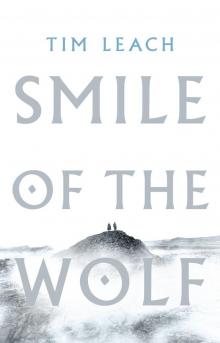
To Caroline Wood for her insightful guidance and storyteller’s instincts. To Nic Cheetham for his support and tremendous enthusiasm, and for setting me on the right path in the first place. To Wendy Toole for a careful copyedit, Mark Swan for the gorgeous cover, Clare Gordon for keeping everything on track, to Christian Duck, Lizz Burrell, Ben Prior, Avneet Bains, and Jade Gwilliam, and everyone else at Head of Zeus and Felicity Bryan for all they have done to help bring this book into the world.
To my colleagues at the Warwick Writing Programme for their wisdom, support, and good humour, and to my students for continuing to inspire me and to teach me the tricks of the trade (I hope that they occasionally feel they have learned something too).
To my parents, always, for everything.
To my friends, for at its heart this is a book about friendship. I suspect that those who are sceptical about the existence of the Amazon warriors have not met the climbing women of Sheffield – fierce, strong, and proud. This book is dedicated to one in particular, a very dear friend who has fought hard for me in the difficult times of my life. She was strong when I was not, brave when I was afraid. May I swallow your evil days, Ness – courage to the champion, and victory to her spear.
About the Author
TIM LEACH is a graduate of the Warwick Writing Programme, where he now teaches as an Assistant Professor. His first novel, The Last King of Lydia, was shortlisted for the Dylan Thomas Prize.
An Invitation from the Publisher
We hope you enjoyed this book. We are an independent publisher dedicated to discovering brilliant books, new authors and great storytelling. Please join us at www.headofzeus.com and become part of our community of book-lovers.
We will keep you up to date with our latest books, author blogs, special previews, tempting offers, chances to win signed editions and much more.
Get in touch: hello@headofzeus.com
www.headofzeus.com
@headofzeus
@HoZ_Books
Head of Zeus Books
Tim Leach, A Winter War