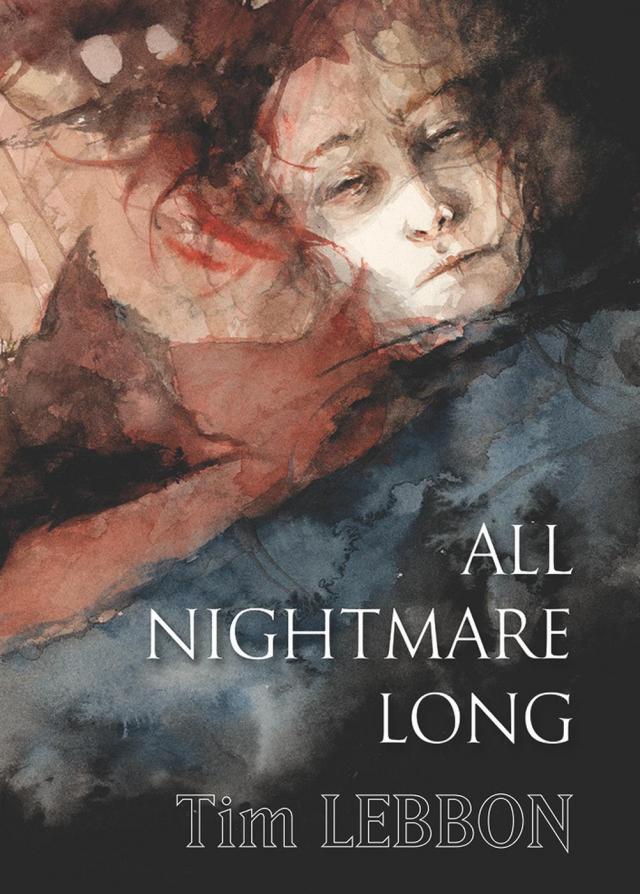
All nightmare long, p.14
All Nightmare Long, page 14


Trapped with myself, I was becoming a stranger.
I know now that I have no choice but to leave. They’re getting closer. If I lie down I hear their whispers, starting far along a wide, empty corridor and then drawing closer, louder. It’s only when I sit up that they dwindle away. I wonder what would happen if I didn’t sit up.
It’s dawn when I decide to leave. I stand inside the back door for a long while, peering through the side window and searching the landscape for shadows that are out of place. There are none that I can see, but even that disturbs me. It means that they’re hiding.
I close my eyes and press my hands to my ears. I wish I was the old me, I think. I wish I couldn’t see and hear more. I wish Margot had never been so clever, and Ray so cynically brilliant. In comparison I was merely their lab rat, and they’ve left me alone to suffer now that they’ve finished with me.
Now that they’re afraid of what they’ve done.
I wish like all the best lab rats, they’d put me down.
Opening my eyes, taking my hands from my ears, I see and hear them as soon as I open the door.
They can’t touch me, I think. They won’t hurt me. It is fair reasoning, because I am seeing and hearing things that are always there. The experiments have changed me, not my surroundings, giving me the ability to perceive realities that humans aren’t supposed to know. That does not mean that they will now hurt me. Maybe they’re pleased to be seen. Perhaps those whispers I hear are songs of joy.
I cross the gravelled area and approach the long driveway. In my determination to leave, my senses become unguarded, and the world opens up around me. Birdsong fills the air, and I hear the differing tones, the deeper meanings. A breeze rustles through the trees, carrying rumours from afar. Sunlight dapples the distant valley sides. Its journey is over, memories of deep space splashed like foam across a seashore. I see and hear new realities and despair at my inability to understand.
I am two hundred feet from the house and moving away. This might work, I think. If I find them again, perhaps they’ll see that their fear was misplaced.
I pass through the gate that borders the property and out onto moorland, following the rough lane up towards the road. That’s when the whispering begins.
A breeze first, then a more sibilant harshness, inside my head and beyond. My blood runs cold, my skin prickling with goosebumps, because I have never heard them sounding so angry. Yet I have done nothing wrong. If they dislike my new abilities, then let them come and tell me why. I cannot remain alone in that house forever.
I walk on, pressing my hands over my ears. That only serves to trap the voices inside. Their strange words echo around my mind, leaving a corrupt trace of themselves wherever they touch.
I see the first of the shadows as I round a corner in the road. It hunkers down in a field behind a hedge, defying the sun, pulsing like a living thing yet surely not. Surely.
I freeze, shifting from foot to foot as I try to make it out. It is difficult to discern properly. Whichever way I look, however much I shield my eyes, the shadow seeks to dazzle me with refracted sunlight. I move closer, and suddenly the whispering in my head changes from angry to mournful. Still tinged with darkness. Still alien.
I see Ray’s body splayed on the ground beneath the shifting shadow. My breath is stolen from me. He’s on his back, eyes open as if staring at the thing above him.
It is wan and grey, and other colours of dark infinity I cannot understand. It is connected to Ray in a dozen places by long, flexing limbs. It seems to be dead as well, although I’m not sure these things comply with any distinction between alive and dead.
Fifty feet beyond it, another shape sits beneath an old oak tree. It is a similar shape and colour. I don’t want to see what lies beneath it, because I already know.
“No,” I say. “Oh, no. No.” My voice seems to stir the attention of other things more distant and still unseen, because the whispering gathers pace and volume. I’m driven back by the words, stumbling over my feet and sprawling in the lane. I scrabble backwards, keeping my eyes on the things I should not see as they pulse and whimper above the bodies of my two dead friends.
I turn and run back to the house, herded by screams and screeches, shoved by shadows when I dare to glance back. I realise with a terrible finality that these things do not want to be known.
And now, I’m the only one who still knows.
Back in the house with the doors shut and the curtains drawn, I stagger into the large living room and lean against the fireplace, head hung, tears spattering the old slate hearth.
Outside, they have gone quiet. They know they have me.
I look up into the big mirror and see movement, and for the briefest instant I think Ray and Margot have come back. Their deaths are a mistake, as is the experiment. I’ll get over it. With their help I’ll get better, and we’ll move on without ever revealing what we did here.
Then I see the thing standing close. I can feel it behind me, exerting a terrible gravity on my life and my soul as they surely do to every man, woman and child. Dark strings lead from around and within me, rising like quivering tentacles and meeting eventually in that monstrous puppeteer’s hands.
Though I close my eyes, I will always hear its dreadful, intimate voice.
STRANGE CURRENTS
Stephan didn’t think he could sleep, not when to close his eyes might mean death. But he was startled awake when two sea birds dropped into the boat, landing heavily, slumping to the fibreglass deck, displaying all the signs of exhaustion and on the verge of death themselves. He thought back to the dreams he’d had during the sleep he should have never let claim him. Dark dreams, where the sea rose up in vast towering shadows, and the hidden depths were crowded. His eyes hurt. His skin was rough and sore, as if burnt beneath alien eyes. Perhaps he hadn’t slept at all.
The two seagulls hobbled around the bow of the lifeboat. But their exhaustion was feigned, and when Stephan moved to catch them, they took flight. One of them flapped away across the waves and was soon lost to sight. The other circled a few times, cawcawing laughter or a warning. Then it followed its cousin, and Stephan thought, They must have come from land.
The realisation should have galvanised him. But he found it hard to move, to summon enthusiasm, even hope. Seven days ago the lifeboat’s entire encasing structure—support posts and rods, tarpaulin, fixing ropes—had been torn away when the craft capsized. It had been pure luck that Stephan’s foot had caught in a trailing cord, the twine twisting around his ankle while he’d been buffeted and spun in the raging water. When the boat righted itself again he had gone with it, tearing the muscles in his calf and injuring his knee, but saving his life. He’d been left draped over the boat’s side, staring down into the water at the dark, massive shape that seemed to fade away beneath him.
There had been no storm. Something had capsized the boat and caused the maelstrom, and he still thanked whatever luck had saved him that he had not been cast into the sea. The boat was tiny compared to what he had seen—
—A whale, that’s what it was, surfacing to breathe and finding him in the way, or perhaps simply curious—
—but he was smaller. Baling water with a plastic container he’d managed to save, he had kept the cord wrapped around his lower leg for another day before finally freeing himself.
Fifteen days exposed to the whims of the North Atlantic weather. Luckily it was summer, otherwise he would have frozen to death long before the impending starvation, dehydration and sunburn would take him. Yet though the winds in the daytime scorched his skin, night breezes blew in cutting and cold. Stephan’s will to survive was strong, but the reality of survival had been growing weaker.
Those birds came from somewhere.
Carefully, painfully, he knelt up and crawled the length of the boat. It was small, designed for a dozen people, and six inches of water swilled in the bottom. He’d stopped baling days ago. Most of the fixtures and fitting had been ripped away during the capsize, including his supply of drinking water, flares, and the small bag containing food he’d been clutching to his side. He often wondered where that bag was now. He thought it would probably float, as the knot he’d tied in the neck had been strong, the drawstring tight. The food was all in packets, not tins, and there was little in there to give enough weight to counteract the air caught in the bag.
Maybe it would float forever. Caught on the tides, nudged by the violent winds, his food bag would likely survive him, drifting across the North Atlantic past Greenland, Iceland, back towards Europe where most of its contents had originated. A ship might run it down and thrash it to pieces beneath its propellor. A sea creature might take it, swallowed whole and unnoticed by a whale or chewed apart by a shark.
Perhaps it would float out here until the world came to an end and humanity was no more. A lonely voyage lasting forever.
“Wake up, Stephan!” he shouted. Tried, at least. But his throat was dry and swollen, his lips split from sun and salt spray, and his cry consisted mostly of blood spat into the bottom of the boat, and a groan of pain.
One of the boat’s four paddles was still clipped to the side, the metal fastenings bent by the force of the coverings being ripped off. He’d tried to loosen it soon after the capsize, found the task difficult, and left it. Now he needed the paddle more than ever. To follow the birds. To find land.
Perhaps he might even survive.
“Don’t think about it,” he whispered, and the high and lonesome sound of the constantly moving sea tried to swallow his words.
His hands were cracked and swollen, but he plucked at the oar’s fastenings for an hour, until his fingernails were split and the tips bleeding. At last the paddle sprung free and he cried out in delight.
It was cold and heavy in his hands, but it felt like taking action.
The birds were long gone, but he had taken a bearing from the sun when they flew away. Allowing for the time since they had flown, he took another visual bearing, sat on one of the raised seats at the side of the boat, and started paddling.
After fifteen days every action hurt, every movement denied the stillness and supplication his body demanded of him. He had never been so hungry and thirsty, and several times over the past few days he’d thought he was going to die. Sitting there, leaning against one of the seats cast into the structure of the vessel, he’d felt darkness closing in.
Something always pulled him through. Sometimes it was his wife’s voice, sweet Mandy beseeching him to survive. Once it was a memory of building a bonfire with the man who had adopted him and become his father, a time from his childhood long-since forgotten until now. And once it was something he could not identify. A strange sensation, a feeling of need and craving that reminded him of dreams he used to have when he was sick. He could not adequately describe them then, though they had been terrifying and made him scream himself awake. And he could not explain that feeling now. Only that it had saved him.
It was as if someone or something else wanted him to survive, and once he had surfaced from the darkness, that someone or something drew back once again, observing rather than intruding.
He shook his head. Foolish thoughts. He’d run the gamut of emotions since the ship had gone down, but now that he was taking action he promised never to be tempted by death again. Life was too precious. That preciousness had brought him here, in his attempt to discover where he had come from, who his true parents had been. His adoptive father had told him nothing of them, had refused to even speak of family. Only that they had brought him across the sea, abandoned him, and returned to some strange place.
He slapped the paddle into the water and pulled, slap and pull, and though he could not tell whether he was moving, or even in which direction, it felt like he was doing something positive at last.
The seascape was vast and unforgiving, the great swell bringing the horizon near and then drawing it out again, as if teasing him. The steady breeze sprayed salt water across his face and exposed arms and hands, making his raw wounds worse and offering a tantalising taste of water that would only make him sick. Sometimes he thought he saw land across the heads of the swells, but the next sight would reveal it to be simply another wave in the distance. He heard the echoing hiss of the waves’ laughter as his hopes were dashed once again.
He pulled on the paddle. The boat was too big for him to move on his own, he knew that, it would have taken six people rowing to even hope to take charge of the vessel’s direction. But he had to try. Mandy’s voice convinced him of that. His father’s face seen through the haze of bonfire smoke, the spit of knots in wood, the rich, sweet smell of burning branches from the evergreens growing around his grandparents’ garden.
“The birds came from somewhere,” he said again and again as he paddled. The words formed a chant, a song that the waves and wind sang along with him.
Something passed beneath the boat.
Stephan felt a pull on the oar as if a sudden, violent current was attempting to tug it from his hand. He held on tight and hauled the oar back into the boat. The sense of something huge passing beneath him was powerful, and he feared he was about to capsize again. The boat seemed gripped in a strong wake, drawing it up the face of an oncoming wave and down into the trough beyond. Stephan was powerless, and he waited for the moment when the thing below would rise up, break surface, show him secrets that had been hidden since the moment the ship had sunk.
But nothing happened, and the casual swell of the sea guided the boat once more.
Nothing had gripped the boat. Just the strange currents swirling here, flows of warm and cold water starting as a splash at the equator and taking on energy beyond measure by the time they made it this far north. Such was the way with the sea. Most people thought it was a silent mass, still and calm but for the waves texturing its surface. In reality the sea was a living thing, clasping the fixed continents in its smooth embrace and curling, twisting, abrading them over eons too vast for the human mind to contemplate.
Stephan had just gained a glimpse at that vastness. Rather than feeling awed, he was only scared.
He picked up the paddle to follow the birds once more.
If a distress signal had been sent, it had not been acted upon quickly enough to save him. If the lifeboat had a homing beacon, it had either failed or been washed overboard. He had seen plane trails several times since the sinking, but they were high in the stratosphere, passenger jets taking people across the wide ocean upon which they could not imagine such a story being played out.
He could remember little from that awful night, only that he had found himself in the lifeboat, darkness pressing heavy all around and the sea roaring and convulsing in a violence that terrified him to the core. Sea sickness had crippled him, curling him in a ball beneath the boat’s flapping covering. Fear refused to let him go. It grasped him in its wet, salty grip, squeezing hard, forcing more puke when there was nothing left to bring up.
He was only a passenger out here.
“The birds came from somewhere!” he said again, but already he was doubting his knowledge. Were such birds native to the sea, or the land? Had he really read somewhere that seagulls were land based? Or could the species he had seen cruise above oceans for weeks on end, landing on boats or debris for a brief rest, sleeping on the wing?
He didn’t know for sure, and such uncertainty angered him. He was ignorant, thrown into an alien environment with no clue how to survive.
Yet survive he had, and his wife’s voice called him onward, and his father’s face glimpsed through smoke.
An hour later, with Stephan still paddling, a shadow passed beneath the boat.
This time he was sure there was something there. He snatched the oar back on board and the surface of the sea rose, smoothing out as if an unimaginable bulk forced water up from the depths below. The surge was gentle rather than violent, carrying the lifeboat forwards and easing the way.
Against all instincts, Stephan leaned over the side of the boat and looked down. He saw only water, the surface now so smooth that his reflection looked back up at him, broken by ripples from the boat. He could not see any deeper.
Heart hammering with fear and a keen excitement, he had to fight against the urge to lean out further and plunge his face beneath the surface.
The surge ended as quickly as it had begun, dropping the boat into another valley between swelling waves, and he picked up the oar again. Just as he scrambled onto the plastic seat once more, he glimpsed something across the tips of the waves.
Land?
He gasped and dug the paddle in, trying to drive the boat towards the faint shadow he had seen. He feared he was hallucinating again, and that next time the boat was picked out of a trough he’d see a bank of dark clouds low to the horizon. But after splashing for what felt like eternity the boat rose again, bow first, until he was resting atop a giant swell.
“Yes!” he shouted. It was definitely land, a wide band of hills and beach on the horizon, lit by the afternoon sun and speckled with breakers. He must have been even closer than he realised if he could see breakers!
Stephan started paddling again, harder than before. He ignored the pain from his damaged hands, gritting his teeth against the sting of split lips and sunburn, and he started to believe he was going in the right direction. He had to believe that. No other outcome would be fair.
Mandy had died when the ship went down. She had still been in their cabin, miserable from sea sickness, and Stephan had gone on deck to smoke a cigarette. A jarring thud, a series of dull, inexplicable impacts below the waterline, and he had been flung over the handrail and into the sea, swimming frantically as the boat quickly sank beneath the waves. The only survivor.
Maybe the cabin had remained watertight for a while. Long enough for her to really think about what was happening and believe him dead. He hoped not.