

Petra, p.1
Petra, page 1


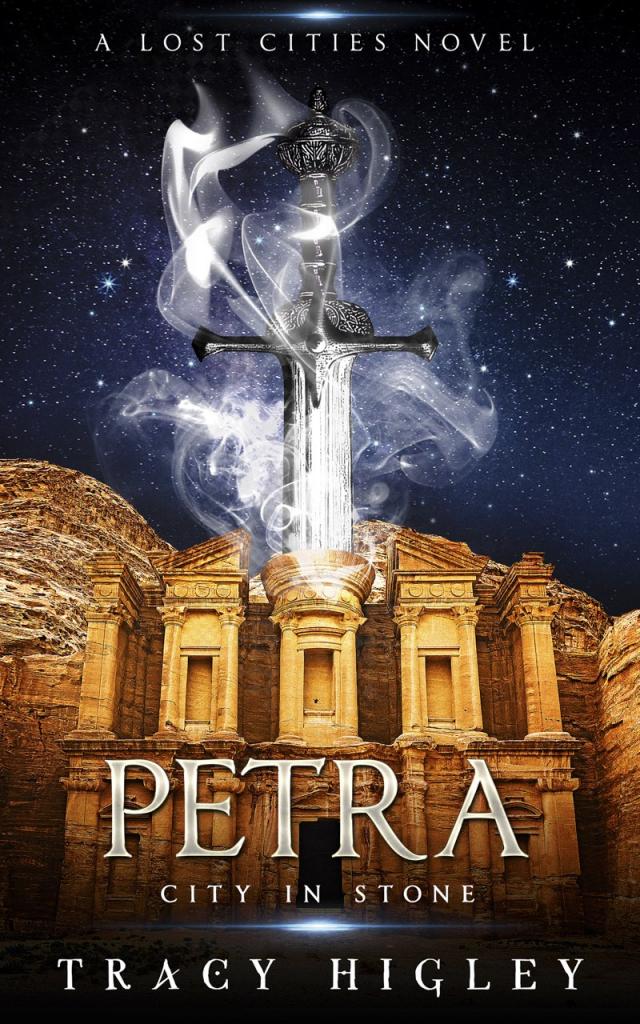
PETRA: CITY IN STONE
TRACY HIGLEY
STONEWATER BOOKS
Copyright © 2021 by Tracy Higley
All rights reserved.
No part of this book may be reproduced in any form or by any electronic or mechanical means, including information storage and retrieval systems, without written permission from the author, except for the use of brief quotations in a book review.
ISBN (paperback): 978-1-7370579-4-9
Cover Design by Alexander von Ness.
For permissions contact Tracy Higley.
www.TracyHigley.com
FREE NOVELLA
I’d love to give you a free novella!
A mage, a soldier, and a princess,
on an epic quest across the sands of Arabia.
Following a Star, in search of a King.
Get a FREE ebook when you join “The Caravan” – my affectionate name for those of you traveling through the pages of history and fiction with me.
You’ll also receive discounts on books, updates on new releases, and fun history tidbits along the way!
CLICK HERE TO GET YOUR FREE EBOOK.
CONTENTS
Word List
Chapter 1
Chapter 2
Chapter 3
Chapter 4
Chapter 5
Chapter 6
Chapter 7
Chapter 8
Chapter 9
Chapter 10
Chapter 11
Chapter 12
Chapter 13
Chapter 14
Chapter 15
Chapter 16
Chapter 17
Chapter 18
Chapter 19
Chapter 20
Chapter 21
Chapter 22
Chapter 23
Chapter 24
Chapter 25
Chapter 26
Chapter 27
Chapter 28
Chapter 29
Chapter 30
Chapter 31
Chapter 32
Chapter 33
Chapter 34
Chapter 35
Chapter 36
Chapter 37
Chapter 38
Chapter 39
Chapter 40
Chapter 41
Chapter 42
Chapter 43
Chapter 44
Chapter 45
Chapter 46
Chapter 47
Chapter 48
Chapter 49
Chapter 50
Chapter 51
FREE NOVELLA
Read this Next!
A Note for Readers
How to Help the Author
Book Extras
Books by Tracy Higley
WORD LIST
betyl—a sacred stone, often in the form of a block
Cardo Maximus—the main thoroughfare of a city
cavea—seating area in a Roman arena or amphitheatre
cella—inner chamber of a temple
contubernium—the smallest organized unit of soldiers in the Roman army
cunei—wedge-shaped sections that divided the amphitheatre vertically, separated by stairs
denarii—small silver coin in Roman currency, most common coin
gladius—short sword
mina—a unit of weight equal to sixty shekels, monetary unit
pilum—javelin
scanae—the scene building behind the stage
sestarii—small unit of money
shekel—a unit of weight equal to about half an ounce, monetary unit
tessera—stone tile worn around the neck and used as a ticket
triclinium—dining room containing a dining table with couches along three sides
velarium—type of awning stretched over the seating area
CHAPTER ONE
Rome, AD 106
The streets of Rome lay barren and empty, sucked dry by the colossal Flavian Amphitheatre that had swallowed seventy-five thousand Roman citizens in a single gulp, and would hold each one captive until they enjoyed the horrors Julian now raced to prevent.
More time. I need more time. Already the crowd inside the four-story rim of stone cheered for the first event.
Julian’s sandals smacked the black basalt road that led toward the amphitheatre. The blistering Roman sun pounded the moisture from his skin and left him panting. He had run most of the way, since an old servant in Vita’s house had pointed a gnarled finger toward the east, toward the Forum, toward the arena of death.
Eighty arches ringed the outside of the theatre on each of its first three stories. The bottom arches provided access to the public, and the second story’s niches held statues of the gods and emperors, who now looked down on Julian as he sprinted across the large travertine slabs that paved the arena’s edge.
He ran toward one of the four main entrances and fumbled for the tessera, the stone tile he wore around his neck. The designatores at the entrance would insist on examining it, to see the sector, row, and seat to which he was assigned.
Indeed, the usher at this entrance was full of his own importance and held a palm to Julian’s oncoming rush as though he could stop him with only the force of his arm.
“Too long in your bed this morning, eh?” His smug smile took in Julian’s hastily wrapped toga and sweat-dampened hair.
Julian thrust the tessera before the man’s gaze. “Here, here, look at it.”
Still the amused smile. The usher opened his mouth to speak again.
“Look at it!”
Daunted, the man let his gaze travel over the tile, then took a tiny breath and stepped back. His grin faded to a look of regret, and he bowed his head. As if that were not enough, he bowed at the waist and extended a hand to invite Julian to enter.
Julian did not wait for an apology. He pushed past the usher and under the vaulted entrance, then straight through the arena’s outer corridor and up a ramp that led to the cavea, the wedge-shaped sections of marble seats. This main entrance led directly to the central boxes reserved for the elite.
He exploded from the dimly lit ramp onto the terrace. The morning sun slashed across half the seats, the height of the amphitheatre leaving the other half in shade. The red canvas velarium, the awning used to shade the spectators, would be raised before it got much hotter, but for now, thousands of bleached togas on white marble blinded the eye and the smell of the masses assaulted the nose.
Julian crossed the terrace in two strides, slammed against the waist-high wall that separated him from the arena. A figure dashed at him from the shadows.
His mother’s hands were on his arms in an instant. “Julian, what are you doing?” Her words were as clipped and terror-filled as his every movement.
“They have Vita, Mother!”
She wrenched his body to face her. Julian stood nearly a cubit taller than his mother, but Ariella had retained all the strength of her youth, along with the beauty. “There is nothing that can be done, my son.”
He yanked his arms from her grasp. “Do not say that!” Julian searched the cavea behind him, full to overflowing with the purple-edged togas of senators. “Where is Father? Is he here?”
“Julian, think! You must think.” Her voice was urgent and low, and her clutching fingers again slowed Julian’s restlessness. “You will bring more harm—”
“I do not care!” He fought to harden his feelings into action. “I must end this.”
“You cannot, son.”
He turned flaming eyes on Ariella. “Do you not understand? I should be down in those cages.”
Ariella’s eyes misted. “I would not lose both my son and his betrothed on the same day.”
Betrothed. The word washed more guilt over Julian’s stricken soul.
A senator, one of his father’s friends, walked past and paused to hold out an arm in greeting to Julian. “Fine day for the games, is it not?”
Julian straightened at once, resuming the noble bearing trained into him since childhood, and returned the man’s grip. He nodded once but did not speak. The senator moved on, and Julian dropped his shoulders, ashamed he had not made a statement.
Ariella seemed to read his thoughts. Her dark gaze held his own. “It will take more than a day to change the Empire.”
Julian looked out over the yellow sand of the arena. “But this day, Mother, this day we must!” He slapped a hand against the top of the marble wall. “I am going to find Father.”
“Julian, you know he can do nothing—”
He spun on her. “No. I am tired of both of you, always moving about your circles quietly, behind closed doors, the truth spoken only in whispers.” He lifted his own voice as an example. “There is a time to speak!”
Ariella’s nostrils flared but she said nothing. Turning from her, Julian stalked to the nearest break in the seating and ascended the tiers alongside his father’s section. Here the nobility did not sit on wooden planks as the rest of the citizens but were given cushions or even chairs for comfort. He scanned the rows of seats for his father’s graying head and instead met his dark gray eyes.
Julian shook his head and opened his mouth to shout across the intervening seats, but his father held up a hand, then stood and excused himself from his colleagues. He slid along in front of a dozen other senators and emerged at the end of the row beside Julian.
Quietly, he spoke into his son’s ear. “I have just now heard. It is outrageous.”
Julian’s hands balled into fists at his side. “You must do something.”
“What can I do, Julian? The emper or has ruled, and Trajan is not a man to be defied.”
Across the arena, Julian watched as a trapdoor slid upward and a huddled band of men and women were prodded onto the sand at the end of Roman spears. Julian’s heart pounded with the shortness of the time left and he turned to his father. “She is out there, Father!”
But his father’s eyes held only grief, not the fiery anger that could change the future, even now.
Julian pushed past him, down the steps. If his parents would do nothing from their positions of influence, then he would stop this madness from a position of strength.
It had been his fault, all of it. Trajan had made his stance clear. As long as they kept to themselves, did not flaunt their disagreement with imperial policy, did not take a public stand, they would be left alone. But that had not been enough for Julian. Passionate about the truth, eager to show himself a leader, and foolish enough to believe himself invincible, he had spoken too loudly in too many places.
And now this. Vita and the others arrested, convicted, and sentenced without his knowledge. Julian had brought this on them all, but he had escaped their fate.
At the terrace level he circled the arena toward the imperial box. The amphitheatre was one of the few places where the public had access to the divine emperor. Julian grasped at the thin hope that he could get near enough to plead for Vita’s life.
He had not loved her. Not like he should, though he tried. He had never known a more virtuous woman. The arranged match between them was a good one. But Julian never felt more than the flame of admiration and respect for her, and he saw nothing but the same in her eyes. Still, they would have been married.
We will be married.
The foot-stomps of the crowd rose around him like a hundred thousand drumbeats. The cadence resonated in his chest and pushed him forward. He knew that sound. It was the sound of a mob hungry for blood.
Terror drove his footsteps. He could not look to the arena. Not even when he heard more trapdoors rise and the low growl of beasts begin.
The crowd screamed as one, and their shouts lifted to the pale-blue sky like a puff of evil smoke from the underworld. Julian’s bones seemed to turn to water. He raced on. The emperor’s raised box was in sight.
But then they were beside him again, both his parents this time, grasping at his arms, pulling him backward.
“It is too late, son.” His mother’s voice held the grief of both the present and the past, for she had seen much sorrow in the arena in her day.
His father turned him to the wall to face the sand. “You must say good-bye, Julian. You must say good-bye.”
He let his parents hold him there at the marble wall. He scraped his hands across the top, then gripped the white stone.
Lions. Six of them. Circling, circling the knot of friends in the center of the bright-yellow sand brought from one of the hills of Rome and spread on wooden planking to soak up the blood of gladiator, beast, and the condemned.
The lions charged at once, but for Julian, the moment stretched out like a thread of silk spun from a slow-turning wheel, and though the crowd still bellowed, in his head all had gone silent and he saw only his group of friends, crumpling in on themselves like sand flowing into a sinkhole.
The lions must have roared before they pounced, though Julian heard nothing, felt only the relentless scraping of his own hands across the stone wall. He scraped until his hands were torn and bloody, wanting to bleed with her, wanting to bleed with all of them as he should have.
The sun had risen to pour its rays into the center of the arena, and the yellow sand beneath them turned to molten gold in the light, an oval of liquid gold with Vita and the others drowning in the center of it. He saw her face for a moment, lifted to heaven.
His mind disconnected and drifted strangely, then, to the words at the end of the apostle John’s Revelation and his vision of the New Jerusalem with its streets of pure gold.
Would Vita fall asleep in this golden sand and wake to streets of gold?
The beasts did their job well and quickly, and when it was over and the mutilated bodies of his friends lay scattered across the sand, Julian woke from his stupor. The weight of every lost life bore down on him as though the stones around him had collapsed on his head. Bile rose in his throat, and he turned away from the wall to retch onto the paving stones.
His parents held his arms as he emptied the contents of his stomach. He heard the jeers directed toward him. When he stood, the tear-streaked faces of both his parents matched his own.
But he found no solace in their shared grief. They did not have to bear the guilt of it as he did. As he always would. He pulled from their embrace and escaped the amphitheatre, running back the way he had come, running like a haunted man.
When his grief had hardened into bitter anger, he tried once again to change the minds and policies of the Roman government. But in the end he brought only more disgrace, and more danger, upon his family.
In the cool of the evening three days after Vita’s death, he stood at the terrace wall of his father’s lavish villa in the Roman countryside, looking down into the flowered gardens his mother had commissioned and listening to the fountain that trickled night and day into the central pool. He inhaled deeply of the night air, dragging in the scent of roses.
His guilt over Vita’s death had not abated, and he had added to it with his actions in the days since. His brazen words in the Senate House, and later the Forum, had identified him as one who should have also met his death in the arena that day.
Perhaps that was his wish. To be arrested himself, to be thrown before the gaping maw of a dozen lions, to be given what he deserved.
But his family. He had not wanted the same for his family. His only brother, long since stationed in some military outpost, had never embraced the family’s beliefs, but even he could be reached by the long arm of the Empire and brought back to face condemnation with the rest.
Behind him slaves stirred to prepare the evening meal and lit torches on the veranda. His parents would appear soon, and they would all pretend their privileged life continued.
But Julian had made a decision. His life in Rome was over. To protect his family, he must disappear.
He thought of his brother’s stories of the provinces that lay at the edges of the Empire. Of Britannia, of Judea. But even there the Roman army could search out a man. No, he must go farther east than even Judea.
There was a place, a hidden city he had heard tales of since he was a boy. Stories that sparked his imagination and gave him the desire to travel across the desert sand to discover the city tucked between the rock cliffs of Arabia.
Petra. Capital of the Nabataean kingdom, wealthy center of the east-west trade route, and beyond even the Roman Empire’s reach.
Julian rubbed his hands together, palms still raw from being torn open the day Vita had died. Yes, it was a good plan.
He would flee to Petra.
CHAPTER TWO
Cassia stood at the window of her Damascus home, the bronze mirror that gave evidence of Aretas’s violent affection for her still clutched in her hand.
How long until the brute returns?
The afternoon sun slanted into their tiny stone home, but it told her nothing. Aretas did not keep the regular hours of a merchant, nor the respectable schedule of a farmer.
She touched the purple flesh around her left eye and winced, then pressed her fingers against the angry bruise until she could no longer bear the pain. But she welcomed the pain today, let it feed her fury, let it harden her hatred. The vows she had whispered into the night, as Aretas slept off his wine, had been only words.


