

Hurricanes in perfect po.., p.1
Hurricanes in Perfect Power, page 1


About the Authors
Candice Brathwaite is an acclaimed author, journalist, and TV presenter, with over 244k Instagram followers. Her first book, I Am Not Your Baby Mother, made it to the Sunday Times best-seller list, and her first foray into fiction, the YA novel Cuts Both Ways, was published in August 2022. Candice is a Contributing Editor at Grazia and frequently appears on national radio and television, including regular appearances on Steph’s Packed Lunch.
Lydia Davis is the author of one novel and six short-story collections, the most recent of which was a finalist for the 2007 National Book Award. She is the recipient of a MacArthur Fellowship and was named a Chevalier of the Order of Arts and Letters by the French government for her fiction and her translations of modern writers, including Gustave Flaubert and Marcel Proust. She won the Man Booker International Prize in 2013.
Anita Desai was born and educated in India, is the author of many novels and short stories and has been shortlisted for the Booker Prize three times for her novels Clear Light of Day, In Custody and Fasting, Feasting. She is the Emerita John E. Burchard Professor of Humanities at the Massachusetts Institute of Technology and a Fellow of both the American Academy of Arts and the Royal Society of Literature.
Mary Gaitskill is the author of the story collections Bad Behavior, Because They Wanted To (nominated for the PEN/ Faulkner Award), and Don’t Cry, the novels The Mare, Veronica (nominated for the National Book Award), Two Girls, Fat and Thin and a collection of essays, Somebody with a Little Hammer. Her stories and essays have appeared in the New Yorker, Harper’s Bazaar, and Granta, among many other journals, as well as in The Best American Short Stories.
Jamaica Kincaid was born in St John’s, Antigua. Her books include A Small Place, At the Bottom of the River, Annie John, Lucy, The Autobiography of My Mother and My Brother. She lives with her family in Vermont.
Toni Morrison was awarded the Nobel Prize in Literature in 1993. She was the author of many novels, including The Bluest Eye, Sula, Beloved, Paradise and Love. She received the National Book Critics Circle Award and a Pulitzer Prize for her fiction and was awarded the Presidential Medal of Freedom, America’s highest civilian honour, in 2012 by Barack Obama. Toni Morrison died on 5 August 2019 at the age of eighty-eight.
Ngũgĩ wa Thiong’o is one of the leading writers and scholars at work in the world today. He has authored more than thirty books, including novels, short stories, memoirs, essays and children’s books. His novel Petals of Blood saw him imprisoned by the Kenyan government in 1977. Recipient of many honours, among them ten honorary doctorates, Ngũgĩ wa Thiong’o is currently distinguished professor of English and Comparative Literature at the University of California, Irvine.
Irenosen Okojie is an experimental Nigerian British author. Her books have won and been nominated for multiple awards. Her journalism has been featured in the New York Times, Observer, Guardian and Huffington Post. She co-presents the BBC’s Turn Up For The Books podcast alongside Simon Savidge and Bastille front-man, Dan Smith. Vice chair of the Royal Society of Literature, she was awarded an MBE for services to literature in 2021.
Tabitha Siklos is a writer and researcher from Surrey. She has a Masters in Creative Writing from Birkbeck College, University of London. She worked for a decade as a lawyer and, following stints as a blogger and ghostwriter, she is currently a researcher on the authorised biography of Stephen Hawking. Having a trio of small children, Tabitha’s fiction and non-fiction examines (among other themes), the wondrous gore and glory of motherhood. ‘Foetus’ was shortlisted for the White Review Short Story Prize.
Helen Simpson’s sixth short-story collection, Cockfosters, follows Four Bare Legs in a Bed, Dear George, Hey Yeah Right Get a Life, Constitutional and In-Flight Entertainment. A Bunch of Fives: Selected Stories includes five stories from each of her first five collections. She has received the Sunday Times Young Writer of the Year Award, the Somerset Maugham Award, the Hawthornden Prize and the E. M. Forster Award. She lives in London.
Ali Smith was born in Inverness in 1962. She has written sixteen novels and been shortlisted for the Booker Prize, Orange Prize and Orwell Prize. Her novel How to be Both won the Bailey’s Prize, the Goldsmiths Prize and the Costa Novel of the Year Award, and was shortlisted for the Man Booker Prize. Ali Smith lives in Cambridge.
Tessa Hadley is the author of eight highly praised novels, the most recent of which is Free Love. The Past won the Hawthornden Prize in 2016, while Bad Dreams won the 2018 Edge Hill Short Story Prize. She also won a Windham-Campbell prize for Fiction in 2016. Her short stories appear regularly in the New Yorker.
Casey Plett is the author of A Dream of a Woman, Little Fish and A Safe Girl to Love. She has written for the New York Times, Guardian, Harper’s Bazaar and other publications. A winner of the Amazon First Novel Award, the Firecracker Award for Fiction, and a two-time winner of the Lambda Literary Award, her work has also been nominated for the Scotiabank Giller Prize. She currently splits her time between New York City and Windsor, Ontario.
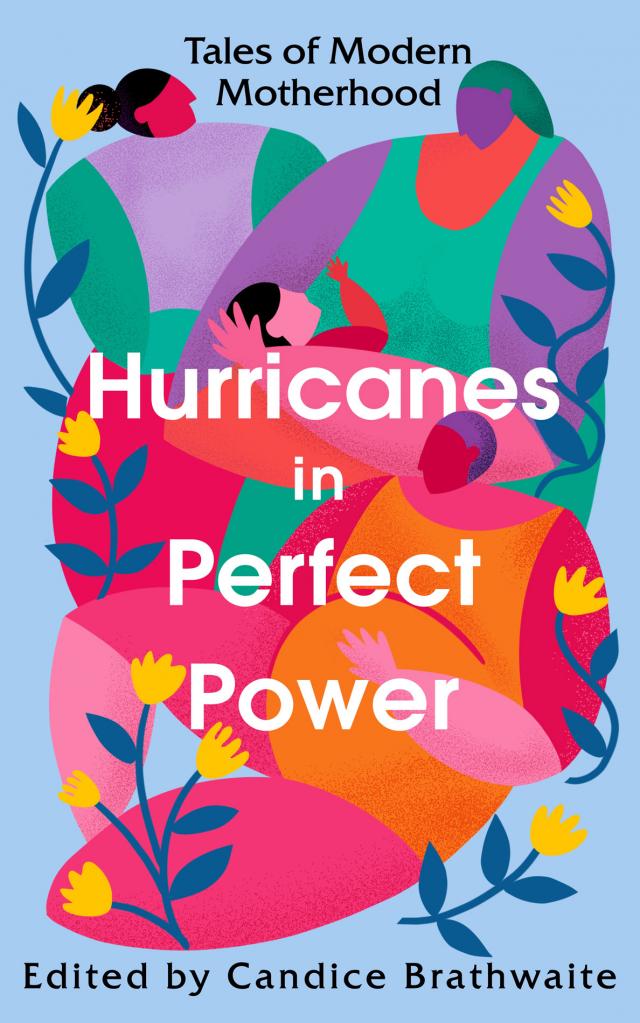
HURRICANES IN PERFECT POWER
Tales of Modern Motherhood
EDITED BY
Candice Brathwaite
Contents
Introduction
Winterscape by Anita Desai
What You Learn About the Baby by Lydia Davis
The Child by Ali Smith
Café Society by Helen Simpson
Foetus by Tabitha Siklos
Mother’s Son by Tessa Hadley
Girl by Jamaica Kincaid
Sweetness by Toni Morrison
Of Mothers and Children by Ngũgĩ wa Thiong’o
Winning by Casey Plett
Gunk by Irenosen Okojie
Heaven by Mary Gaitskill
Introduction
Today as I begin to write this introduction it’s as if Leto, the Greek goddess of motherhood herself, is heartily laughing at me, not with me.
The first of the school lurgies has entered our house. My husband is supporting our business elsewhere, meaning that I am currently balancing a laptop on my lap, a lukewarm cup of coffee in one hand and a bagel in the other, while always keeping one eye trained on a particularly energetic four-year-old whose temperature is sitting at 39°.
My eye, however trained it may be, slips out of focus if I look for long enough. Held within the blur is a moment in which the time I’ve spent as a mother to this child feels distant and present all at once. I think of those early days, when the heaviness of my tummy felt linked to my eyelids, my brain begging for sleep and my body praying for a miracle. My bones themselves felt exhausted. But this was my second child, so the repeated reassurance that ‘they grow up so fast’ was not a sound that resonated with the same impact. I had awoken to this truth once before. But oh, to wake up there again!
Through the years I’ve been serenaded by the soft moo of the breast pump or called upon abruptly by a sharp squeal the moment a toe touches bath water. I have a four-year-old, an almost-ten-year-old and a fourteen-year-old stepdaughter. I have had to acknowledge that modern motherhood is peppered with hurricanes, none of which feel as confronting as the first, but the smaller ones accumulate. They’re all as life-altering as each other.
Over almost a decade I have faced the internal hurricane that comes with doing what’s best for my children even if it comes at a personal sacrifice. In ‘Winterscape’ by Anita Desai, a biological mother lets her grieving, heartbroken sister nurture the child she’d given birth to out of love for them both. The story speaks of a bargain I couldn’t imagine making, not just because I have strained relationships with similar characters in my own life, but because it’s hard to imagine letting someone else raise your child when you’ve carried them and you too love and want them. Motherhood is filled with difficult decisions but, as Desai suggests, if they’re driven by love more than ego, you will, more often than not, make the right one.
I have faced the agonising thought of not becoming a mother. Going through that has, I think, made me the mother I am now. While I doubt this was Ali Smith’s intention in ‘The Child’, her story helped provide me with language for that period of my life. The piece also articulates an idea – and a fear – of motherhood, which stands in stark opposition to the ideals of those who want the best for their children: that nature may sometimes take precedent over nurture, and that your child, despite your very best efforts, might turn out to be the opposite of what you imagined. ‘The Child’ is a burlesque of this, whereby a baby is a cruel tyrant, expressing prejudiced views of women and asylum seekers.
And I have, of course, like the protagonist in Toni Morrison’s ‘Sweetness’, continued to tussle with the hurricane of being a black mother, with all its intricacies. Historically, black mothers haven’t been given space in black British literature. I predict that this will be the longest lasting hurricane of all.
When I was asked to edit this book, I had no idea what kind of work I would read and how it would make me view my motherhood journey thus far. Having grown so tired of the microwave pop-and-go type motherhood books, I was more than willing to sink my teeth into words that would maybe, just maybe, help me more eloquently describe the indescribable.
What I love most about the stories I’ve chosen for this book is how far-reaching they are. It will always be important to me that stories and representations of motherhood are as diverse as possible. Even though my identity is one spread across many intersections, it doesn’t cover all bases, and I too have had to learn what it means to be truly qui et and listen to someone else’s version of motherhood – something we usually blanket as a universal experience. This is most true of ‘Winning’ by Casey Plett, about the relationship between a transgender mother and daughter.
Recently I was speaking to a friend who is a mother of two under two, who – let it be known – said she feels as though motherhood is either overly and falsely glamourised, or made out to be completely horrific, when actually there are multiple moments of each throughout the course of every single day. I couldn’t help but agree.
While I don’t regret my decision to embark on motherhood, I can firmly say that if I had been offered a one-year, no-holds-barred trial, I wouldn’t currently be a mother of two.
The firm grip this duty has on my time, body and mental state, to say the least, is a stronghold that no one can actually describe. So many feel as though they cannot and should not communicate the pressures and stresses motherhood places on you, because it seems like every other mother is having a great time of it.
What’s most striking about this collection of stories is how close they are to the blistering truth. They do not shy away. There aren’t many saccharine moments – not because motherhood is without them, but because they are fleeting. Most of it is back-breaking emotional work, where the small beings you have made space for end up teaching you more than you bargained for.
In the days when my children were very young, I could have been a character in Helen Simpson’s short story ‘Café Society’. I remember all too well the tightrope I walked daily between my life as a career woman, one where I felt independent for the hours between 9 and 5, and heading home to become a full-time carer to those who depended on me at night. I think back to when I preferred to walk four miles to meet a friend to avoid the countless buses that couldn’t accommodate me. In fact, even if they could accommodate me, there were times that I would rather walk for miles with a pram than feel the prickles of a dozen corneas on me, all of them saying, without tongues, that they wished I could do a better job at keeping my baby quiet.
And then there are, of course, glimpses into future hurricanes. Unlike a meteorologist, I don’t need apparatus to predict these ones. The hurricane of your children becoming emboldened enough to show you a reflection of yourself. The hurricanes that come alongside being their first bouncer, forcefully batting any harm out of the way as it comes hurtling towards the one thing you feel obliged to protect. This is explored in ‘Mother’s Son’ by Tessa Hadley, where a son confides in his mother that he is having an affair with someone he loves, and the mother conceals this from her son’s distressed girlfriend. The story articulates one of my bigger fears: becoming a woman who hurts other women by putting her instinctive, but arguably misplaced, loyalty to her son before all, even herself. As sure as I am in this moment that I would dissolve any twisted loyalty I think I have towards my son in order to protect someone else’s daughter, I haven’t yet been faced with this in real time. I hope that if I ever find myself there I can stand firm, but if there is one phrase that motherhood has taught me to live by, it’s ‘who knows?’.
It’s after months of thinking about these stories and a week of writing that I’m drawing this introduction to a close. My time, like my body, is no longer my own; I’m bound by my children’s schedules, which often become complicated by the unexpected, including my current battle with sickness. I do things incrementally, making things happen as and when I can.
I am now sitting in a clinical environment wearing a clean gown that perhaps hundreds if not thousands have worn before me. It feels symbolic of motherhood itself. After five years of suffering with terrible back passage issues after giving birth to a 10lb 2oz son, I’ve finally been forced to put myself first. I think that may be the thread that ties all of these beautiful, emotional, scary and sometimes heartbreaking stories together: a desire to remember oneself among becoming someone else’s everything.
This collection stands as a reminder that there is not a single cell of newness that exists under the theme of motherhood. Someone has always been where we are or felt how we feel. In times of darkness, stories similar to ours can be hard to find, as traditional media and popular conversation parrots that motherhood is the greatest journey you will go on and that your child is the most precious gift. I hope you find that my selections for this book shine a light into all corners and resonate with mothers at every stage of their journey, from those of us with young children to those on the precipice of an empty nest; from those of us dealing with depression to those of us who can’t wipe the smiles off of our faces. And I hope these stories hit home with those who aren’t mothers, too. In some ways, I especially hope this collection reaches non-mothers. Because mothers and non-mothers have to co-exist in community spaces, those that we all depend on, and in this sense I hope this book can be used as an educational tool. I hope it offers entertainment as well as blistering insight into worlds that, for me as a mother, are commonplace but for so many are currently, and may forever remain, foreign. I hope that digesting these stories will help those who aren’t familiar with the hurricane of motherhood understand just how much their support, help and understanding is desired, even needed, for all of us to feel good and be well.
Candice Brathwaite, 2023
Winterscape
by Anita Desai
She stands with the baby in her arms in front of the refrigerator, and points at the pictures she has taped on its white enamel surface, each in turn, calling out the names of the people in the photographs. It is a game they play often to pass the time, the great stretches of time they spend alone together. The baby jabs his short pink finger at a photograph, and the mother cries, ‘That’s Daddy, in his new car!’ or ‘Susan and cousin Ted, on his first birthday!’ and ‘Grandma by the Christmas tree!’ All these pictures are as bright and festive as bits of tinsel or confetti. Everyone is smiling in them, and there are birthday cakes and Christmas trees, the shining chrome of new cars, bright green lawns and white houses. ‘Da-dee!’ the baby shouts. ‘Soo-sun!’ The bright colours make the baby smile. The mother is happy to play the game, and laughs: her baby is learning the names of all the members of the family; he is becoming a part of the family.
Then the baby reaches out and waves an ineffectual hand at a photograph that is almost entirely white, only a few shades of grey to bring out the shapes and figures in it. There are two, and both are draped in snow-white clothes which cover their shoulders, exposing only the backs of their heads which are white too, and they are standing beside the very same white refrigerator in the same white-painted kitchen, in front of a white-framed window. They are looking out of it, not at the camera but at the snow that is falling past the windowpanes, covering the leafless tree and the wooden fence and the ground outside, providing them with a white snowscape into which they seem nearly to have merged. Nearly.
The baby’s pink finger jabs at the white photograph. The mother says nothing immediately: she seems silenced, as if she too has joined the two figures at the window and with them is looking out of the white kitchen into a white world. The photograph somehow calls for silence, creates silence, like snow.
The baby too drops his hand, lowers his head on his mother’s shoulder, and yawns. Snow, silence, and sleep: the white picture has filled him with sleep, he is overcome by it. His mother holds him and rocks him, swaying on her feet. She loves the feel of the baby’s head on her shoulder; she tucks it under her chin protectively. She swivels around to the window as if she sees the two white figures there now, vanishing into the green dusk of a summer evening. She sings softly into the baby’s dark hair: ‘Ma and Masi – Ma and Masi together.’
‘Two?’ Beth turned her head on the pillow and stared at him over the top of her glasses, lowering the book she was reading to the rounded dome of her belly under the blue coverlet. ‘Two tickets? For whom?’ because she knew Rakesh did not have a father, that his mother was a widow.
‘For my mother and my aunt,’ he said, in a low, almost sullen voice, sitting on the edge of the bed in his pyjamas and twisting his fingers together. His back was turned to her, his shoulders stooped. Because of the time difference, he had had to place the call to the village in India in the middle of the night.


