

Iron curtain, p.1
Iron Curtain, page 1


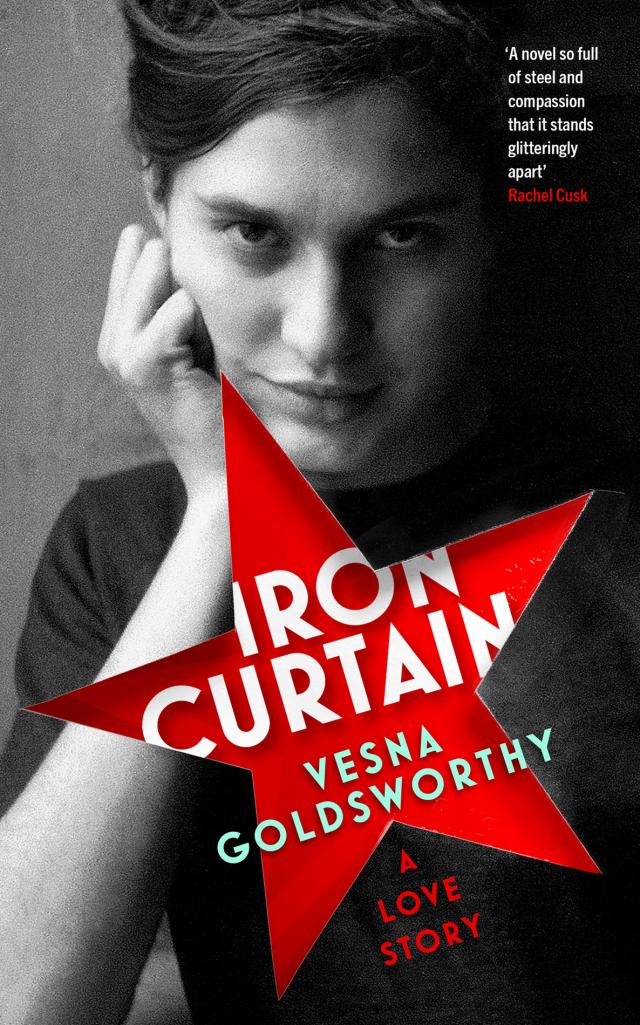
Vesna Goldsworthy
* * *
IRON CURTAIN
A Love Story
Contents
Prologue: The Curtain Falls
Part One: East of the Iron Curtain Chapter One: Victory Day
Chapter Two: Swearing In
Chapter Three: The Fallout
Chapter Four: Unseasonal Weather
Chapter Five: Performance
Chapter Six: The Day After
Chapter Seven: The Thaw
Chapter Eight: The Spa
Chapter Nine: The Lake
Chapter Ten: Carried by Dragons
Part Two: London Chapter Eleven: The Art of Leaving
Chapter Twelve: The London Halls
Chapter Thirteen: Out of London – A Journey to the Heart of Darkness
Chapter Fourteen: Un Repas Anglais
Chapter Fifteen: A Foreign Field
Chapter Sixteen: Moving Home
Chapter Seventeen: The Wedding Day
Chapter Eighteen: Clarissa’s Visit
Chapter Nineteen: Leave to Remain
Chapter Twenty: Interview
Chapter Twenty-One: Job Search
Chapter Twenty-Two: Family Planning
Chapter Twenty-Three: Labour
Chapter Twenty-Four: Betrayal
Chapter Twenty-Five: The Golden Age
Chapter Twenty-Six: Jason’s Kiss
Chapter Twenty-Seven: Return to Zenda
About the Author
Vesna Goldsworthy comes from Belgrade. She began her writing life as a poet and aged 22 performed her poetry to thirty thousand people at a football stadium. At 24 she moved to the UK and started writing in English, her third language. Her widely-translated books include a prize-winning poetry collection The Angel of Salonika; an internationally bestselling memoir, Chernobyl Strawberries; and the London-based novels Gorsky and Monsieur Ka. A former BBC World Service journalist, she is now an academic and occasional broadcaster.
BY THE SAME AUTHOR
NON-FICTION
Inventing Ruritania
Chernobyl Strawberries
POETRY
The Angel of Salonika
FICTION
Gorsky
Monsieur Ka
To all my friends who, like me, grew up east of that line from Stettin in the Baltic to Trieste in the Adriatic
Stronger than lover’s love is lover’s hate. Incurable, in each, the wounds they make.
Euripides, Medea
When you go, space closes over like water behind you,
Do not look back: there is nothing outside you,
Space is only time visible in a different way,
Places we love we can never leave.
Ivan Lalić, ‘Places We Love’
PROLOGUE
The Curtain Falls
Live from Berlin, December 1990
‘The walls are crumbling all over Europe. A year ago, this city was still divided by one. Many of those who wanted to escape life in the East, by climbing over or tunnelling under it, lost their lives. Concrete fragments of that wall are now sold as souvenirs, pathetic remnants of a former threat.
‘From Tallinn to Tirana, from Belfast to Bucharest, people are on the move, free at last. We don’t need visas any more and soon we will need no passports. We are witnessing the end of history. And this glorious city, where I am now standing, is both the heart and the fountainhead of this new world.
‘In the past two years, small countries lying on what some wrongly see as the edge of Europe, but which are just as much part of the continent’s glory as any lands to the west, have suffered agonies of social turmoil. Some have ended decades of repression with bloody revolutions. These countries are now queuing up to join us in the European Union. As an Irishman and, above all, a European, I feel their pain and share their hopes. We must offer them a hand of friendship, show that our world is better, that it was worth their sacrifice.
‘I am honoured to receive this great poetry prize in the newly reunited Germany, a harbinger and, I hope, a leader of further unifications. Allow me to dedicate the honour to my sons, Nicholas and Philip.
‘Their generation will grow up without the Iron Curtain, without the suffering it brought to millions, and in a new Europe without borders. I am speaking for them, and to them, this evening.
‘Dear boys, your father promises you an open, unfettered Europe. I look forward to seeing you in Britain very soon.’
He stared into the TV camera as though straight into my eyes. His hair was tamed in a smart cut and his Nehru jacket was too obviously bespoke to be borrowed, but he seemed unchanged otherwise, every centimetre his dishonest self, spooling out clichés unworthy of the award he was about to receive.
I used to love this man.
I could not bear to witness the eagerness with which he glided in the slipstream of political power, a cultural opportunist performing like a circus dolphin. How well he did it, and how uncritically and enthusiastically his audience accepted him for what he wasn’t. His skill was in striking the precise chord they wanted, to stroke their desire to feel simultaneously cultured and virtuous. I knew his power to seduce. I had been just as gullible once.
A crystal orb and fifty thousand Deutschmarks: that was the prize, they said. The performance was worth every pfennig. It was a betrayal of everything poetry should stand for.
I could not bear the sounds of Beethoven’s ‘Ode to Joy’ rising under his words, deployed in that sentimental way that only the Germans seem capable of when they want to mask their own might. And I definitely could not bear to hear Europe mentioned once more.
I used to love Europe too.
I switched the television off.
Part One
* * *
EAST OF THE IRON CURTAIN
In a Far-Away Country of Which We Know Nothing
Membership in the Communist Party before the Revolution meant sacrifice. Being a professional revolutionary was one of the highest honours. Now that the Party has consolidated its power, Party membership means that one belongs to a privileged class. And at the core of the Party are the all-powerful exploiters and masters.
Milovan Djilas, The New Class: An Analysis of the Communist System
CHAPTER ONE
Victory Day
1981
It was a mediocre essay: threadbare insights into the details of the life of the poor in Oliver Twist, the kind you had to spew out in order to pass an exam, interleaved with a few adolescent aperçus of my own. I was passable, good even, as a student of the English language. Home tutoring and access to imported music and films helped, and of course I had attended our capital’s sought-after English-language high school, one of the unisex ‘Etons of the East’, as it was waggishly nicknamed.
Literature was a different matter. I found analysing books, particularly the sort of English novels that graced the Communist curricula, too tedious. Teaching assistants treated me timidly, as though it was an honour to have me in their seminars, but my attendance record remained dismal.
I went to the end-of-year awards ceremony only because I knew that my absence would speak more loudly than my presence. I did not want to fight every battle against the system just to show my father that I was my own person. How do you rebel when even your rebellion is anticipated?
The Dean called my name. His articulation of my arguments was sharper than anything in my essay. The gold medal. Imagine my fury when I was summoned to the podium. Both the silver and the bronze winners looked stunned as the three of us were lined up for a photo.
‘Great work, Comrades,’ the Dean told the other two. ‘Not quite matching the finesse of Comrade Urbanska’s understanding, but well done nonetheless.’ He managed to sound lovelorn as he pronounced my name.
I shut my eyes when the camera clicked.
I opened them to spot Misha and Lana, my boyfriend and his brat sister, smirking in the third row. They were there purely to embarrass me. Someone must have told them – but not me – about the prize. I dreamed of pushing Father from the top of the stairs back home, of breaking his bovine neck.
‘Happy Victory Day,’ Misha said in Russian when we met later that evening. His intonation was soft: Leningrad rather than Moscow.
‘You speak too soon,’ I said as he stepped towards me. I gave a snort, like a prize pony, then shoved him away. I was still fuming about the medal, not in the mood for fondling. Had I only guessed that Misha would be taken from me so soon – Russian-style, albeit not by the Russians – I’d have pulled him closer, held him better.
I was in my regulation black-widow student outfit – black shirt, black trousers, black plimsolls, kohl-rimmed eyes to match raven-black hair.
‘The Juliette Gréco of the steppes,’ Misha said.
He was dressed as faultlessly as ever: navy Converse, red-label 501s with button flies, a racing-green Lacoste polo, Ray-Ban aviators tucked into its neck opening, a wine-coloured cashmere cardigan draped over his shoulders. His Jim Morrison curls stood out in a city in which the police scooped boys up off the streets for savage shearing if their hair so much as touched their shirt collars.
My relationship with Misha achieved the rare feat of dividing my parents. My father, predictably, hated the little sissy. Mother’s concept of manhood was broader, accustomed as she had been to tenors in powdered wigs and lipstick in her days on the operatic stage. My own take on Misha was, to begin with, very simple. I wanted a boyfriend, he was good-looking and good in bed. The local choice was limited. We weren’t – certa inly I wasn’t, or not yet – in love.
He offered me a cigarette from a shiny black-and-gold John Player Special packet and, when I took one, he held up his cloisonné Dupont lighter. Click. He was a vacuous prat, I thought, and I was worse than him for being able to read his get-up, item by item.
Nothing on him – not the socks, not the boxer shorts, not the watch, not the braided leather bracelet on his wrist or the musky aftershave – was purchased locally. Even the bitter lemon he drank arrived in cans from Italy. Only the rare few around here had passports; fewer still could afford to travel in order to shop for fripperies; and a handful had foreign fripperies delivered to them.
I used to think Misha an immature snob for needing his Western façade to be so immaculate that even the briefest of walks required an hour’s notice and a full-length mirror. I had misread its significance. It was an exoskeleton, a scaffold that held him together. It was not so much about worshipping the West – Misha knew the West too well for that – as about a refusal to belong to the East.
All Communist countries were supposed to be alike. Socialism was scientific after all, a repeatable experiment. But each one, including our own, bore the imprints of its past. Catholic, Orthodox, Protestant, Islamic; Byzantine, Ottoman, Habsburg, Tsarist Russian, Königliche Prussian, regicidal Serbian or even theocratic and tribal Montenegrin – centuries of tradition lingered into the Marxist dawn.
Kafkaesque, bureaucratic Prague or the déclassé but still bleakly Germanic East Berlin was very different from the quasi-oriental satrapies of Bulgaria or Romania, with the latter’s sinister tales of secret executions, not to mention the terra incognita of closeted, deviationist Albania. The worlds that came before eventually seeped through the layers of fresh paint like bloodstains on the wall of an ancient torture chamber.
I preferred history to literature. However, there was little point in studying history here. We lived it every day but could only discuss it freely but furtively by night. Our own land melded both Latin and Phanariot ingredients in a soup of Slav blood. It had been ruled for centuries by despots and sebastokrators, men dressed in velvet and pearls and unused to opposition. Their fathers died in their own beds only when given a nightcap of poison. Their melancholy mothers – princesses imported at six or seven, from palaces as far afield as Sicily or Seville, to shore up an alliance or buttress a peace deal – spoke Latin and Greek and knew little of our barbarian tongue. They brought up their sons to expect the finest of everything, because an all-too-fleeting luxury was the only succour they could guarantee.
In addition to all that, we were a satellite orbiting the great mother planet of the revolution, the Soviet Union itself. Misha was the latest member of one of our illustrious, indigenous revolutionary lines. Of course, he was against entitlement and privilege. We all were; it was a matter of principle. But I am not speaking about principles here, I am speaking about DNA.
‘We are the most talked-about couple in town,’ Misha said. ‘Comecon’s Charles and Diana.’
That spring, it was our running gag. Both our mothers were mesmerised by the fairy tale that was the British royal engagement. While their husbands were nominally committed to executing monarchs wherever they might reign, the two wives followed royal families avidly in glossy foreign magazines, savouring palace intrigues from Monaco to Stockholm. Neither of them had anything better to do.
‘My lady Di,’ Misha appraised me in sing-song, pronouncing the name the way my francophone mother would: maladeedee.
‘I can’t wait to see you in uniform in a couple of months’ time, dearest Charles,’ I shot back, just to be mean.
In army matters, boys like Misha got off lightly, spending their two years of military service in the cushiest corners of our lovely land. Yet even so they sometimes suffered mental breakdowns, because their privileged locks were finally shaven to match other heads, or because coordination of every last detail of their outfit was no longer up to them.
Two years were still two years; no one could give that time back. And occasionally someone shouted, even at them. The fathers might well have encouraged the barking of orders. Rather like that notorious tradition of English fathers paying good money to send their sons to bleak and spartan public schools, it was good for character-building.
‘It’s four months away still, darling, not until September,’ Misha said. ‘Don’t cry for me, Argentina.’
The tosser had the only LP of Evita this side of the Iron Curtain. We held Evita parties in his villa.
‘Have you heard what’s happening at the Youth Palace this evening?’ he asked. ‘Lana is already there, guarding two seats for us.’ He took the jumper off his shoulders and threw it over mine, perhaps to break my coiffed and sartorial monotony of black.
The pavements under our feet were covered in acacia petals. Their scent was stronger than the ubiquitous diesel fumes, so strong that it reached through fastened windows and balcony doors at night. People went about their business in this confettied whiteness like swarms of bees.
It was the eve of Victory Day and a rehearsal was going on along the main drag as we emerged. The street echoed with the sound of boots falling on tarmac, kicking petals into the air.
‘Present arms,’ the drill sergeant shouted. Several hundred young heads turned right just as Misha and I were passing, their dark eyes glinting, bayonets sparkling. Wafts of boys’ sweat and the felted wool of their overcoats cut through the perfume of the acacias. Their winter uniforms were too heavy for the weather. There was the inhuman, grinding sound of tanks on the move somewhere further up the road.
Misha grabbed my hand and pulled me back under the trees and into the park.
‘Present arms,’ he imitated the sergeant in a stage whisper. I froze to attention and he lifted me up. I propped my chin against the top of his head. His curls tickled, so I tilted my head back. The sky was lit by a million stars. It seemed just possible, in that moment, to love both him and this place. He was mine and it was ours.
We skipped over rows of municipal flower beds and across freshly watered lawns, ignoring the warnings not to walk on the grass. The row of flagpoles in front of the Praesidium came into view, pale like giant birch trunks in the evening light. The flags fluttered redly some fifteen metres above our heads. I always hated the building; in its rejection of bourgeois taste, it seemed to me instead a celebration of ugliness and, in its massing of reinforced concrete, well beyond any scale that could be described as human. Even the paws of the stone lions at the entrance were as tall as we were. It was an expression of power, as brutal as the boot forever stamping on a human face that I had read about in the Orwell novel my father kept under lock and key.
That evening, unexpectedly, there was something magical about the animals; the granite they were carved from sparkled in the moonlight.
‘Let’s climb the lions,’ Misha said. ‘Let’s sit up there. The guards have gone to bed.’
He gestured towards the massive bronze doors. Their patinated squares, produced by some Communist Pisano, illustrated the story of the revolution. The doors were wide open in daytime, with guardsmen in ceremonial uniform standing on either side, guns at the ready. One side was now closed, the squares shining faintly in those low spots where a human hand had touched them. Where the other side was open, you could see another door further in, made of thick glass, and, through it, the lobby. There, in the half-light, stood a soldier in battle fatigues with a machine gun. Unlike his chocolate-box colleagues in daytime, this one wasn’t for show, but a reminder of the less-than-distant memory of the revolution that had eaten so many of its children. He looked in our direction but it was unclear whether he could actually see anything.
‘The revolution never sleeps,’ Misha said, undeterred. ‘Let’s climb up there anyway, please, Mimi. Let’s be like those hippies who ride the lions in Trafalgar Square.’


