

The winter market, p.1
The Fog, page 1


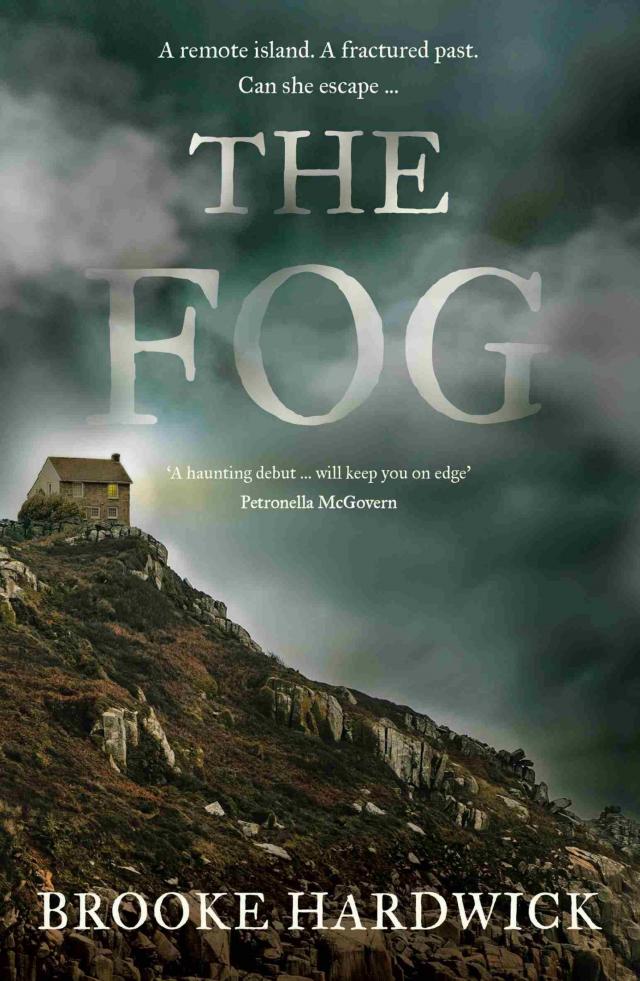
Praise for The Fog
‘The Fog is a haunting debut that delves into the human psyche and our ability to cope when pushed to extremes. Author Brooke Hardwick intertwines a harsh, remote island with a mysterious history and mythology to create a challenging environment which echoes the inner turmoil of the characters. This dark, eerie read will keep you on edge until the very last page.’
Petronella McGovern, author of The Last Trace
‘A mind-bending gut punch of a novel. I had my heart in my mouth the entire time I was reading!’
Dinuka McKenzie, author of Taken
‘The Fog by Brooke Hardwick is a hard book to put down. It follows the journey of Kate who joins three other writers on the eerie remote island of Rathlin off the northern Irish coast who are all attending a ten-day course to overcome writer’s block. In this smouldering novel, past and present collide as secrets are unlocked and dangers lurk around every corner.
Brooke Hardwick is a master of tension and suspense.’
Vikki Petraitis, author of The Unbelieved
‘This gothic thriller about control and manipulation is deeply unsettling and eerie in the best possible way, with atmosphere to spare, assured writing and a remote island setting that’s a character in its own right.’
Kate Riordan, author of Summer Fever
‘Suffused with a creeping sense of dread and an eclectic cast of characters, The Fog is an accomplished debut that draws deeply on its evocative setting to pull the reader into a dark secret. Brooke is a talent to be reckoned with and I look forward to reading more of her brilliant writing.’
Amanda Reynolds, author of Close to Me
‘The Fog is a beautifully written, utterly absorbing and atmospheric thriller. I tore through it.’
Katy Brent, author of The Murder After the Night Before
Thank you for downloading this Simon & Schuster ebook.
Join our mailing list to get updates on new releases, deals, recommended reads, and more from Simon & Schuster.
CLICK HERE TO SIGN UP
Already a subscriber? Provide your email again so we can register this ebook and send you more of what you like to read. You will continue to receive exclusive offers in your inbox.
For Rathlin, the island in between
PROLOGUE
You can’t breathe. It’s the smoke. Bitter black. Poisonous.
Tiny coarse particles fill your throat, soot trailing from each nostril. Your skin is raw. Your hair is burnt.
This wasn’t meant to happen.
Lightning cracks, and a dagger of blue illuminates the room. Two hands close around your throat, crushing your airway. Your tongue swells. Your head lolls to one side. The whites of your eyes redden, and your bladder empties. You try to struggle, to escape, but you’ve no strength left.
‘No…’
Slowly your lids close. The last image reflected on your retina: a pillow rushing toward your face.
DAY ONE
1
I scramble for the phone in my pocket. I’m sure I felt it vibrate, but there’s no flashing. It’s obsidian black. Silent.
Blinking back disappointment, I place it facedown on the table, glance at the clock on the wall behind the bar, and retrieve the glossy welcome package from my handbag.
Congratulations! You’ve been accepted into our Ten-Day Therapeutic Retreat – A Radical Course That Will Change Your Life.
The door swings open, and a weather-beaten man shuffles inside the pub and shrugs off his coat. Air rushes in, sharp and cold.
Biting my bottom lip, I look at the clock again – the ferry is late.
A flash of childhood – waiting with my father for the St Mawes Ferry to Falmouth. He’s grinning. Ferry timetables are like politicians, pet… can’t trust any of them.
Behind the acceptance letter, there’s a glossy brochure. It’s emblazoned with a large photo of a stately stone manor, solitary atop a treeless cliff, the ocean beyond. Written beneath the photo is a cryptic passage. Join us on Rathlin Island. The only inhabited island in Northern Ireland, this is where Kings find their courage. The question is, will you?
There’s an illustrated map too – drawings of a puffin and a seal huge against the tiny L-shaped outline of the island. I can’t make out many man-made structures, except for the lighthouses. There are three – to the west, east and south. Don’t come too close they say.
I shift on the wooden stool. There’s a dull throb on the right side of my head. I massage the spot, pressing my fingers into the sphere of pain.
* * *
Hugh isn’t here. My husband. I won’t lie about him in his absence, though. You see, most women fib about the men they’re married to, sculpting them into statue-sized heroes for other wives to fawn over. I won’t fabricate an alternative version of Hugh. I don’t need to.
Hugh isn’t a where have you been, when is dinner, and how many times have I told you husband. You won’t see him smirk when other men mock their wives or whistle slowly when the waitress walks away and say, What I’d do to tap that.
Hugh is a good man. He gives me the security women won’t admit they want.
That said, you won’t hear me bandy compliments about in public. My husband doesn’t need a woman to deify him; he’s already important. Well, he’s one promotion away from important. I know he can make it from Assistant Head Teacher to Head Teacher. I give him security too.
The other wives, the wives who lie about their husbands, also lie to them. No, I hadn’t planned anything special they say when John calls from the pub and another dinner goes cold. You’re right, I don’t enjoy them either they demur when Paul insists that holidays with other couples are no fun. I’m not that easily offended they laugh when Tom mentions his new assistant’s great tits at a dinner party with their friends.
Hugh and I are different from other couples. We know that leaving things unsaid is the stuff of real love.
* * *
I stare through the small front window of the pub and watch the sea swell and foam. Hugh isn’t here, but I wish he was.
I turn the phone over and search for the orientation email. Maybe I got the time wrong. The ache on the right side of my head intensifies. I knead it deeper with my knuckles, wishing I could reach inside my skull and remove the migraine before it arrives in force.
There’s a flash in the room, a horn blares: it’s the ferry, fog lights eye-level to the pub. It putters in the small harbour, swivelling in a circle to dock. I rush to the door with only one arm in my jacket, and wrench it open. The blast of freezing air makes my eyes water.
A south-westerly howls across the ocean, gnashing waves against the dock. Beneath my clothes, I’m wearing a high-tech base layer, a last-minute purchase from Marks and Spencer. It’s immediately obvious it won’t do. The thin fabric is no match for the freezing wind. I stuff my other arm into the jacket, zipping it up to my chin.
A long-bearded man, burly, vital, in his thirties, lowers a ramp from the back of the boat. He looks wild and untamed – a Viking.
‘Kate, is it? Ya, right?’
I look over my shoulder to see if he’s hollering to someone else – a different Kate, a doppelgänger who’s followed me here. It’s foolish. The retreat organisers have emailed to say they chartered the ferry specifically for me. They know my name. They know I’m arriving today.
‘Come on, you,’ he says, his hair a frenzied mess in the wind.
I clatter my suitcase up the ramp and notice what I hadn’t seen from the dock: the man is wearing a kilt and sporran – one corner of the tartan whipping against his thigh.
‘It’s a winter kilt. It’ll hold, hen,’ he says, a mischievous glint in his eye.
Safe onboard, the surge of adrenaline subsides, and my limbs become heavy. London to Ballycastle has taken all day, and the island is still six miles across the churning Atlantic.
‘You’re the representative? You’re taking me to the retreat?’ I say, flinching as the jacket’s zip pinches the skin beneath my chin.
‘Not what you expected, is it… a Scotsman?’ he says, hauling the ramp back into position. ‘We’re a real mixed bag, us islanders. Scots and Irish both. Up in these parts, we all belong to the same Gaelic kingdom, though – Dál Riada.’ The wind whistles across the bow of the ferry. ‘You’re right to go inside the cabin. It’s too grim out here in the brunt of it.’
I don’t move. I want to feel the icy blast, hopeful the shock of cold will alleviate the pressure building inside my head.
‘Suit yourself,’ he says, taking my suitcase with him, the cabin door slamming shut.
We rock side to side, and the rolling motion makes my stomach flip. Bile rises from my gut, nausea reaching an unbearable peak. I swallow and set my eyes on the horizon.
* * *
It’s only been thirty minutes since we departed Ballycastle, but there’s an abrupt clanking sound, the engine decelerates, and the island appears like an apparition.
It’s decidedly different here, despite the short trip. There’s a shift in the atmosphere. It feels like I’m entering another time zone.
As we approach the bay, two long rows of heaped boulders jut into the ocean. They create a narrow entrance, and the ferry slows to navigate the rocks. A semicircle of terraced housing becomes visible. Clustered as though huddled against the cold, the homes mirror the curve of the bay. They look cosy together. But behind the single row of modest dwellings, there’s nothing but emptiness.
‘You’ve got the right kind of spirit for this place!’ The imposing Scotsman stands before
There’s no movement anywhere. No cars. No children. No chatter. I scan the windows, but the curtains are closed – motionless. There aren’t any people in the harbour either, save for a single fisherman, his back to the wind, painstakingly mending a net on the pebbled beach.
Shivering, I follow Ewan down the ramp and to a small blue truck waiting in the car park. ‘We’re multitaskers on Rathlin,’ he says, effortlessly hoisting the luggage onto the truck’s tray. ‘Only about a hundred of us, so gotta shapeshift to earn your keep. In summer, I help with the research on our puffins. You hearda them? Quite the scene when they come home to roost. But they’re still out over the Atlantic. Won’t be home till spring. The offseason is a different kettle of fish. Dead quiet. Cormac has me as your cook during the winter. Other odd jobs too, up at the manor.’
I haven’t met Cormac. I have no idea who he is or what he looks like. I trawled the internet for his photo, but there was no trace. I know he’s a renowned therapist, the brochure said so, and my writing group wouldn’t have recommended him otherwise. Still, I can’t find anything about him as a person, and it strikes me as a little odd in this day and age. There aren’t any profiles online or any social media accounts. I’m about to put my future in the hands of a man I know nothing about. Am I doing the right thing?
The truck ascends out of the bay, and the movement pits us against the wind. Powerful gusts slam into the vehicle, shaking the metal frame and shuddering the steering wheel. Strong currents rip across the grass, and the only vegetation visible, small clumps of low-lying heather and shrub, shake as we pass.
I search for signposts in the landscape, an unusual house or tree, a marker that would help guide me back from where we’ve come, but there’s nothing – only grass, dry-stone walls and a narrow stretch of road utterly void of markings. There aren’t any streetlights either, just one long length of bitumen, a single black vein, carrying us further and further from the only evidence of civilisation.
Ewan fumbles inside his sporran and withdraws a small plastic-wrapped lemon drop. I can’t be sure, but it appears his sporran is full of sweets.
‘You’ll need a sugar hit after that ride. You were in the full face of it out there,’ he says, handing it to me. ‘Not that I don’t admire your guts.’
I put the lemon drop in my purse and remove the welcome package.
I turn the brochure over in my hands. There’s a photo of a man. He’s turned away from the camera, standing on a cliff and staring out to sea. Is that Cormac? Funny, I still can’t see his face. There’s text printed on the blue sky above him – Guaranteed to Heal Trauma and Cure Writer’s Block – Only Ten Days to a New You.
The truck lurches toward a dip in the road, and I clamber for the door handle. When we crest the trough, I can’t believe my eyes – we’re driving alongside a massive cliff. There’s no fence or barrier, just the truck hurtling along the empty road with nothing between us and a sheer drop to the ocean.
I turn to Ewan, wide-eyed, but he appears oblivious to the danger, his eyes on the road.
My ears are ringing. The sound doesn’t hit the same shrill pitch as the wind. Instead, it’s robotic – electrical. My eyelids feel heavy too, and I shake my head, struggling to stave off fatigue.
‘You’ll be needing a cuppa when we get back. By the looks of it, you haven’t slept in a week.’
He’s right. I haven’t been sleeping. But it’s been longer than a week. At night I lay awake, and memories scurry back and forth, taunting me. Still, the snapshots only illuminate for a heartbeat, never long enough to form a clear picture.
‘Cormac tells me you’re from London. That’s a big trip in one day. No wonder you’re scunnered. Not to worry, most of them look like you when they arrive, all worn out and glum and the like. He’ll have you sorted in no time, Cormac will. So, what type of novel is it you’re having trouble with? Romance? Thriller?’
‘I… Um…’
‘Nae bother. I know what hoops you would’ve jumped through to get accepted. Earned your spot, you did. Couldn’t have happened sooner if you asked me – slashing the prices and introducing the essay component. I told Cormac, I said, “That was a stroke of genius, pal.”’ He turns. Looks me straight in the eyes. ‘Folk should be accepted into the course based on the merit of their individual case. Not how much cash they’ve got to throw at their problems. Don’t you think?’
‘I…’
‘You writers are a strange bunch. No problem putting words down on paper, but rubbish at saying them out loud.’
The bitter cold, the migraine, the howling wind. Signs – all signs. Headaches are like stoplights, pet… ignore them at your peril. My hands tremble. I feel sick to my stomach.
‘You happy to be here?’
‘Um…’
‘Geez, anyone would think I’d asked you to tell me your deepest secret.’
I don’t want to lie about my feelings. Silence is better. That’s what we both think – my husband and me.
Hugh and I don’t lie to each other, nor do we lie about each other. Instead, we hold our tongues. We agree it’s best this way. We even have a mantra: silence is golden.
Clenching my jaw, I swallow the emotion that keeps threatening to spill over. It would only take three decisive movements to put an end to all this. Pull the door handle. Swing my legs. Launch. My body would careen over the cliff’s edge, a ragdoll with jellied limbs, disappearing forever into the deep.
‘Come on. Keen for the next ten days?’
‘I am,’ I say. It’s not a lie – this retreat is my only hope.
2
I wind the window down a fraction, and the frigid air revives me.
‘Not far to the retreat now, hen,’ Ewan says when he notices me swivelling in my seat. ‘It’s close to my place, the west lighthouse,’ he says.
‘You live in a lighthouse?’
‘I pitch in with maintenance, records, that sort of thing.’
‘And you work at the manor too?’
‘Like I said. Cooking. Odd jobs. Whatever Cormac asks of me,’ he says, pulling the car to a stop. ‘Here it is, hen.’
Before us, there’s a vast slope, treeless and interrupted only by a low dry-stone wall. Behind the wall is the manor from the brochure. It’s grand, two floors tall and solitary. The building looks dark and imposing from the road, a creeper smothering the stone, the leafless vine casting a net across its façade.
The land rises gently, giving way abruptly to a cliff. Beyond, the ocean, the opaque green of time-worn glass, barrells toward the island. The grounds around the manor are vast and untamed – so different from our semi-detached in Dollis Hill, with its narrow plot and neat English garden.
‘Cormac’s out running errands, so he asked me to show you to your room.’ That’s odd, I think. Why wouldn’t the director be here to greet the participants? ‘He has them all assigned. Yours is the Sylvia Plath suite. Out the back.’
Sylvia Plath? I feel nauseous again. The room’s named after a writer who killed herself by putting her head in an oven. Perhaps it’s meant to be confronting. Maybe it’s part of the therapy.
‘You’re not going to turn it off?’ I say as Ewan takes my luggage from the tray and walks away from the truck with the door open and the engine still running.
‘Ah, that’ll be the Londoner speaking. I suppose the whole world’s out to get you, heh?’
‘So, you just leave it idling? With the keys in the ignition?’
‘Even if someone did take it, where would they go?’ Ewan lifts his chin toward the ocean. I follow the sharp cliff edge to its furthest point in the distance. He’s right. There’s nowhere to drive a stolen car. Other than the ferry, there’s no way to leave.
Ewan leads me behind the manor to a small stone cottage between the cliff and the main house. The sheer edge doesn’t look as threatening as it did from the moving car, but it’s colder out in the open, and the wind is so strong it feels vindictive.
There’s another outbuilding too. It’s facing the cottage but a little further away, closer to the cliff. Emerald grass covers the expanse between the triangle of dwellings, a central courtyard that the inhabitants of each outbuilding would need to cross to get to the main house.


