

Mr penrose, p.44
Mr Penrose, page 44
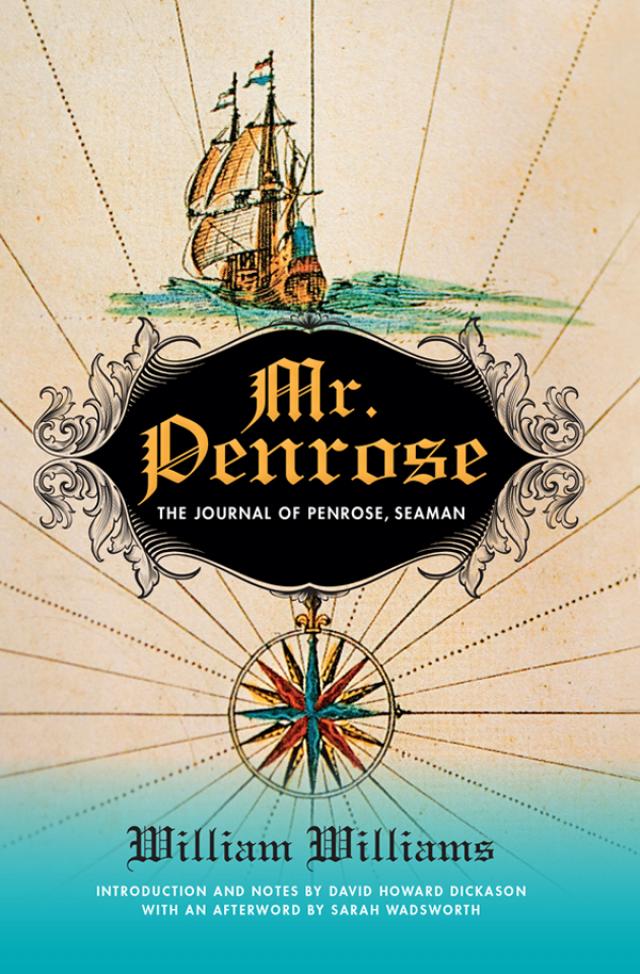


Although Mr. Penrose has clear affinities with eighteenth-century autobiographies and travelogues, it resonates even more profoundly with castaway fiction (called Robinsonades, named for Robinson Crusoe) and its nonfiction analog: survival literature. Described by Mary Louise Pratt as “first-person stories of shipwrecks, castaways, mutinies, abandonments, and (the special inland version) captivities,” seventeenth- and eighteenth-century survival literature, Pratt explains, “furnished a ‘safe’ context for staging alternate, relativizing, and taboo configurations of intercultural contact: Europeans enslaved by non-Europeans, Europeans assimilating to non-European societies, and Europeans cofounding new transracial social orders.” In exercising the artistic license of fiction, Williams departs from the generic conventions of survival literature in one crucial respect: he rejects the denouement of the marooned or captive character’s return to European society, and Penrose chooses to make the Mosquito Coast his permanent home. In contrast, as Pratt elaborates, “The context of survival literature was ‘safe’ for transgressive plots, since the very existence of a text presupposed the imperially correct outcome: the survivor survived, and sought reintegration into the home society. The tale was always told from the viewpoint of the European who returned.”22 To be sure, Mr. Penrose is inescapably implicated in the ideology it critiques, and aspects of it clearly participate in the familiar imperialist fantasy of a New World Eden presided over by superior Europeans. And yet there is this key difference--the fantasy that Mr. Penrose develops rejects expansionist tactics and challenges imperialist assumptions. If vestiges of an assumed, unexamined European/British/ white supremacy remain, they are very tenuous. Instead, the novel depicts a multiracial, multiethnic political sanctuary in which Manoluvy, or “a general amity and concord,” prevails and “The Killing Spirit” (311) has no place.23
(3)
Landscape
As an artist with a professional interest in theater, Williams displayed a flair for dramatic scenery. In Imaginary Landscape (1772), a particularly lavish and fanciful painting, Williams conjures a whimsical turret guarding a frothy bay as a fleet speeds by with the wind in its sails. His portraits, too, feature striking or picturesque backdrops, ranging from seascapes and bucolic meadows to villages and formal gardens. Even the Self-Portrait, set indoors in the confined space of the artist’s studio, incorporates landscape. In the background, the careful viewer can just discern the hazy outlines of a sketched scene affixed to the studio wall: a leafy pastoral in which an animal grazes placidly in the foreground. A far cry from the tumultuous seascapes and lush tropical scenes depicted in Mr. Penrose, this picture-within-a-picture nevertheless draws our attention to the regenerative power of the New World landscape in Williams’s novel.24
Mr. Penrose depicts terrain unlike anything extant Williams portrayed on canvas. (Late in life Williams began a “picture … on the subject of Penrose,” but this work has not surfaced.) If he adhered to European models for his paintings, for his strikingly original fictional landscapes he drew on first-hand knowledge of the New World. Where previous writing about American nature tends toward the general, Williams prefers the specific and precise. Barbara Harrell Carson accurately remarks that Williams presents details of the natural world “not as factual tidbits interrupting the fictional flow, but as integral components of the literary work, contributing to the development of the novel’s plot, characters, and themes.”25
Like many contemporaneous writers, including J. Hector St. Jean de Crèvecoeur, William Bartram, and Thomas Jefferson, Penrose is fascinated by unusual specimens of plant and animal life. He explains that he has an “inquisitive inclination, having from a Child ever taking much delight in prying into the works and wonders of Nature” (267). This interest was by no means unusual in the period in which Williams was writing. The publication of Carl Linnaeus’s The System of Nature (1735) catalyzed a radical transformation in the way Europeans conceived of—and wrote about—the lands they colonized. The Linnaean method of claiming and analyzing the natural world, according to which plants and animals were “subsum[ed] and reassembl[ed] … in a finite, totalizing order of European making,” contributed to what Pratt identifies as an emerging “planetary consciousness.” Although it is not difficult to extrapolate from Mr. Penrose this kind of precise, scientific “systematizing of nature” (as did a pirated, heavily annotated German edition of Mr. Penrose, titled Der neue Robinson, oder, Tagebuch Llewellin Penroses, eines Matrosen [1817]), Williams resolutely resists the trend to classify, label, and possess. More than its rejection of the dominant scientific discourse, however, what separates Penrose from this “European knowledge-building project” is his tendency to move seamlessly between the close study of nature and philosophical reflection. Although more often than not, Penrose simply observes and describes what he sees, taking the contemplation of nature as a worthwhile end in itself, he also draws insights about humanity from nonhuman life, much as Thoreau would do decades later.26
In place of the planetary consciousness Pratt describes, with its “rationalizing, extractive, dissociative understanding,” Penrose advances an awareness of place that is both intensified and elevated by his belief in Providence. He muses, “Oh! how often have I been soothed in this Solitude when the divine Works of Nature have insensibly drawn me into deep contemplation” (169). Like another keen eighteenth-century observer of nature, Jonathan Edwards, Penrose finds that his empirical investigation of nature strengthens and even proves his faith. A finchlike bird whose purple and green plumage provides perfect, ever-changing camouflage amid the variegated fruit of its arboreal roost prompts him to exclaim, “How manyfold are the Wonders of our Divine Creator when our Eyes behold these things” (316). Commenting on this kind of narrative “shift from the physical to the cosmic,” Carson observes that in Mr. Penrose“nature, humanity, and the divine are brought into dizzying intersection.”27
But the landscapes and seascapes in Mr. Penrose are not simply “nature.” They are also geographic, political, economic, and ecologic. In Pratt’s reading, the eighteenth-century planetary consciousness paralleled European efforts to map interior continental spaces. She explains, “The systematic surface mapping of the globe correlates with an expanding search for commercially exploitable resources, markets, and lands to colonize.” More recently, the historical geographer Karl H. Offen has argued that the “spatial practices” of Amerindians-including their political alliances, warfare, trading practices, and diplomatic efforts-contributed substantively to colonial maps of the Mosquito Coast. While Spanish maps emphasized the threat of Mosquito power to Spanish interests, English maps reinforced Britain’s strategic alliances with the Mosquito people by emphasizing their sovereignty. Offen explains: “British cartographic strategies common in North America that possessively transformed place-names, or justified settlement by referring to lands as empty or Indians as ‘savages,’ were entirely absent in Mosquitia.” These two complementary perspectives on eighteenth-century cartography--the colonizers’ mapping of colonial space and the “mapping back” of colonized peoples--provide valuable templates for thinking about European and indigenous space and the complexity of geographical representation in Mr. Penrose.28
The effort to map continental interiors was preceded, as Pratt notes, by “navigational mapping [which] is linked with the search for trade routes.” This link is borne out in the early chapters of Mr. Penrose, in which Penrose scrupulously records longitude, latitude, depths, dates, and other navigational details as he traverses the seas in vessels bearing commercial cargo or protecting British commerce. Even after many years on land, Penrose conceives the idea of “draughting” (mapping) the harbor near his “Castle,” since he knows “all the Bearings and distances full well by long and Frequent observations” (330). Similarly, the oceanography of Mr. Penrose is inscribed by an intricate network of transatlantic and hemispheric trade routes. Even as a castaway Penrose benefits from the fruits of exchange: although he avoids trading directly with Europeans, he does make exceptions, as when he purchases the “prize” library of a Jamaican planter from the Irish captain of a Spanish privateer. He also acquires a wealth of European-manufactured items in the form of flotsam that washes up from wrecked ships. In addition, his Indian friends bring him goats, chickens, ducks, and geese, implicitly acquired through trade with Europeans and gradually absorbed into an evolving creole ecology.29
For all its attention to navigation and trade, however, Penrose’s journal opposes rather than endorses the imperialist interests associated with these activities. Both his Amerindian alliance and his recounting of the escaped slave’s narrative reflect an awareness of environmental knowledge as a tool of resistance. In addition, his attention to ocean-going traffic exposes the confluence of military (or paramilitary) and commercial interests--both legal and illegal. (As Offen points out, the contraband trade was “an important feature of the Mosquitia until independence.”30) This relationship comes into focus with the end of the Seven Years’ War as the battle for the seas is reconfigured. With Spanish “Guardacostas” from Cartagena patrolling the waters “to prevent contraband trade” (294), while Fair Traders from “Pensilvania, New York, Maryland or New England” cruise the coastline “upon what they call the fair thing” (296), the novel’s geopolitical space seems to realign along an invisible hemispheric North-South axis.
In The Environmental Imagination: Thoreau, Nature Writing, and the Formation of American Culture, Lawrence Buell defines four characteristics of “environmentally oriented” texts: “the non-human environment is present not merely as a framing device but as a presence that begins to suggest that human history is implicated in natural history”; “the human interest is not understood to be the only legitimate interest”; “human accountability to the environment is part of the text’s ethical orientation”; and the text manifests “some sense of the environment as a process rather than as a constant or a given.”31 Readers will have little difficulty locating these characteristics in Mr. Penrose, although they might disagree about their application and implications. There is no sense in Williams’s novel of the “environmental dissonance” (4)–defined by Pineda as a “nagging” sense of discord “between the abundance of [the] natural environment and the stagnation of the [local] economies”--that would become endemic in the region by the twentieth century. Instead, the novel emphasizes what twenty-first-century readers might term sustainability. Penrose may miss the “onions and garlick” (72) of his native island, but he does not want for the necessities of life. Through hunting, fishing, gathering, and the cultivation of his “plantation”--the latter activity connecting the novel with the domestic and georgic traditions in American nature writing--Penrose, his family, and friends can get what they need and enough extra to protect themselves from shortages, but with no attempt to accrue a surplus for trade or profit. In polar opposition to the Puritan work ethic and the drive for material success valorized in Franklin’s Autobiography, Penrose pronounces his community “perfectly happy if we could but be content as we wanted for nothing but such things as we could well do without” (196).32
From the restless youth swept up in the flurry of European expansion, Penrose achieves his greatest victory by learning to live content in “a little society hid away from all the World” (196). For his part, Penrose has few regrets about the portion of his life spent in exile. Unlike John Winthrop, who conceived of the Godly society of Massachusetts Bay as a “City on a Hill,” shining forth like a beacon of hope to the rest of the world, Penrose has no interest in expanding his sphere of influence, evangelizing about his way of life, or attracting converts. Instead, he is fully satisfied to live apart from “life’s great hurry” (121). For Penrose, his family, and the voluntary members of his “Elected” society, no greater satisfaction exists than to “[dwell] Sequstered from the society of Europeans, out of the knowledge Of all trade and what the busy world were about” (373).
(4)
Despite its realism, the image Williams presents in the Self-Portrait is deceptive. The momentary glimpse of the artist captured on canvas belies the countless hours, invisible to the viewer, that Williams spent composing at his easel, reconceiving and perfecting this idealized self-image. A composite construction, the Self-Portrait silently effaces the lapse of time. In contrast, Penrose’s journal draws attention to time, segmenting it, articulating it, and marking it out. As a castaway, Penrose becomes preoccupied with time-keeping, adopting alternative methods to record the passage of time: committing important dates to memory, collecting shells to use as counters, marking trees, and ultimately writing in the journal that descends to us today.
Throughout Mr. Penrose, Williams offers images and dialogue pointing to parallel systems of comprehending or “reckoning” (60, 158) time. Time functions differently in the early, European sequences and the later Mesoamerican portion of the novel. To Penrose’s Indian friends, incidents long ago in the historical past occurred in human or ancestral time, referred to as their “old fathers time” (195); environmental time, as “when the very old trees were but small” (95); or even cosmological time, for example, “when the Moon was a little Star” (95). In contrast, Penrose’s journal, by virtue of its very form, seems to contain and control time. Like the Indian Harry, who shakes an hourglass with determination, convinced he can make the sand flow more rapidly, Penrose uses the journal’s form to manipulate the narrative passage of time. With entries accruing year by year, the Journal seems to accelerate and decelerate time. Extended periods can be telescoped into shorter entries in which “empty” time seems to collapse. Interleaved with these brief sections, Penrose inserts longer, more detailed entries in which time seems to slow down and thicken, allowing narrator and reader alike to linger over passing occurrences or “look inward and reflect” (302). Midway through the journal, the moment at which Penrose, having acquired paper and writing materials (in August 1754), “catches up” with the passage of time marks a pivot between a long retrospective view and a more immediate recording of recent events. Possibly corresponding to the period when Williams began composing Mr. Penrose, this narrative transition can be imagined as one “bookend” of the writing process that constitutes the journal’s creation.33
Coinciding with the final pages of the novel, the other “bookend” is the “transmittal letter” that concludes the volume. A bridge between the fictional story of Penrose and the history of the novel’s composition and dissemination, this epistle, signed by “Paul Taylor,” contains two dates that are suffused with historical resonance: 1776, the year the completed journal passed into Taylor’s hands, and 1783, the year indicated in the dateline of the letter itself. Coinciding with the Declaration of Independence and the Treaty of Paris, respectively, these dates are remarkable for the seven-year gap they frame. Like the Seven Years War, earlier in the novel, the period bracketed by these dates marks a cataclysmic phase in the intersecting histories of Europe and the Americas. Yet on this subject, too, Mr. Penrose is, ironically, utterly silent. Despite its post-Revolutionary New York dateline, the letter makes no reference to the rebellion of the thirteen colonies, the long war for independence, or the beginning of the new republic. Nor does it allude to imperialist developments closer to the scene of the novel’s action, where Spain, in response to the American Revolution, attempted--but failed--to drive British colonists from the Mosquito Coast. Similarly, the radical geographic decentering of Penrose’s account shifts our attention from the metanarrative of Euro-American history and invites us to live vicariously at the very margin of empire.34
Like Williams’s Self-Portrait, with its layered renditions of writer and painter, Mr. Penrose is a palimpsest in which readers can explore multiple layers of meaning. It may have seemed an outlier in American literature fifty years ago, but in the new American Studies, with its spatial, temporal, diasporic, and ecocritical turns, this novel could hardly be more central. Readers may wonder what it means to begin the timeline of American fiction with Mr. Penrose. What is at stake, after all, in the designation “first American novel”? (How) Does literary history change when this book, and not some other, becomes the point of origin on a timeline that continues up to the present and projects forward into the future? Readers will disagree on the extent to which the novel reproduces the ideologies it simultaneously critiques; the extent to which Penrose’s “colony” problematizes his anti-imperialist stance; the degree to which his own benevolent authoritarianism compromises the autonomy of the individuals who comprise this familial, consensual society; and the degree to which its patriarchal hierarchy rests on an assumption of European (or British) and male superiority. Such questions, and the voices that enter into dialogue in response to them, will ensure that Mr. Penrose is valued not merely as an enjoyable read (which it is) but as an important book for current and future generations to consider.
SARAH WADSWORTH
NOTES
1. The New-York Gazette and the Weekly Mercury, May 8, 1769. Reproduced in Rita Susswein Gottesman, comp., The Arts and Crafts in New York (New York: New York Historical Society, 1938), 1:7.
2. In several respects, Mr. Penrose resembles Daniel Defoe’s Robinson Crusoe (1719). For a detailed discussion of this aspect of the novel, see David Howard Dickason, William Williams: Novelist and Painter of Colonial America, 1727–1791 (Bloomington: Indiana University Press, 1970), 100–114.
3. Although the anonymous The Female American; or, The Adventures of Unca Eliza Winkfield (1767) features a half-Indian, half-English heroine, its status as “American” is by no means certain. See The Female American; or, The Adventures of Unca Eliza Winkfield, ed. Michelle Burnham (Peterborough, Ont.: Broadview Press, 2001).


