Divya, p.27
Divya, page 27


Yashpal was fascinated by that period in the history of ancient India known as the Classical Age. In each of his sixteen collections of short stories, there is at least one tale about that era, in a language and style similar to that of Divya. Yashpal’s novel based on historical imaginings, Amita (1956) is about Ashoka the Great’s conquest of Kalinga, circa 260 BC, the conqueror’s change of heart and his subsequent conversion to Buddhism. The novella Apsara ka Shap (1965), a retelling of Kalidasa’s Abhijnana Shakuntalam, is a tale from the Epic Age (c. 900–520 BC).
Since its publication more than sixty years ago, Divya has had a chequered history, not dissimilar to the tumultuous story of its eponymous heroine. Assertions by Divya such as ‘the mistress of a noble family is not a free woman; she is not independent like a disreputable courtesan’ outraged many of Yashpal’s contemporaries. Others tried to ignore it because they felt that a story about India’s so-called Golden Age could not be considered ‘literature’ if it expounded an unacceptable political ideology. Fortunately, a core of young critics and scholars of successive generations has continued to stand—and even swear—by Divya’s yearning for independence when she decides to be a prostitute, so as to be a free woman and have ownership rights over her body. Such thinking is clearly behind the general acknowledgement of the novel’s importance and of its impact on Hindi literature.
This translation, too, has a chequered history. Although the final draft was ready by 1988, the manuscript languished with literary agents in North America for several years, including one in Hollywood who, in the wake of the success of various television mini-series on the Orient in the eighties, took an option on Divya with a view to marketing it in the media as a similar US production. It also survived suggestions by two publishers to rewrite Divya’s story in a less literary language so as to make it more accessible to the average reader.
I acknowledge my indebtedness to Bernard Queenan for his valuable assistance in the work of editing this translation and in retaining the classical flavour of Yashpal’s highly literary Hindi. Bernard’s versatility, flair for phrasing and mastery of idiomatic English underlined his insistence upon the comprehensibility of the final text, and saved this translation from being—to borrow a phrase from Yashpal’s foreword—unforgivably full of errors.
Anand
1Later known as Sialkot.
1Ornament in circular and semi circular shape.
2Red dye used by women to paint their feet.
1 Large scarf worn over shoulders, and by women over the head; similar to Spanish mantilla.
1Stringed musical instrument, similar to a sitar.
1Circular dance, associated with Lord Krishna.
1Green beetle leaf eaten with beetle nut.
1 The wheel of law. It is a Buddhist emblem of Hindu origin. It resembles a wagon wheel with eight spokes, each representing one of the eight tenets of Buddhist belief. The circle symbolizes the completeness of the Dharma, the spokes represent the eightfold path.
1Specifically any of the herd-girls of Brij who were in love with Krishna.
1Ancient name of India.
1Religious ceremony, often includes sacrificial acts.
2Ornamental or ritualistic mark on forehead.
1Now known as Mathura.
1Cylindrical drum, played on both ends.
2Coarse wine, toddy.
1Ancient measure of distance, roughly thirteen kilometres.
1Sacred grass used in religious ceremonies.
1 The southern route, from Mathura towards Avanti (Malva) and Gujarat, along the edge of the Vindhya mountains.
1Hooligans.
1Later known as Sutlej.
1The northerly route of east–west transit and trade, extending from Punjab and the upper Indus to Bihar and the lower Gangetic plain.
2Gold coin of the Vedic era.
1Later known as Patna.
1Flowering tree, Ninsops dengi.
1Flowering tree, Nauclea cadamba.
1Bird, Alectoris chukar.
PENGUIN BOOKS
Published by the Penguin Group
Penguin Books India Pvt. Ltd, 11 Community Centre, Panchsheel Park, New Delhi 110 017, India
Penguin Group (USA) Inc., 375 Hudson Street, New York, New York 10014, USA
Penguin Group (Canada), 90 Eglinton Avenue East, Suite 700, Toronto, Ontario, M4P 2Y3, Canada (a division of Pearson Penguin Canada Inc.)
Penguin Books Ltd, 80 Strand, London WC2R 0RL, England
Penguin Ireland, 25 St Stephen’s Green, Dublin 2, Ireland (a division of Penguin Books Ltd)
Penguin Group (Australia), 250 Camberwell Road, Camberwell, Victoria 3124, Australia (a division of Pearson Australia Group Pty Ltd)
Penguin Group (NZ), 67 Apollo Drive, Rosedale, North Shore 0632, New Zealand (a division of Pearson New Zealand Ltd)
Penguin Books (South Africa) (Pty) Ltd, Block D, Rosebank Office Park, 181 Jan Smuts Avenue, Parktown North, Gauteng 2193, South Africa
Penguin Books Ltd, Registered Offices: 80 Strand, London WC2R 0RL, England
First published in Hindi by Viplava Karyalaya 1945
First published in English by Sahitya Akademi 2006
Published by Penguin Books India 2009
Copyright © Viplava Karyalaya 1945
Translation copyright © Anand 2006, 2009
Foreword copyright © Namita Singh 2009
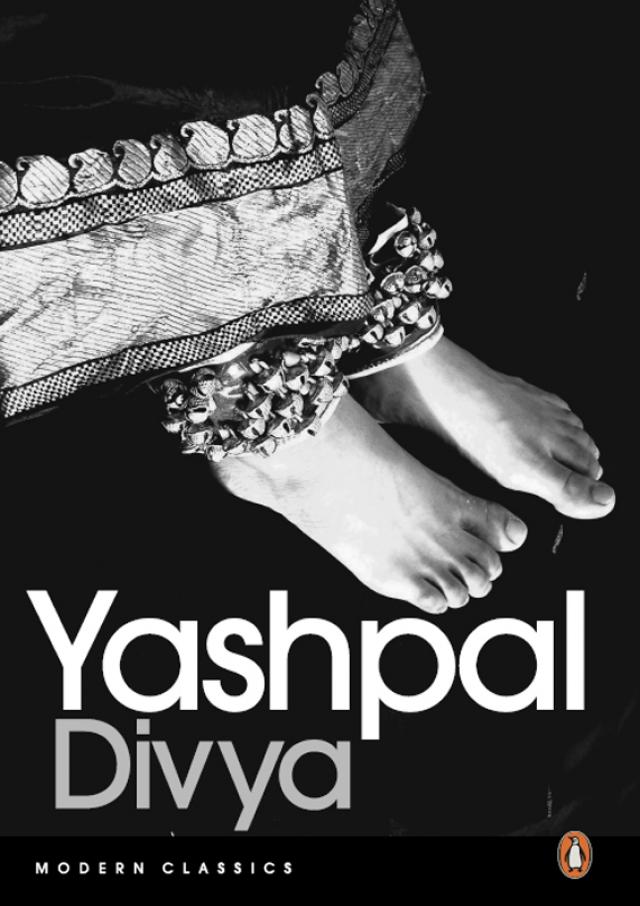
Cover photograph © Chitra Serang Bani
All rights reserved
This is a work of fiction. Names, characters, places and incidents are either the product of the author’s imagination or are used fictitiously and any resemblance to any actual person, living or dead, events or locales is entirely coincidental.
ISBN: 978-01-4310-312-7
This digital edition published in 2012.
e-ISBN: 978-81-8475-820-7
This book is sold subject to the condition that it shall not, by way of trade or otherwise, be lent, resold, hired out, or otherwise circulated without the publisher’s prior written consent in any form of binding or cover other than that in which it is published and without a similar condition including this condition being imposed on the subsequent purchaser and without limiting the rights under copyright reserved above, no part of this publication may be reproduced, stored in or introduced into a retrieval system, or transmitted in any form or by any means (electronic, mechanical, photocopying, recording or otherwise), without the prior written permission of both the copyright owner and the above-mentioned publisher of this book.
Yashpal, Divya