

George michael, p.31
George Michael, page 31
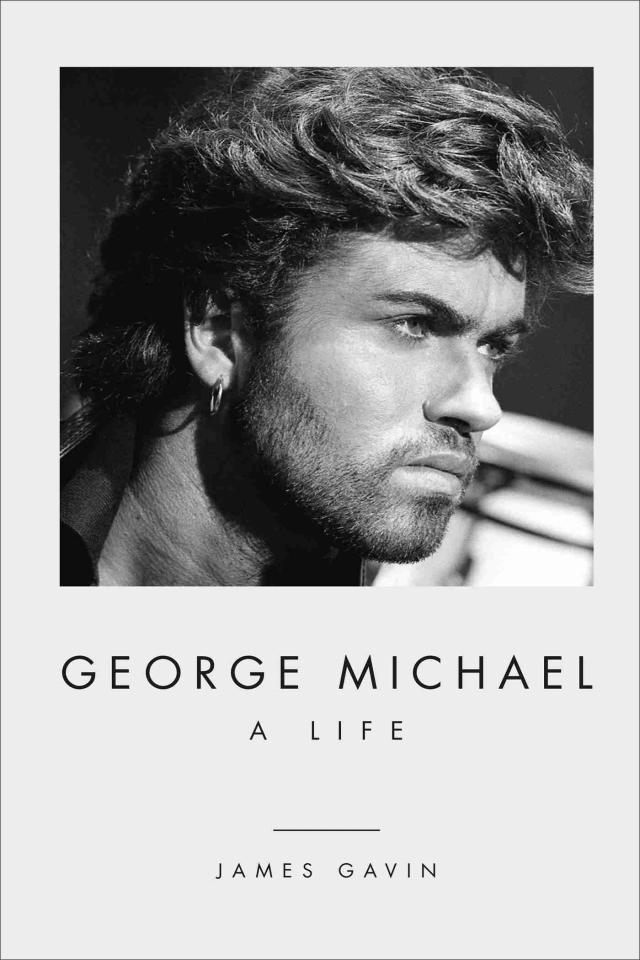


Watching Deal or No Deal, a game show, Michael saw a man talking about his wife’s need for costly fertility treatments. He sent them an anonymous £15,000 grant. One day he observed a woman crying in a café; he said hello, and she confessed she was mired in debt. He sent her £25,000. Michael tipped a bartender £5,000 when he learned she was struggling to repay a loan for her nursing studies. Periodically he loaded up his Range Rover with soup and sandwiches made in his home and drove to Cardboard City, a food dispensary in the poor London neighborhood of Holborn. He doled out meals by hand, chatting freely. “The funniest thing about it all is that no one seems to recognize him,” said a fellow volunteer. “He comes down in jeans and a baseball cap and mucks in with the rest of us. George is a genuinely nice bloke. The youngsters often tell him he looks like George Michael and he laughs and says people tell him that all the time. When anyone asks what he does for a living, he tells them he’s self-employed.”
Michael hadn’t performed a full show in about three years, and he longed to reconnect with what his life was all about. In October 1996, he returned to pure music-making in a BBC radio concert, “An Audience with George Michael”; he also taped an installment of MTV Unplugged, the series of handsomely produced specials that showcased established stars in acoustic settings. In both shows he stressed Older, whose songs he hoped to keep alive.
MTV Unplugged was an adult oasis on a network whose target demographic topped out at thirty-four. Michael taped it at a studio in East London for an invited crowd of fewer than two hundred. He sat for the whole show, with seventeen musicians and singers arranged artfully around him in a circle; like him, they wore black. At both the Unplugged and BBC shows he could look into nearly every listener’s face, which he found scarier than singing into a dark sea of fifteen thousand. Now, though, he felt no pressure to deliver to the back of an arena, moving all the while. Michael just sang, and with his voice free of the usual reverb, it had rarely sounded so supple and free.
He lingered over some of his saddest songs: “You Have Been Loved,” “Older,” and “Praying for Time.” The one cover he sang, “I Can’t Make You Love Me,” written by two Nashville songwriters, Mike Reid and Allen Sham-blin, came from Bonnie Raitt’s biggest-selling album, Luck of the Draw. Raitt sang of a bedtime scene between her and the man who had drifted away from her: “I’ll close my eyes / Then I won’t see / The love you don’t feel / When you’re holding me.”
In the five years since, “I Can’t Make You Love Me” had been covered widely; even Prince had recorded it—the likely reason that Michael was now singing it, too. But Michael’s version mimicked no one’s. He sang as though he were recalling his first heartache; his voice sounded years younger. His version climbed to No. 3 in the United Kingdom.
After that, there would be no more chart-toppers for Michael. But the playing field of pop recording was shifting rapidly. The public was losing patience with the zooming list price of new CDs, which in the States had reached $18.99. In 1999, two computer developers, Shawn Fanning and Sean Parker, neither of them yet twenty, developed Napster, an internet file-sharing service through which tracks could be bootlegged and downloaded for free. A court injunction halted Napster in 2001, but now millions had discovered the pleasures of downloading songs at little or no cost.
Well before his failed lawsuit against Sony, Michael had tired of corporations. “Let’s start our own label—fuck ’em,” he told Andros, who for years had dabbled in record producing, frequently with Michael’s help. Once more Michael’s template was Prince, who had founded his own label, NPG (New Power Generation). But Andros took that ambition further; he saw a future in which artists could produce and sell their music directly on the internet. He got Michael excited over the possibilities. The singer told the Times: “I can’t help but believe that music will become one of the first things that the public will buy online.” If that happened, he predicted, record stores would crumble.
Thus was born Ægean Records, paid for by Michael and run by Georgiou. As an experiment, he posted Michael’s recording of “Ain’t No Stoppin’ Us Now” on the label’s website for a $0.99 download. Sales were strong.
He and Georgiou sketched out a plan to offer the sort of artist-friendly deals Michael had fought for. Once production costs were recouped, performers would receive 50 percent of the profits; anyone who felt unhappy could leave.
It was a gallant plan, but Michael left most of the work to Andros. He was feeling neither ambitious nor social, except with regard to sex. Michael had begun frequenting Beverly Hot Springs, a day spa in the Koreatown neighborhood of Los Angeles. Though ostensibly straight, it had a substantial gay clientele; it was also known for attracting celebrities and those who wanted to meet them. It was there, in June 1996, that Michael met Kenny Goss, his next boyfriend.
Goss, who had recently moved to Los Angeles from his native Texas, was hardly Michael’s type; he was smooth, cornfed, and all-American, not hairy and swarthy. He spoke with a hint of a twang and had a gleaming smile with “very expensive teeth,” as a friend of Michael’s called them. Goss, who was two years older than Michael, had worked for the National Cheerleaders Association, selling uniforms and teaching cheerleading technique. “He acted like a star,” said a colleague, “even when he was selling cheerleading clothes.”
In Los Angeles, he set up a business as a gym-equipment salesman, but he had grander ambitions, which he attained once he had caught Michael’s eye. “It wasn’t the big love-at-first-sight thing that he’d had with Anselmo,” said Lesley-Ann Jones, a columnist who knew Michael. But Goss was an antidote to Michael’s loneliness; he seemed like a nice, solid boyfriend at a time when Michael had lost hope of finding one. He yearned to show Goss off, but he was still programmed to be secretive. Johnny Douglas recalled walking into the lounge of a recording studio and seeing Michael on the sofa with his arm around Goss; spotting Douglas, Michael yanked his arm away.
Even so, Goss gave Michael a shoulder in the hard times ahead. Monogamy, however, was not in the deal, on either side. “He knows who I am,” explained Michael. In June 1997, Goss moved in with him.
“I think he was good for George,” said Douglas. “I think he helped keep him on the straight and narrow a lot of the time.” Others were leery. In his memoirs, Andros recalled Goss telling him he had never heard of Michael until the day he had arrived in Los Angeles; the friend who picked Goss up, Andros said, played “Fastlove” in the car. “It would have been impossible for a man of Kenny’s age, being the party animal that he was, not to have danced to or heard one of his songs.” One of Michael’s band members felt a continual chill from the star’s new boyfriend. “He was terribly self-important, I felt. If you said, ‘Hi, Kenny,’ he wouldn’t stop and talk. Just ‘How ya doing?’ and he kept walking.” Phil Palmer recounted an afternoon when Michael, with Goss at his side, arrived at a venue and was shown to his lavishly stocked dressing room. Goss, said Palmer, “demanded that he have his own dressing room. And that’s what he got on subsequent occasions.”
But Goss made Michael feel lovable again. The thought of her son being alone had worried Lesley, and Michael decided to tell her “this fantastic news.” She had evolved into his best friend; from her he got “a completely unwavering feeling that nothing I can do can stop this person from loving me, supporting me, and believing in me.”
She couldn’t do enough to show her son how much she loved him; Lesley even made regular visits to his homes to clean and do laundry. Shortly before the holidays of 1996, he phoned her and effused about Goss. After telling him how happy that made her, she divulged some news she’d been keeping secret: She had recently had surgery for skin cancer. Michael panicked, but Lesley assured him that she was fine. “Lesley was a very proud woman,” said Andros, “putting on a smiling face for everybody all the time.” In truth, her condition was serious, and she was on strong painkillers. But she didn’t want to burden her son or spoil anyone’s holidays.
After the New Year, however, there was no hiding the fact that Lesley was gravely ill. She spent much of the next few weeks in the cancer ward of Charing Cross Hospital in Hammersmith. So traumatized was Michael that he didn’t have the heart to visit. But by February 24, 1997, word had come that Lesley’s hours were numbered.
That night, Michael was due at Earls Court, the twenty-thousand-seat venue in London’s West End, for the BRIT Awards. Older had earned him a nomination for Best Male Solo Artist. His opponents were poised to outshine him from every angle. Sting’s album Mercury Falling had gone platinum in both the United Kingdom and the United States; Simply Red’s Greatest Hits had sold platinum six times over. Twenty-three-year-old Mark Morrison was England’s hottest R&B singer of the day; Tricky, twenty-nine, had helped create trip-hop, the music Michael had dipped into in Older. Elton John would present the award.
Unlikely as a win seemed, Michael had hoped to make his mother proud of him one last time. He had hoped against hope that he might make it to Earls Court; instead, he and his family were gathered by her bedside. John, who knew the situation, stood at the podium and solemnly read off the nominees.
He popped open the sealed card containing the winner’s name. Looking pained, he announced it to a roar of approval: George Michael. “Unfortunately, George cannot be here tonight,” said John. He read a message that Michael had prepared in case he won. “To everybody here, and everybody watching at home, I would like to apologize for not attending tonight’s award show. . . . My love to my family and friends and to everybody that has helped to make music my life for the last fifteen years. Thank you, thank you, thank you. George Michael.” Clutching the award, John added: “I’d like to add to that how proud I am of him, and to send my love to his family as well, and to George; he’s a dear friend.”
At the hospital, their excruciating vigil wore on. “We slept on the hospital floor that night,” said Andros. The next morning, Lesley died. She was fifty-nine.
•••
The memory of Anselmo haunted Michael daily; now he had lost the mother who loved him as no one else in his life ever would. “He never recovered from either of those things, I think,” said Phil Palmer. “The songs reflected it for the next twenty years.”
In the car on the way home, he and Andros played a demo by Ægean’s first signing: Toby Bourke, an Irish singer-songwriter, two years Michael’s junior. Bourke had a rugged, weathered voice and a slightly surly delivery, laced with hurt. The song, “Waltz Away Dreaming,” reminded Michael of his mother’s passing: “She had a history, joy and pain, and she chose to leave. . . . Now you fly like an eagle above while I waltz away.” As it played, Michael vowed to plunge back into work, just as Lesley would have wanted, and turn tragedy into beauty. He would produce “Waltz Away Dreaming” as a duet between him and Bourke. All this proved an unimaginable dream-come-true for Bourke, a pub performer who had been hungry for a break. Michael asked him to write a new chorus that would address the loss of Lesley.
Three days later they were together at SARM. Grief and pot had nearly immobilized Michael; that day and at the sessions that followed, Bourke was shocked by what he saw. “George would turn up stoned out of his mind. He would smoke skunk joints in the studio when we were meant to be working. He was easily getting through twenty joints a day. I remember how smelly and pungent it was when he was smoking them. But nobody was allowed to complain.”
In the midst of all this, Michael was helping plan his mother’s funeral service, which was held as secretly as possible in a small church. Michael was numb; he remembered not crying, which enabled him to give a soft-spoken, dignified eulogy. “Sometimes,” he said, “God can’t wait for his angels and takes them early.”
Harrowing as it had been to produce, “Waltz Away Dreaming” turned into a track that all concerned could be proud of. It had the homeyness of Celtic folk; the two singers seemed as sympathetically matched as brothers. Bourke sounded like the toughened elder; Michael, as high as he was, sang with a boyish innocence. He delivered the song’s closing words: “She’s waiting.”
Prior to the single’s release, Capital Radio held a fundraising weekend for Help a London Child. Michael and Georgiou offered the song as a premium for donors. When he heard that donations had reached £904,000 he phoned in and donated another £96,000 in Lesley’s memory. “I didn’t think I’d have a good day like this for a long time,” he said, “but I had a fantastic time just listening to the radio.”
The publicity cinched the success of “Waltz Away Dreaming,” which rose to No. 10 in England. Michael even paid for the production of a video that matched the track in its poignancy. It showed Bourke playing guitar and singing the song in a dim room of a family house, filled with candles and letters. An old man, seemingly widowed, wanders off as the room morphs into an enchanted forest. Michael is there in a black top coat, walking and singing amid flowering trees and nymphs. One was played by his friend Kate Beckinsale, a beautiful young British film actress. Michael and Bourke, also dressed in the color of mourning, meet and finish the song together.
If the video implied sympathy toward his father, Michael felt little; on the contrary, he blamed him for Lesley’s fate. Even Andros, who hated Jack, could not agree. But as the winter ended, Michael was doing his best to put on a public face. On March 26, 1997, he made his first live appearance since Lesley’s death; at the Capital FM Radio Awards in London, he collected honors for Best Male Vocalist and Best Album. Two weeks later, Michael was in Los Angeles to make a “surprise” appearance at the fourth annual VH1 Honors. There he would sing with Stevie Wonder, for the first time since their 1985 duet at the Apollo.
The show was devoted, as Variety put it, to “rock ‘n’ roll’s golden oldies”: James Taylor, Lou Reed, Steve Winwood, Emmylou Harris, Chaka Khan, and Wonder, all of whom, like Michael, had mellowed into cherished elder statesmen.
At the April 10 taping at the Universal Amphitheatre, Wonder was at the piano and in the midst of the song when Michael strode out, looking every inch the ultra-assured pop star in his trademark black Armani and shades. Their song was “Living for the City,” Wonder’s 1973 portrait of poverty and prejudice in a Mississippi ghetto. When Michael sang, out came a copy of Wonder, just as it had at the Apollo. For all Michael’s eminence, awe could still make his identity crumble.
Then he took the podium and read a statement geared to the night’s cause: the VH1 Save the Music Foundation, which seeks to bring music education into schools. Unlike the evening’s safely worded, stiffly delivered testimonials, Michael’s was a personal statement of dismay over hip-hop, which had helped push the show’s veteran participants aside. “For the first time in human history,” he announced, “music became the mouthpiece for anger, fear, and racial division, driving young people apart and even more tragically offering no solutions, no hope. . . . Surely we know that music’s greatest values are joy, elation, and that old favorite, pure escapism. Of course, there have always been protest songs, songs of political frustration; we just did one. But they’ve never overshadowed the heart of popular music in this way before. I’m sure I’m not the only musician in this room that believes it’s time for our business to wake up and admit that it has a responsibility to the children of the future.”
Out of the spotlight, Michael remained almost inconsolable over his losses. He was distracted, often in a foul mood, and, for all his charitable gestures, increasingly self-obsessed. “It seemed his dad’s arrogance was taking over,” said Andros. Yet Michael was humbled by a surprise invitation from Ron Weisner, the manager who had almost signed Wham!. Weisner was overseeing a duets album by Ray Charles, who was nearing seventy and in declining health. Weisner wanted Michael aboard; the stunned singer consented immediately. He flew to California to meet with Charles in his Culver City offices. The two of them chose a tortured lament for lost love, “Blame It on the Sun,” by Stevie Wonder and his then-wife Syreeta Wright. Michael and Charles recorded together, although the soul titan didn’t like how he sounded and redid his vocals later. “Ray became a fan of George,” said Weisner. The duet, released after Charles’s death in 2004, took on a father-and-son vibe; Charles sang like a ravaged, embittered old man, while Michael, in his sweetest voice, could have been a teenager wracked with heartbreak.
In Charles’s intimidating presence, Michael had been the ultimate professional. But Michael had more or less abandoned Toby Bourke, whose dreams of an album on Ægean were fading. For weeks and weeks Bourke heard not a word from Michael, whose dependence on antidepressants and pot were troubling. He engaged Paul McKenna, a famous British TV hypnotist and self-help guru, to try and break him of his smoking habit. It didn’t work.
The singer had lost all interest in Ægean, which under Andros’s direction had floundered. But Michael wasn’t helping. “We could do nothing without getting the okay from George,” said Andros, “but he was too hammered to give us that okay.” Niall Flynn had quit SARM to work there; in dismay he watched Andros and his cronies “throw around pie-in-the-sky ideas with nothing but bravado to back them up.”
A handful of artists besides Bourke were signed, to little or no avail. Michael had found Trigger, a British-based trio with an ethereal chillwave vibe. Ægean launched the band with a single, “Chameleon (Shed Your Skin)”; Michael’s heavily processed backup vocal was in the blend. But like Bourke, Trigger had to go elsewhere to get an album released. In one of their numerous yelling matches, Michael told Andros to shut the label down. From then on, the singer would release some of his own music under the Ægean imprint, but no more would he record outside artists.
•••
For the moment, Andros remained one of Michael’s “shadows,” as Danny Cummings had termed the group of acolytes who followed him everywhere. A few of its members, such as Shirlie Holliman and her husband, Spandau Ballet’s Martin Kemp, to whom Michael had introduced her, seemed sincerely caring. Others, said Phil Palmer, did not. “George was a gravy train. He surrounded himself with people who seemed to do absolutely nothing except smoke joints with him or get drunk with him. They were kind of employed to bolster his ego and to support his lifestyle. What should have happened, and what never did, is that his proper friends should have been more protective of him, I think.”





