

George michael, p.51
George Michael, page 51
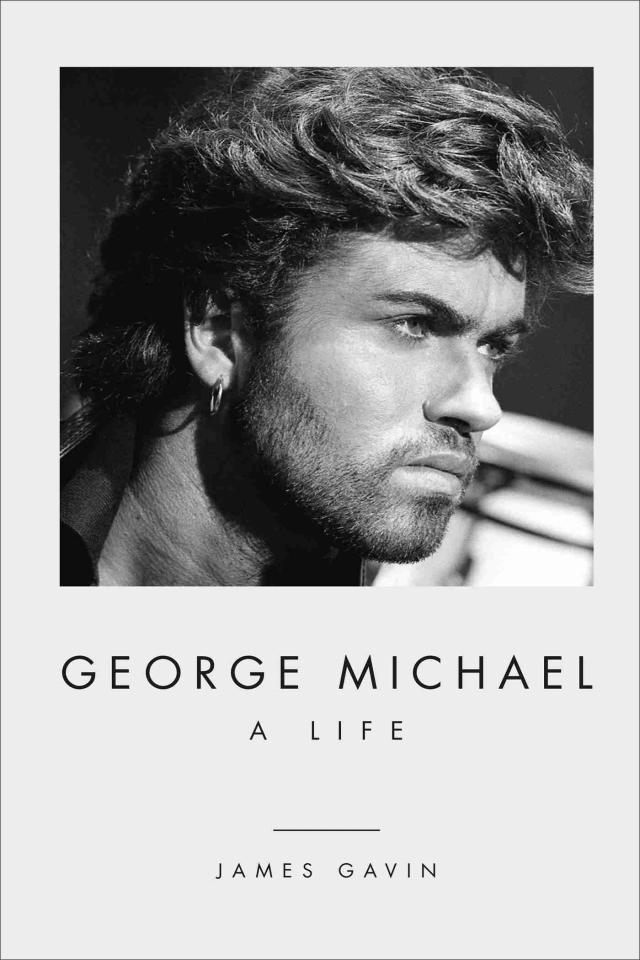


Fawaz, who that month had claimed he hadn’t been invited, sat far from the family and the funeral proceeded. Jack didn’t speak, but the minister conveyed his thoughts: Never had he thought his son would be so successful, but George had made him proud. Melanie took the lectern, acknowledging other guests and their importance to Michael. She noted Goss as though he were the widower; nobody mentioned the real one. She spoke of the family commitment to do right by Michael’s legacy. The ceremony lasted barely an hour. Fawaz left quickly.
Then came the burial, in the west section of the cemetery. Michael had bought a plot for his family; there he was laid in the ground alongside his mother. A white-rose arrangement in the shape of a large heart was placed on Lesley’s grave. Guests proceeded to a reception in Highgate.
A few weeks later, Goss’s account of the funeral showed up in the Sun. Though respectful, his interview was seen by those closest to Michael as a betrayal. The piece stressed that Goss had not been paid for this information directly; instead, the Sun had made a “donation” to the Goss-Michael Foundation.
At the family’s request, Michael’s grave bore only a small, unmarked headstone. The reason, ostensibly, was to prevent a barrage of fans, yet until 2020, that part of the cemetery was accessible only to those on guided tours. Grieving visitors from all over the world continued to heap offerings outside the Highgate house. In May 2017, the family posted a message on Michael’s website, asking fans to please claim their items out of consideration for the neighbors.
•••
The family’s problems with Fawaz had barely begun; soon they escalated into what Melanie termed a nightmare. Since well before Michael’s death, Fawaz had been living in the Regent’s Park house. He claimed that Michael had told him he could stay as long as he wanted, which may well have been true. Fawaz seemed to be hoping that Michael had left him the house in his will, whose details had not yet been disclosed. In fact, he had not inherited it—and while some American states granted ownership rights to common-law partners, the United Kingdom did not.
Nonetheless, Fawaz had no intention of leaving “my place.” Fawaz’s Twitter followers read his angry announcement that the credit cards Michael had given him had been canceled. With that, he began waging war. “An eye for an eye, a tooth for a tooth,” he wrote. Often he spoke directly to his dead boyfriend, whose extreme financial generosity should have left him comfortable for a long time. “George I am starving,” Fawaz wrote. “The icon partner”—as he called himself—“refused to sell stories worth millions when he was hungry. . . . Lunchtime I didn’t sell a story I searched my car for a pound here and a pound there so I could buy my double cheese burger.”
He found a short-term solution: “Goerge Micheal [sic] Items for sale if you interested please let me know.” He also offered the Range Rover Michael had given him one Christmas. “It’s a way so I can survive till we solve the problems with his family and lawyer. Since I’m left with no help and since no one is human anymore.” Fawaz thanked Michael for having gifted him with an unreleased album; which one wasn’t clear. “I feel so special,” he wrote. “I love you George.” Of course, he owned no rights—and when he posted a link to a track on Twitter, Michael’s lawyers demanded he remove it.
According to Fawaz, in the winter of 2018 lawyers sent him a letter, insisting he vacate the house. He stepped up his attacks on Michael’s inner circle, calling them “savages” and “deadly creatures”; to Michael, he complained: “They even accused me I had something to do with your death.” Word had spread that Fawaz was planning a tell-all book; for now he tweeted: “To every news papers in the world please get in touch I’m ready to talk.” Undoubtedly he knew things that the family did not want revealed. Reports followed that they were considering a £250,000 payoff to hush him up and get him out.
They could have afforded it. Despite the recent concerns over his cash flow, Michael had owned an abundance of assets, and the estate was valued at £95 to £105 million. Finally, after eighteen months of probate, the contents were revealed. Most of Michael’s fortune would go to his sisters, neither of whom had married. Yioda, who was far tougher than the growingly fragile Melanie, would serve as co-executor along with one of Michael’s lawyers. The singer had expected her to keep supporting his favorite charities and to bestow other funds where she saw fit. He directed that his artwork and antiques—including the Lennon piano—be sold and the funds poured into the philanthropic organization he had created, the Mill Charitable Trust.
To his father, Michael left the racehorse stud farm, located in Hertfordshire, that he had bought for him. Since Jack already lived there, it was a redundant gift. A short list of true-blue friends such as David Austin and Shirlie Kemp and a handful of loyal employees, including Connie Filippello, would be rewarded in amounts to be determined by Yioda.
“All of these people had one thing in common,” wrote Amanda Platell in the Mirror. “They were there for him through good times and bad. . . . The friends never betrayed him, but instead supported and defended him at every turn.”
The omissions were more telling. They included such close pals as Geri Halliwell and Kate Moss, although both women had plenty of their own money; his faithful studio colleagues Johnny Douglas and Niall Flynn; Andrew Ridgeley, who admittedly had been well compensated through “Careless Whisper”; Pepsi DeMacque, Shirlie’s fellow backup singer from Wham!; and his last two partners, Goss and Fawaz, who of course had reaped lavish rewards already. Fawaz’s Twitter followers read a brutal response: “George I hate you. Your power proved to me you could turn friends, family and strangers into liars, cowards and very much inhuman and yet this mega power can’t make or keep someone KIND or LOVING.”
Fawaz was no more the muscley hunk whom Michael had shown off to the world on Twitter. In July 2019, photographers snapped him shirtless on the balcony of the Regent’s Park house, belly hanging over his waistband and a cigarette in his mouth. Behind him, the glass panels of the French doors were smashed. Battered walls were visible inside. On Facebook, Fawaz posted a photo of a broken window with his fist held in front of it in silhouette; his middle finger was raised. Questioned by a Sun reporter, he said he was “renovating.” In fact, the family had upped its pressure to expel him.
Later that month, a neighbor reported that Fawaz had gone “absolutely berserk” and that there was “glass flying everywhere.” Others told of seeing Fawaz on the roof, pitching items that crashed into their gardens. Water gushed out the house’s front door. On the night of July 23, the police and fire department were called. As they entered, a shocking sight awaited them. “Every fixture and fitting, every door and window, everything George left in there—it’s all completely destroyed,” said a neighbor. “Even the toilets and sinks have been smashed. There’s major damage to the walls and even the ceilings.” Three young policemen in black-and-white uniforms escorted him out, handcuffed, and arrested him on suspicion of aggravated criminal damage. They drove him to the station, where he was held for approximately twenty-four hours.
The family had the locks changed and windows barred. Fawaz was finally out. He moved into a forty-nine-pound-per-night Travelodge; then, he said, he began “sleeping in the street in Covent Garden instead of being in my home . . . What a cheap ikon [sic] this George fucking Michael is.” Numerous photos were shot of him wandering the streets and sitting on stoops.
He got his revenge. On October 30, 2019, Fawaz addressed years of speculation in a single tweet. “George Michael was HIV+,” he wrote. “We found out in Vienna after his illness.” His representatives did not respond. Given Michael’s near-death of pneumonia and his notorious reputation for promiscuity and hard drug use, the claim caused hardly a ripple.
Fawaz wasn’t through. Later that day he posted: “He never wrote his own music. He paid other people to make the music for him and pretended it was him. Not so talented after all.” Michael, he added, was “extremely boring” in bed. He claimed he had taken photos of the dead body, although they didn’t surface. In August 2020, Fawaz was videotaped wandering around the neighborhood of Bethnal Green and bashing parked cars with a hammer. Police were called; they searched him, then reported finding Class A drugs in his possession. According to the New York Post, the officers on the scene “said that a man in his forties was ‘taken into custody and subsequently released under investigation.’”
Other tabloid-worthy incidents followed. No matter how low he sank, he held fast to his declaration: “I will revenge till the last breath of my life. . . . And no I won’t get a job.”
•••
The side of Michael that had made every good thing possible—his artistry—still shone in the best of his catalog. On his website, his sisters posted their vow to carry on Michael’s creative legacy “exactly as Yog would have wanted.” With that in mind, they appointed David Austin as adviser. Austin had spent the better part of his life in the shadow of his overwhelmingly charismatic best mate; he had served as caretaker, gofer, and occasional songwriting assistant. But according to Andros—who, in his memoirs, wrote of an amicable reunion call with his former friend shortly before his death—Michael had confided plans to cut Austin off after the New Year; it had to do with his annoyance over “David trying to take control.”
Now, all decisions as to his famous friend’s body of work would be made by lawyers, with input from Austin. What would Michael have thought? “George was really anti-corporate, anti-establishment,” said Flynn. “He was constantly cursing his lawyers and now they’re running it the way they want to run it.”
Having heard about a wealth of unreleased material, fans and writers awaited a stream of discoveries. Johnny Douglas was eager to help. Michael’s trusted producer for twenty years had retained outtakes and song fragments going back to 1995. Some showed promise, and he went about finishing them, but their release was blocked. “I said, ‘I’ve got these tunes, I’ve been working on them, these could be huge.’ No.”
September 2017 saw the premiere of the Nile Rodgers remix of “Fantasy” on BBC Radio 2. The release of Michael’s first posthumous single, revamped by a flashy producer, was news. Rodgers had given the old track a funk groove; he had also added sped-up samples of Michael’s vocals—a throwback to Faith, where Michael had copied Prince’s electronically created alter ego, Camille. On the website Queerty, David Grant compared the sound to that of a “choir of bipolar chipmunks.” Deon Estus was no more restrained. “It’s absolute fucking shit,” he said of the remix. “I love Nile. But it’s crap. George would turn in his grave!”
Michael’s last big project, the Freedom documentary, was almost certainly what he had wanted it to be. The star renowned for wanting his privacy had shown an almost pathological compulsion to explain himself, spelling out the what, how, and why of his every move, while assuring viewers of how happy he was. Freedom, which credited Michael and Austin as codirectors, zeroed in on his sense of victimization. Most of the gems of self-assessment from his talk with Kirsty Young did not appear; nor did the Michael of 2016, as least visually. Instead, a British actor, Simon Rutter, played a young and beautiful George. The glamour quotient was upped by a profusion of celebrity talking heads (Clive Davis, Stevie Wonder, Naomi Campbell, Ricky Gervais, Mary J. Blige, Tony Bennett, James Corden) who had barely known him; they and a few who had (Kate Moss, Elton John, Tracey Emin) either fawned over Michael or tiptoed around the truth.
In the Los Angeles Times, Mikael Wood called Freedom “essentially a glorified sizzle reel” that “does little to deepen our understanding of Michael or his music; it sheds no fresh light on why he made the artistic choices he did or how he carried them out.” Most of the starry commentators, he wrote, praised the star in “bland generalities that could be easily swapped into a film about Freddie Mercury or Amy Winehouse. . . . A film as shallow as this one doesn’t deserve anyone’s time.”
Another movie, long in the works, emerged in the 2019 holiday season. The romantic comedy Last Christmas featured a script that Emma Thompson, the esteemed British actress, had cowritten. Four years earlier, Thompson had visited Michael to propose a film that would flesh out the story in Wham!’s yuletide evergreen. He was amenable. Then he died, and Austin stepped in, receiving an associate producer credit. One Michael song burgeoned into a soundtrack of fifteen; according to one report, about a fifth of the $25–30 million budget went for the songs.
Emilia Clarke plays Kate, an aspiring singer who works in a Christmas store. She embarks on a romance with a mysterious man, Tom (played by Henry Golding), to whom she reveals she had a heart transplant. Her selfish behavior alienates him and he disappears. Only later does she learn that she had imagined their affair; Tom had died some time before in an accident, and she had received his donated heart. Armed with this knowledge, Kate becomes a force for good. She organizes a benefit talent show at the homeless shelter where, in her hallucinations, her mythical angel had volunteered. Joined by the residents, she sings “Last Christmas” (“I gave you my heart . . .”). In a flash cameo, Andrew Ridgeley is in the audience.
Though a box-office success in England, Last Christmas earned mostly scathing reviews. Rolling Stone’s David Fear called it “incredibly, shockingly, monumentally bad. The kind of bad that falls somewhere between finding a lump of coal in your stocking and discovering one painfully lodged in your rectum.”
Seeing the finished film, Niall Flynn shuddered at the use of “fifteen of George’s songs in this appalling movie” and on a soundtrack album. “George made money but he was never about money,” Flynn said. “The whole idea was to do the best for George’s legacy so he would be remembered as an artist of the stature he deserved. Once he had seen this film he would have said, ‘You can use ‘Last Christmas’ but I’m not putting any more of my songs in it.’” Among the inclusions was “This Is How (We Want You to Get High)” from the unfinished disco album. Flynn flashed back to his last visit with Michael in 2016, when his friend had instructed him, Austin, and James Jackman that the track had to be shelved.
The feeding frenzy that had encircled him since Wham! showed no signs of dying off. That March, Michael’s art collection—nearly two hundred pieces—had been auctioned off at Christie’s in London to benefit his pet causes. Nearly every item except the ones by Damien Hirst—whose shock value had waned—had proven a good investment on Michael’s part, with winning bids exceeding estimates. According to Christie’s, the proceeds topped $12.3 million.
Every bang of the auctioneer’s gavel occurred “under the watchful eye of George’s ex, Kenny Goss,” the Sun reported. Even though Michael had paid for the whole collection, Goss had claimed rights to it, which led to a nasty dispute. Ostensibly, Michael had purchased most of the works for the Goss-Michael Foundation, which had continued to house them. For Michael’s estate to reclaim the art had not been easy.
Goss retaliated. Clearly, he announced, Michael had not been “in his right mind” in 2013, when he had last revised his will. During their relationship, Goss had gotten used to receiving his £15,000-a-month allowance. In October 2020, the family was stunned to learn that Goss was suing them. After all he had done for Michael, argued Goss, he deserved to keep living in the style to which his ex had made him accustomed. In 2021, the estate settled with him for an undisclosed sum.
By this time, the family had suffered one more tremendous blow. Ever since Michael’s death, Christmas had been especially bleak for Melanie, the sister to whom he had been closest. She was one of the first people to whom he had come out; from then on she had been second only to their mother as his adoring cheerleader and support system. That hadn’t stopped her from pleading with him for years to seek help for his addictions. To watch him spiral downward had been almost unbearable.
Losing Michael had devastated her; she agonized over what more she might have done to save him, and she fell into an agonizing depression. Melanie had moved into the Hampstead house, where memories of her brother were constant. Now a recluse, she ate herself to a state of morbid obesity and developed diabetes and heart disease. On the day before Christmas Eve of 2019, she joined with her sister, father, and Austin in posting a valiant message on social media: “We will be swerving the bad and enjoying the good as much as we can this coming year.”
On Christmas Day, Melanie was found dead at the house. At fifty-five, she had lapsed into a coma triggered by diabetic ketoacidosis, a condition marked by low insulin and skyrocketing blood sugar. She had also had bronchopneumonia, a condition not unlike Michael’s in 2011. The fact that Melanie had died three years to the day after the published date of her brother’s loss seemed no coincidence. Now Jack would have to bury another child. Melanie’s funeral was a near-replica of Michael’s, down to the chapel and the white flowers. She was laid to rest in the family plot alongside her mother and brother.
•••
The man who had written two anthems called “Freedom” had known little of it; even in death he had not found peace. In his final months he had talked to Kirsty Young about his trademark sunglasses, behind which he had long hidden. “I think the glasses were probably very much a first sign that my place in life had begun to become a heavy thing for me to carry,” he said. “Something I didn’t truly believe in.” Michael recalled how much he had longed for one special person to make him feel complete, but the battle for self-love had been his toughest, and in the end he had lost. His feelings at the peak of Faith gave a clue as to what lay ahead. He was “adored by millions,” he said, “but couldn’t work out why.”
EPILOGUE
On April 8, 2017, the sun shone on a crowd of revelers in the cruising section of Hampstead Heath. Some were there for sex, others to dance; a few played bongos or sang. The party was hosted by Queer Tours of London, an activist group that hosted excursions through the byways of British LGBT history. A rainbow of genders, ages, and types had gathered in the park—some tattooed and pierced, others looking like people one might encounter at the office. Several wore white T-shirts that said CHOOSE LIFE. A few reached into baskets of condoms and ventured behind the bushes.
Then came the burial, in the west section of the cemetery. Michael had bought a plot for his family; there he was laid in the ground alongside his mother. A white-rose arrangement in the shape of a large heart was placed on Lesley’s grave. Guests proceeded to a reception in Highgate.
A few weeks later, Goss’s account of the funeral showed up in the Sun. Though respectful, his interview was seen by those closest to Michael as a betrayal. The piece stressed that Goss had not been paid for this information directly; instead, the Sun had made a “donation” to the Goss-Michael Foundation.
At the family’s request, Michael’s grave bore only a small, unmarked headstone. The reason, ostensibly, was to prevent a barrage of fans, yet until 2020, that part of the cemetery was accessible only to those on guided tours. Grieving visitors from all over the world continued to heap offerings outside the Highgate house. In May 2017, the family posted a message on Michael’s website, asking fans to please claim their items out of consideration for the neighbors.
•••
The family’s problems with Fawaz had barely begun; soon they escalated into what Melanie termed a nightmare. Since well before Michael’s death, Fawaz had been living in the Regent’s Park house. He claimed that Michael had told him he could stay as long as he wanted, which may well have been true. Fawaz seemed to be hoping that Michael had left him the house in his will, whose details had not yet been disclosed. In fact, he had not inherited it—and while some American states granted ownership rights to common-law partners, the United Kingdom did not.
Nonetheless, Fawaz had no intention of leaving “my place.” Fawaz’s Twitter followers read his angry announcement that the credit cards Michael had given him had been canceled. With that, he began waging war. “An eye for an eye, a tooth for a tooth,” he wrote. Often he spoke directly to his dead boyfriend, whose extreme financial generosity should have left him comfortable for a long time. “George I am starving,” Fawaz wrote. “The icon partner”—as he called himself—“refused to sell stories worth millions when he was hungry. . . . Lunchtime I didn’t sell a story I searched my car for a pound here and a pound there so I could buy my double cheese burger.”
He found a short-term solution: “Goerge Micheal [sic] Items for sale if you interested please let me know.” He also offered the Range Rover Michael had given him one Christmas. “It’s a way so I can survive till we solve the problems with his family and lawyer. Since I’m left with no help and since no one is human anymore.” Fawaz thanked Michael for having gifted him with an unreleased album; which one wasn’t clear. “I feel so special,” he wrote. “I love you George.” Of course, he owned no rights—and when he posted a link to a track on Twitter, Michael’s lawyers demanded he remove it.
According to Fawaz, in the winter of 2018 lawyers sent him a letter, insisting he vacate the house. He stepped up his attacks on Michael’s inner circle, calling them “savages” and “deadly creatures”; to Michael, he complained: “They even accused me I had something to do with your death.” Word had spread that Fawaz was planning a tell-all book; for now he tweeted: “To every news papers in the world please get in touch I’m ready to talk.” Undoubtedly he knew things that the family did not want revealed. Reports followed that they were considering a £250,000 payoff to hush him up and get him out.
They could have afforded it. Despite the recent concerns over his cash flow, Michael had owned an abundance of assets, and the estate was valued at £95 to £105 million. Finally, after eighteen months of probate, the contents were revealed. Most of Michael’s fortune would go to his sisters, neither of whom had married. Yioda, who was far tougher than the growingly fragile Melanie, would serve as co-executor along with one of Michael’s lawyers. The singer had expected her to keep supporting his favorite charities and to bestow other funds where she saw fit. He directed that his artwork and antiques—including the Lennon piano—be sold and the funds poured into the philanthropic organization he had created, the Mill Charitable Trust.
To his father, Michael left the racehorse stud farm, located in Hertfordshire, that he had bought for him. Since Jack already lived there, it was a redundant gift. A short list of true-blue friends such as David Austin and Shirlie Kemp and a handful of loyal employees, including Connie Filippello, would be rewarded in amounts to be determined by Yioda.
“All of these people had one thing in common,” wrote Amanda Platell in the Mirror. “They were there for him through good times and bad. . . . The friends never betrayed him, but instead supported and defended him at every turn.”
The omissions were more telling. They included such close pals as Geri Halliwell and Kate Moss, although both women had plenty of their own money; his faithful studio colleagues Johnny Douglas and Niall Flynn; Andrew Ridgeley, who admittedly had been well compensated through “Careless Whisper”; Pepsi DeMacque, Shirlie’s fellow backup singer from Wham!; and his last two partners, Goss and Fawaz, who of course had reaped lavish rewards already. Fawaz’s Twitter followers read a brutal response: “George I hate you. Your power proved to me you could turn friends, family and strangers into liars, cowards and very much inhuman and yet this mega power can’t make or keep someone KIND or LOVING.”
Fawaz was no more the muscley hunk whom Michael had shown off to the world on Twitter. In July 2019, photographers snapped him shirtless on the balcony of the Regent’s Park house, belly hanging over his waistband and a cigarette in his mouth. Behind him, the glass panels of the French doors were smashed. Battered walls were visible inside. On Facebook, Fawaz posted a photo of a broken window with his fist held in front of it in silhouette; his middle finger was raised. Questioned by a Sun reporter, he said he was “renovating.” In fact, the family had upped its pressure to expel him.
Later that month, a neighbor reported that Fawaz had gone “absolutely berserk” and that there was “glass flying everywhere.” Others told of seeing Fawaz on the roof, pitching items that crashed into their gardens. Water gushed out the house’s front door. On the night of July 23, the police and fire department were called. As they entered, a shocking sight awaited them. “Every fixture and fitting, every door and window, everything George left in there—it’s all completely destroyed,” said a neighbor. “Even the toilets and sinks have been smashed. There’s major damage to the walls and even the ceilings.” Three young policemen in black-and-white uniforms escorted him out, handcuffed, and arrested him on suspicion of aggravated criminal damage. They drove him to the station, where he was held for approximately twenty-four hours.
The family had the locks changed and windows barred. Fawaz was finally out. He moved into a forty-nine-pound-per-night Travelodge; then, he said, he began “sleeping in the street in Covent Garden instead of being in my home . . . What a cheap ikon [sic] this George fucking Michael is.” Numerous photos were shot of him wandering the streets and sitting on stoops.
He got his revenge. On October 30, 2019, Fawaz addressed years of speculation in a single tweet. “George Michael was HIV+,” he wrote. “We found out in Vienna after his illness.” His representatives did not respond. Given Michael’s near-death of pneumonia and his notorious reputation for promiscuity and hard drug use, the claim caused hardly a ripple.
Fawaz wasn’t through. Later that day he posted: “He never wrote his own music. He paid other people to make the music for him and pretended it was him. Not so talented after all.” Michael, he added, was “extremely boring” in bed. He claimed he had taken photos of the dead body, although they didn’t surface. In August 2020, Fawaz was videotaped wandering around the neighborhood of Bethnal Green and bashing parked cars with a hammer. Police were called; they searched him, then reported finding Class A drugs in his possession. According to the New York Post, the officers on the scene “said that a man in his forties was ‘taken into custody and subsequently released under investigation.’”
Other tabloid-worthy incidents followed. No matter how low he sank, he held fast to his declaration: “I will revenge till the last breath of my life. . . . And no I won’t get a job.”
•••
The side of Michael that had made every good thing possible—his artistry—still shone in the best of his catalog. On his website, his sisters posted their vow to carry on Michael’s creative legacy “exactly as Yog would have wanted.” With that in mind, they appointed David Austin as adviser. Austin had spent the better part of his life in the shadow of his overwhelmingly charismatic best mate; he had served as caretaker, gofer, and occasional songwriting assistant. But according to Andros—who, in his memoirs, wrote of an amicable reunion call with his former friend shortly before his death—Michael had confided plans to cut Austin off after the New Year; it had to do with his annoyance over “David trying to take control.”
Now, all decisions as to his famous friend’s body of work would be made by lawyers, with input from Austin. What would Michael have thought? “George was really anti-corporate, anti-establishment,” said Flynn. “He was constantly cursing his lawyers and now they’re running it the way they want to run it.”
Having heard about a wealth of unreleased material, fans and writers awaited a stream of discoveries. Johnny Douglas was eager to help. Michael’s trusted producer for twenty years had retained outtakes and song fragments going back to 1995. Some showed promise, and he went about finishing them, but their release was blocked. “I said, ‘I’ve got these tunes, I’ve been working on them, these could be huge.’ No.”
September 2017 saw the premiere of the Nile Rodgers remix of “Fantasy” on BBC Radio 2. The release of Michael’s first posthumous single, revamped by a flashy producer, was news. Rodgers had given the old track a funk groove; he had also added sped-up samples of Michael’s vocals—a throwback to Faith, where Michael had copied Prince’s electronically created alter ego, Camille. On the website Queerty, David Grant compared the sound to that of a “choir of bipolar chipmunks.” Deon Estus was no more restrained. “It’s absolute fucking shit,” he said of the remix. “I love Nile. But it’s crap. George would turn in his grave!”
Michael’s last big project, the Freedom documentary, was almost certainly what he had wanted it to be. The star renowned for wanting his privacy had shown an almost pathological compulsion to explain himself, spelling out the what, how, and why of his every move, while assuring viewers of how happy he was. Freedom, which credited Michael and Austin as codirectors, zeroed in on his sense of victimization. Most of the gems of self-assessment from his talk with Kirsty Young did not appear; nor did the Michael of 2016, as least visually. Instead, a British actor, Simon Rutter, played a young and beautiful George. The glamour quotient was upped by a profusion of celebrity talking heads (Clive Davis, Stevie Wonder, Naomi Campbell, Ricky Gervais, Mary J. Blige, Tony Bennett, James Corden) who had barely known him; they and a few who had (Kate Moss, Elton John, Tracey Emin) either fawned over Michael or tiptoed around the truth.
In the Los Angeles Times, Mikael Wood called Freedom “essentially a glorified sizzle reel” that “does little to deepen our understanding of Michael or his music; it sheds no fresh light on why he made the artistic choices he did or how he carried them out.” Most of the starry commentators, he wrote, praised the star in “bland generalities that could be easily swapped into a film about Freddie Mercury or Amy Winehouse. . . . A film as shallow as this one doesn’t deserve anyone’s time.”
Another movie, long in the works, emerged in the 2019 holiday season. The romantic comedy Last Christmas featured a script that Emma Thompson, the esteemed British actress, had cowritten. Four years earlier, Thompson had visited Michael to propose a film that would flesh out the story in Wham!’s yuletide evergreen. He was amenable. Then he died, and Austin stepped in, receiving an associate producer credit. One Michael song burgeoned into a soundtrack of fifteen; according to one report, about a fifth of the $25–30 million budget went for the songs.
Emilia Clarke plays Kate, an aspiring singer who works in a Christmas store. She embarks on a romance with a mysterious man, Tom (played by Henry Golding), to whom she reveals she had a heart transplant. Her selfish behavior alienates him and he disappears. Only later does she learn that she had imagined their affair; Tom had died some time before in an accident, and she had received his donated heart. Armed with this knowledge, Kate becomes a force for good. She organizes a benefit talent show at the homeless shelter where, in her hallucinations, her mythical angel had volunteered. Joined by the residents, she sings “Last Christmas” (“I gave you my heart . . .”). In a flash cameo, Andrew Ridgeley is in the audience.
Though a box-office success in England, Last Christmas earned mostly scathing reviews. Rolling Stone’s David Fear called it “incredibly, shockingly, monumentally bad. The kind of bad that falls somewhere between finding a lump of coal in your stocking and discovering one painfully lodged in your rectum.”
Seeing the finished film, Niall Flynn shuddered at the use of “fifteen of George’s songs in this appalling movie” and on a soundtrack album. “George made money but he was never about money,” Flynn said. “The whole idea was to do the best for George’s legacy so he would be remembered as an artist of the stature he deserved. Once he had seen this film he would have said, ‘You can use ‘Last Christmas’ but I’m not putting any more of my songs in it.’” Among the inclusions was “This Is How (We Want You to Get High)” from the unfinished disco album. Flynn flashed back to his last visit with Michael in 2016, when his friend had instructed him, Austin, and James Jackman that the track had to be shelved.
The feeding frenzy that had encircled him since Wham! showed no signs of dying off. That March, Michael’s art collection—nearly two hundred pieces—had been auctioned off at Christie’s in London to benefit his pet causes. Nearly every item except the ones by Damien Hirst—whose shock value had waned—had proven a good investment on Michael’s part, with winning bids exceeding estimates. According to Christie’s, the proceeds topped $12.3 million.
Every bang of the auctioneer’s gavel occurred “under the watchful eye of George’s ex, Kenny Goss,” the Sun reported. Even though Michael had paid for the whole collection, Goss had claimed rights to it, which led to a nasty dispute. Ostensibly, Michael had purchased most of the works for the Goss-Michael Foundation, which had continued to house them. For Michael’s estate to reclaim the art had not been easy.
Goss retaliated. Clearly, he announced, Michael had not been “in his right mind” in 2013, when he had last revised his will. During their relationship, Goss had gotten used to receiving his £15,000-a-month allowance. In October 2020, the family was stunned to learn that Goss was suing them. After all he had done for Michael, argued Goss, he deserved to keep living in the style to which his ex had made him accustomed. In 2021, the estate settled with him for an undisclosed sum.
By this time, the family had suffered one more tremendous blow. Ever since Michael’s death, Christmas had been especially bleak for Melanie, the sister to whom he had been closest. She was one of the first people to whom he had come out; from then on she had been second only to their mother as his adoring cheerleader and support system. That hadn’t stopped her from pleading with him for years to seek help for his addictions. To watch him spiral downward had been almost unbearable.
Losing Michael had devastated her; she agonized over what more she might have done to save him, and she fell into an agonizing depression. Melanie had moved into the Hampstead house, where memories of her brother were constant. Now a recluse, she ate herself to a state of morbid obesity and developed diabetes and heart disease. On the day before Christmas Eve of 2019, she joined with her sister, father, and Austin in posting a valiant message on social media: “We will be swerving the bad and enjoying the good as much as we can this coming year.”
On Christmas Day, Melanie was found dead at the house. At fifty-five, she had lapsed into a coma triggered by diabetic ketoacidosis, a condition marked by low insulin and skyrocketing blood sugar. She had also had bronchopneumonia, a condition not unlike Michael’s in 2011. The fact that Melanie had died three years to the day after the published date of her brother’s loss seemed no coincidence. Now Jack would have to bury another child. Melanie’s funeral was a near-replica of Michael’s, down to the chapel and the white flowers. She was laid to rest in the family plot alongside her mother and brother.
•••
The man who had written two anthems called “Freedom” had known little of it; even in death he had not found peace. In his final months he had talked to Kirsty Young about his trademark sunglasses, behind which he had long hidden. “I think the glasses were probably very much a first sign that my place in life had begun to become a heavy thing for me to carry,” he said. “Something I didn’t truly believe in.” Michael recalled how much he had longed for one special person to make him feel complete, but the battle for self-love had been his toughest, and in the end he had lost. His feelings at the peak of Faith gave a clue as to what lay ahead. He was “adored by millions,” he said, “but couldn’t work out why.”
EPILOGUE
On April 8, 2017, the sun shone on a crowd of revelers in the cruising section of Hampstead Heath. Some were there for sex, others to dance; a few played bongos or sang. The party was hosted by Queer Tours of London, an activist group that hosted excursions through the byways of British LGBT history. A rainbow of genders, ages, and types had gathered in the park—some tattooed and pierced, others looking like people one might encounter at the office. Several wore white T-shirts that said CHOOSE LIFE. A few reached into baskets of condoms and ventured behind the bushes.


