

Abortionist, p.17
Abortionist, page 17
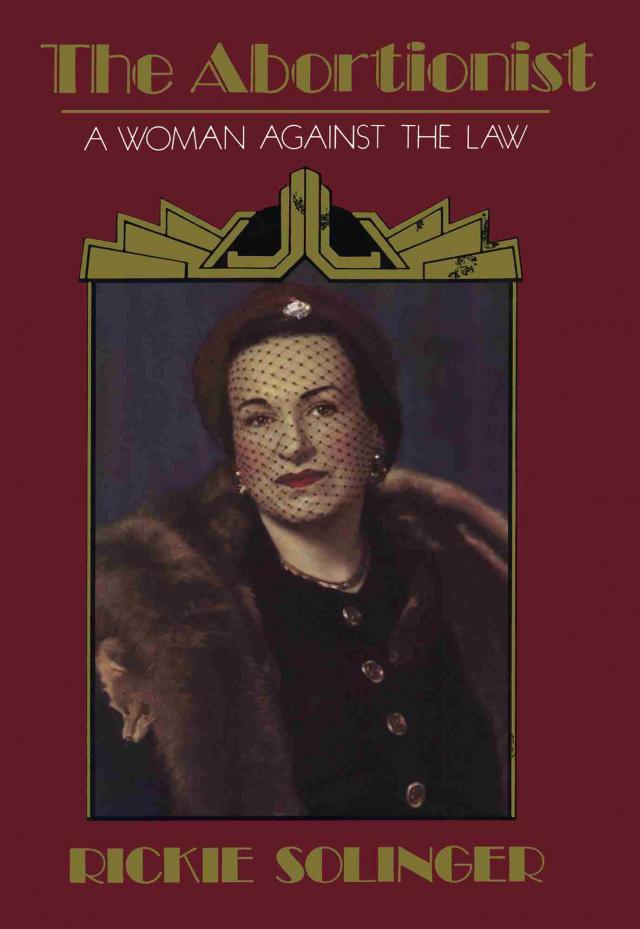


In the late 1930s, conjugal life in Portland (and elsewhere) began to feel the influence of Margaret Sanger’s national birth control campaign. It had been twenty-four years since the crusader for contraception had come to Portland, and now few people remembered how she had been locked up for distributing birth control literature. Linda Gordon has described the changes of the late 1930s in this way: “Judges, doctors, government administrators, and pharmaceutical houses entering the contraceptive business were all persuaded by an enormous change not only in public opinion but in public demand for birth control.” A poll commissioned by the Ladies’ Home Journal at this time reported that seventy-nine percent of its readers approved of birth control, and over the course of the thirties, the National Committee for Federal Legislation for Birth Control claimed that it had grown from one thousand backers in 1931 to twelve million in 1937. Under this kind of pressure, the American Medical Association at last endorsed “artificial contraception” in the late thirties, and a landmark federal court decision poked holes in the old Comstock Law of 1873 that had defined contraceptive information and materials as obscene. Like many new converts to the birth control cause in the waning years of the Depression, the court expressed its interest in contraception as a “healthy alternative to the national epidemic of illegal abortions” that had been performed during the decade of economic dislocation. It can be argued that these years marked, in fact, the first surge of both mass and elite support for contraception.
This is not to say, of course, that any woman in Portland or anywhere else who wanted to use birth control in the late thirties or early forties could get her hands on the information or materials she sought. Even the women who could afford to pay private physicians in those years had a hard time finding doctors willing to provide them with contraception, yet many did. For the first time, hundreds of married women in Portland, some of them the patients of Dr. Jessie Laird Brodie, a tireless advocate for the cause, now had a choice beyond the old alternatives of an unplanned, problematic pregnancy or a trip to the Broadway Building downtown.
A Portland labor organizer active in the Federation of Woodworkers in the late thirties knew that working women in that city were ready to think about contraception and to do what was necessary to get it for themselves. Julia Ruuttila remembered that during a lockout, the women’s auxiliary of the Federation tried to raise money for layettes because, as she put it, “the people that were locked out had no money to buy clothes for babies.” But the women rapidly moved beyond that strategy. “We got the idea,” she said, “that we should have someone come and speak to our auxiliary meetings on birth control because it was no time to be bringing any more children into the world when we couldn’t even feed the ones that we had. I had heard that Dr. Lena Kenin was interested in birth control. So I went to see her and she agreed to come and speak at a meeting on different methods of birth control, something that most of our members knew absolutely nothing about. It was the largest meeting that we ever had. We advertised it in all areas where the workers lived. It was just absolutely jammed.
“Well, she advocated the use of diaphragms to be used with some kind of antiseptic cream; however, they had to be fitted. So she volunteered her services. I think she agreed to fit diaphragms to a large number of women, maybe twenty. But we realized to get all of our people covered and to get those diaphragms bought, we were going to have to get other doctors interested. So we sent a committee up to the medical school. What a fight that was! The head of the medical school was a Catholic. Well, we had a sit down up there. That’s right! So they finally agreed to fit the diaphragms. We had a tussle with the welfare to make them buy the diaphragms, but we won that one too.”
Julia Ruuttila’s report is strong evidence that women in Portland were prepared to fight for alternatives to unhappy pregnancy and abortion at the end of the thirties, and that, to an unprecedented extent, it was possible to succeed. At least to some degree, the diminished traffic in Ruth Barnett’s office reflected these events and also the demographic and economic shifts in Portland. On the one hand, by 1938 the birthrate there and elsewhere had bounced back to its pre-Depression level, suggesting that women were feeling a new willingness and ability to augment their families. On the other hand, the new birth control option was affecting the number of abortion clients. The abortion business in 1940 was not what it had been just a few years earlier during the Depression, or what it would soon become under wartime conditions. Moreover, while the number of respectable illegal practitioners in Portland was smaller just before the war than it had been, and despite the retirement of Dr. Van Alstyne and the departure of Dr. Watts, Ruth still had a formidable senior colleague in the Broadway Building with whom she shared the trade.
Ever since Ruth came to work for Dr. Watts in 1929, she’d known Ed Stewart as a fellow practitioner, and she held him in awe. In her opinion, Stewart’s reputation was flawless and his office was “the most famous clinic of its kind in the Pacific Northwest, if not anywhere.” According to Ruth, Stewart brought distinction to the profession they shared. At the end of her life, she saved some of her highest praise for this man, whom she considered a very classy gentleman. She said, “He came from one of Oregon’s pioneer families and for years remained a brilliant surgeon. He was a cultured man without pretensions. A connoisseur of art, he kept his impressive collections of paintings both in his clinic and his home. He spent a great deal of money on worthy causes, including sizable grants he made on an anonymous basis to colleges and medical schools. Like the hero in “Magnificent Obsession,” he made these gifts under pledge of absolute secrecy. He was a very generous man.”
What Ruth did not reveal about Dr. Stewart then or ever was that, since 1934 at least, Ed Stewart had a close relationship with Reg Rankin and was more than once in on the entrepreneur’s deals as a silent partner. Stewart was not a man whom Rankin could hector or move around like a pawn on a chessboard, as he did the other abortion doctors he collected in the thirties. Stewart was more dignified and more successful than the others, but not too refined, it turned out, to make deals with Rankin. Unlike most of Rankin’s associates, Stewart knew how to stay in the background, to keep his name off the contracts Rankin was fond of drawing up, and he usually knew how to stay out of the way when things got hot. Yet the evidence shows that he was deeply involved in 1934 and 1935 in a number of aspects of the syndicate.
Early on, Rankin believed he could count on Stewart to participate in underwriting the capitalization of the Medical Acceptance Corporation, the credit business that Rankin hoped would replace the traditional practice of accepting engagement rings and fraternity pins from desperate women as collateral payment for abortions. In the summer of 1935, Rankin told Paul De Gaston that it was time to start such an operation, and he began to plot his strategy. First, he said, “I am going to call Dr. Stewart to see how much cash he can invest in it, and if I can get five or ten thousand dollars from each doctor, I will have something to start with.” Then, De Gaston remembered, Rankin picked up the phone and called Ed Stewart in Portland, and the two men worked out the details.
That same summer and into the fall, Rankin sent De Gaston to Portland to Stewart’s office a number of times. According to De Gaston, he was sent there to “show Dr. Stewart our method of abortion, this local anesthetic and also this sucker, how to use that.” Of course, by this time Ruth was a master of the method herself and occupied an office in the same building as Stewart. If Stewart merely had wanted to learn the aspiration method devised by his old colleague Watts, it is likely that Ruth would have been honored to teach him. But Stewart was, by this time, in business with Rankin, and Rankin generally insisted on using doctors, even when that meant an unlicensed doctor recently involved in a murder trial, as in the case of De Gaston.
In addition, Rankin and Stewart travelled together several times to Seattle and California in those years, and extended their partnership beyond the abortion business by investing together in a ranch in eastern Oregon. De Gaston had a role in this part of the relationship, as well. He said, “I would have, from time to time, to go to Portland and relieve Dr. Stewart while Mr. Rankin and he were away together on trips.”
When Rankin’s clinics were raided in 1936, the authorities in California were well aware that the syndicate had offices all the way up the coast in Portland and Seattle. They were well aware of the nature of Dr. Stewart’s practice, the location of his office, and his connection to Rankin. Yet they and the Portland police left him alone. At that time and for the next fifteen years, the authorities in Portland cracked down on many kinds of criminal activities, but displayed a willingness to recognize abortion practitioners as “needed necessities,” particularly if they appeared content to pursue their specialty quietly and with care.
However Rankin’s arrest and imprisonment may have personally affected Ed Stewart, it did not turn the doctor against the entrepreneur, or make him wary of participating in future schemes with the man. In fact, as soon as Rankin was released from jail and engaged in the task of assembling his old cohorts for the purpose of setting up a clinic in Reno, Dr. Stewart was right there with him. The Rankin-Stewart partnership was the key factor in Ruth Barnett’s removal from Portland to Reno.
The two men made the calculation that Ruth would be a more valuable asset in Reno, and so they sent her there. Business was off in the Broadway Building, and Rankin was desperate for an abortionist in Nevada. Stewart, holding an investment in both locations, could see that Ruth in Reno would be a solution to both problems.
Rankin had plenty of experience putting the screws on people, getting them to move when he said so, and where. He had reason to question whether he could strong-arm Ruth Barnett, but with Stewart’s help, Rankin thought the odds were better than even that she could be moved. Maggie, Ruth’s daughter, has a recollection that Ruth and Rankin became lovers that year. She also remembers that when Ruth left for Reno, she sent ahead her beautiful things—the oriental carpets from her office and the settees, oil paintings, and Chinese urns. She meant to stay for some time.
On the 14th of October, 1940, Ruth Barnett and Reg Rankin arrived together in Reno. Along with her finery, Ruth brought her medical instruments and the books of her trade, volumes she’d acquired during her studies for the naturopathy license in the early thirties and that she always kept nearby. One was a tome entitled Minor Surgery and another was the third edition of Preventative Medicine.
Warren Campbell, a contractor Rankin hired to refurbish the premises, was waiting for the couple in the Lyons Building. As soon as Ruth and Rankin arrived, Campbell pointed out some large boxes stacked in the corner of the suite’s front room. The boxes had arrived over the past couple of days from Bishoff’s of Oakland, California, a surgical supply company. They held a full set of equipment to outfit the sort of abortion clinic that Dr. Watts had taught Rankin to invest in: a Van Burdick aspirator, some rubber tubing, an irrigator and a pail, some operating tables, cabinets, and a sterilizer, all shipped from Oakland to Reno via the Oregon-Nevada-California Fast Freight Company. As Rankin opened the cartons, Ruth ticked off their contents. She was familiar with every item, not only because the pieces duplicated the contents of her office back home, but also because she herself had purchased this set in Oakland the month before.
Ever since he and Ruth had met with Cushing and St. John at the St. Francis Hotel in San Francisco on August 19th, Rankin had been clear about what he wanted from her. He wanted her to take charge of everything—medical equipment, decor, recruitment, and abortions. There was, however, one gray area. Despite the fact that, by this time, Rankin knew that St. John’s licensing situation in Nevada was hopeless, he let Ruth come to Reno under the impression that Valentine St. John was still in the picture. So when she arrived in Reno, she believed that it was only a matter of time before the doctor received his license in that state. Her understanding was that when St. John was properly credentialed in Nevada, he would be nominally in charge of the clinic, and Rankin had assured Ruth that there would be plenty of work for both practitioners. Ruth was used to working under these conditions. And she was satisfied that, under the circumstances, it was in everyone’s interest to have a medical man on the scene.
The rest of October was taken up with getting the clinic ready for business. J.C. Perry, Rankin’s former brother-in-law, the man who had had a part in running the Medical Assistance Corporation in L.A. back in 1935 and 1936, lived near Reno now, and Rankin gave him the job of taking Ruth around to buy the accoutrements still required to complete the office. By the first of November, Ruth was itchy to open for business. Everything was ready, but still St. John did not have a license. Ruth was not pleased that in this strange city where she knew no one but Rankin, there was no titular doctor to lend his protection to her work. At this point, Ruth complained to Rankin. She threatened to pack up her carpets and go back to Portland if things didn’t get moving soon.
Rankin was loathe to lose the only abortionist he had at the time, so the next day, he, his son (a young man in his twenties), and Dr. St. John took a trip to Las Vegas to find a doctor. They were looking for a certain old man who drank too much and didn’t have many patients anymore, but had, at one time, worked as a surgeon in the same hospital as St. John in Los Angeles. What made this man, Z.A. D’Amours, worth a trip to Las Vegas was that he possessed a Nevada medical license. St. John promised Rankin that D’Amours was just the man they needed.
When Rankin, his son, and St. John arrived in Las Vegas, they had some trouble at first locating D’Amours. Fortunately for them, before too long they chose the right stranger to ask, an attorney named Fred Alward who was standing in front of the Clark Building downtown. They asked him if he knew old Dr. D’Amours, and indeed, Mr. Alward had known the doctor well for ten years, and knew where his office was. The lawyer told the trio he would arrange a meeting at the Boulder Drugstore that evening. When Alward went to the doctor’s office to tell him he had visitors in town, however, he found the old man sleeping off a heavy evening of drinking. So at the appointed time, Alward met the men at the drugstore and told them, as he remembered later, that he “didn’t think that the doctor could very well see them that evening, that he was having a little drinking celebration, but that they could see him the next morning when he was sober.”
When Dr. D’Amours sobered up, he was glad to meet the visitors in the drugstore. He was fond of Dr. Valentine St. John, and he was in the kind of straits where unexpected callers bearing a business proposition were welcome. As Dr. St. John well knew, Dr. D’Amours was a guileless old man. It never occurred to D’Amours that there was anything untoward about the proposition that his friend from California and the other two gentlemen made him. No one mentioned the word abortion, and as far as D’Amours knew, Dr. St. John was a good man. Sometime later he described their common history with affection: “I was resident surgeon in the French Hospital in Los Angeles. He was a surgeon there, too, a very fine surgeon. I really did appreciate him, especially after he operated so well on my little daughter’s foot. Then I really learned to like him. In fact, I never knew anything bad about this man.”
The fact was, Dr. D’Amours had been waiting for something good to come along for some time. He was not disposed to scrutinize what the men told him about their intention to open a reputable “medico-surgical clinic” in Reno. St. John was one of many old friends and colleagues D’Amours had written to that fall, hoping one of them could give him a hand. As he put it, “I wrote that I wasn’t doing well in Las Vegas, and now St. John came along and said he could get me a collaboration. I told him I had no money to make a change, but Dr. St. John said not to worry, that they would help me if I could go right and be myself.”
Rankin and St. John left D’Amours that day with the notion that at last his life had turned the golden corner. They said he should wait and as soon as the clinic was ready, they would send for him. In the meantime, they said, they would leave him provided for. Indeed, before the trip back to Reno, Rankin stopped in at the Boulder Drugstore and made arrangements for the old man. Frank Crookston, the pharmacist in charge, remembered the transaction. “I seen Mr. Rankin on that Monday morning, I think it was. He came in the store and said he was about to leave town, and they wanted to leave some money with me for Dr. D’Amours, and I said, ‘Well, allright.’ Mr. Rankin told the young gentleman that he was with to write a check for fifty dollars and then he asked me if I would give it to Dr. D’Amours in small payments. He didn’t think it would be advisable that he get the whole fifty dollars at one time. I wrote a receipt for the check to the gentleman and that was the last I knew.”
That same day, while Rankin and St. John were recruiting old Dr. D’Amours, Ruth Barnett engaged the superintendent of the Lyons Building in Reno to paint “Nevada Clinical Group/ Z.A. D’Amours, M.D.” on the door of Room 307, the main entrance to the abortion clinic. She put in the work order that morning because St. John had assured her that the trip to Las Vegas would yield them the “titular head” they needed. He said there was no need to wait. For the next several weeks over in Las Vegas, and then down in Los Angeles, D’Amours waited to hear from his old friend St. John about when he was to come to Reno and take up his new duties.


