

Abortionist, p.30
Abortionist, page 30
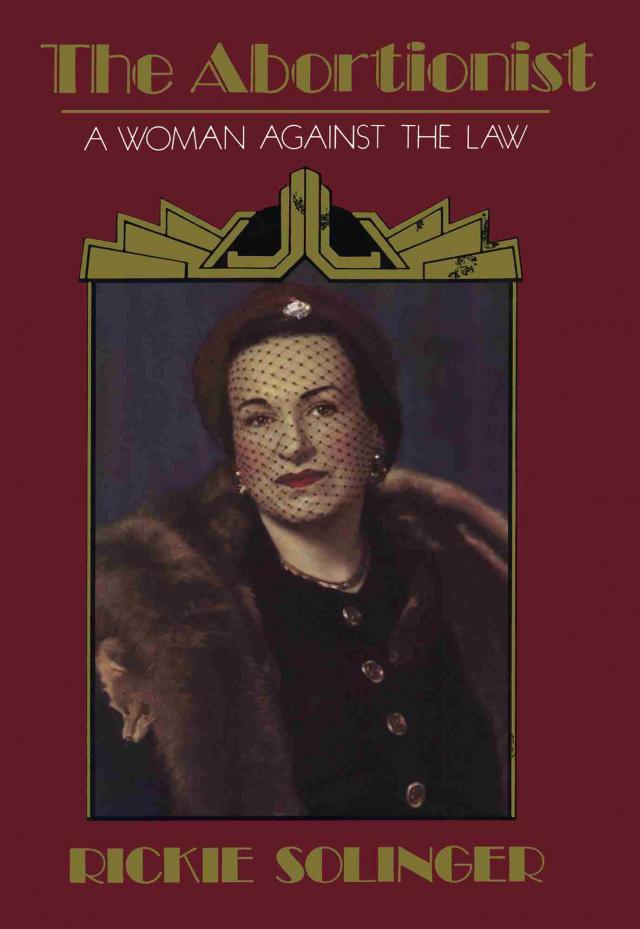


In the interim between Ruth’s final trial and her incarceration, the Greater Portland Council of Churches voted to support the Hoyt Bill, a measure liberalizing the state’s abortion laws then before the Oregon legislature. Soon after that, the Westminster Presbyterian Church in Portland held a public forum at which a minister, a doctor, and an academic leader strongly supported the proposition that what they called “therapeutic abortion” should be legal and accessible, not just to rich women, but to poor women as well. Both ordinary and prominent citizens began to write to their legislators in Salem, urging passage of Senate Bill 218. Most of the letter writers urged their representatives to support the bill for a reason that had little to do with women’s rights. The letters reflect a citizenry that had become convinced that legal abortion was the only really effective means of saving the country from the wages of the population bomb. Or perhaps the letters show that a number of citizens identified this argument as the one most appealing to their legislators.
A woman in Eugene wrote, “My husband and I have become extremely concerned over the population problem in the world, and hope this bill might be the first step leading the way for other states and nations to follow, toward stemming the tide of too many people.” A registered nurse in Portland sent a letter to the state capital expressing her concern about “our exploding population and rising illegitimacy rate.” A woman in Corvallis whose sister, married to a Methodist minister, had been forced to seek out a criminal abortionist, had a somewhat broader view of the need to legalize abortion. She wrote, “It is high time we end the hypocrisy of the present situation which provides subterfuges for the rich and discriminates against the middle class and the poor. Women are forced to bear unplanned and unwanted children often at the sacrifice of the standard of living of the family. I do not see how this squares with a society facing a population crisis, a society where many are screaming about the cost of welfare.”
Few citizens, even in the late sixties, were willing to speak in the terms that Ruth Barnett was using at the time and had used for almost fifty years, that abortion is a woman’s right and must be a woman’s choice. At the end of her life, Ruth wrote to a public she hoped was alert: “Millions of American women have had abortions. Millions more will seek such operations in the future. My sympathies will remain with them as long as I live because I have known their plight. And I have known also what it is to be helped in such a situation and to face life anew. So, while the laws against abortion remain, your duty is clear. If you believe as I do, that abortion is a matter of personal decision, then you must rise up and demand a change in the laws.”
On July 1, 1968, after five months in prison, Ruth promised a panel of five “solemn men”—the Oregon Parole Board—that she would never again perform an abortion. As she put it, “I looked them right in the eye and I said, ‘I will give you my sacred word as a lady, I’ll never do another abortion.’ ” There is no evidence that this time she broke her word. Sixteen months later, in December 1969, Ruth Barnett died of melanoma in Good Samaritan Hospital.
Maggie says her mother’s funeral was a sad affair. “She’d have been terribly disappointed. She was sure she was going to have a big turnout. It was just a scattering of people that came, just a few of the intimate people. The people she’d been drinking and playing cards with.” Both Portland newspapers gave the abortionist a prominent and respectful obituary. The day after she died, her old nemesis the Oregon Journal printed an appreciative column on Ruth’s life that indulgently noted her penchant for “a faultless perfection, a touch of drama, and a great glory-grabbing gusto for being center stage.” More important, the column noted, “So much of what Ruth Barnett believed—and her convictions about the ‘rightness’ of a woman’s right to abortion were genuine enough—is already coming to pass.” By 1976, the Journal was calling Ruth “a woman ahead of her time.” How times had changed.
But in one way, at least, history has enduringly consigned women like Ruth, who devoted her life to performing abortions in the illegal era, to the dark, sordid back alleys of the past. When her kind are remembered at all, they are invoked only as a warning. They are associated with the wretched dangers of the bad old days, before legalization. Practitioners like Ruth have been separated out from the real doctors, the physicians of conscience who performed illegal abortions, it’s said, out of a sense of ethics and duty. Ruth and her sort are remembered and discussed as mercenaries, as a source of danger and death. They are held up as symbols of what we must struggle against in our efforts to preserve Roe v. Wade.
Ruth Barnett would not have been surprised to find her kind still being reviled twenty-five years after her death, but she would have snorted in contempt because she knew, as well as anyone ever did, where the source of danger lay, and it wasn’t the abortionist. It was the law. It was the law that created the opportunity for a crook like Reg Rankin, and horror for young women like Diane McDermott and Shirley Packer, and even Dolores Lesser, denied access by law to a medically appropriate facility. And it was the law that placed Ruth Barnett, herself in some degree of danger every day for fifty years and locked her up, from time to time, even while she gave her life to providing a service that thousands of women were determined to get and few others would provide.
Ruth Barnett was, indeed, a woman ahead of her time, but her time has endured into our own in the sense that a great many people still believe that anti-abortion statutes can and will stop abortion. Ruth Barnett would have snorted at that one, too. For again, she knew—she lived her life as proof—that an unwillingly pregnant woman will find her own determination much more powerful than a coercive legislative prohibition. Nevertheless—and Ruth knew this, too—these statutes were devastatingly effective throughout her lifetime.
It is true that Roe v. Wade has had the effect of alleviating some of the contempt and danger that shaped women’s lives before 1973. After more than twenty years of legal abortion women are safer in this terrain. They are, for example, less likely to find themselves the prey of operators like Reg Rankin and less likely to resort to self-abortion. Still some substantial dangers remain. Abortion continues to be difficult for poor women and those in rural areas to obtain, partly because the number of abortion providers has diminished percipitiously over the past decade. Some politicians continue to play with the abortion issue and with women’s lives for political gain. Many states are placing one obstacle after another in the way of girls and women seeking to manage their own fertility. And thousands of anti-choice proponents have vowed to agitate until the final barriers against legal abortion have been resurrected.
It is a profound irony that nearly a quarter-century after Ruth Barnett’s death and the legalization of abortion, the abortion practitioner is again reviled and endangered in the United States. As in Ruth’s day, there are precious few women and men who can afford the psychic cost of performing abortions, never knowing if and when they will be targeted. And as in Ruth’s day, the ones who continue to practice do so out of a deep and abiding commitment to women’s choice. In a curiously telling twist, the practitioner is endangered today not so much by the spectre of the law, of course, or by the crackdowns and raids that shadowed abortionists in the past, as by the violence of anti-choice fanatics. But what is clear by now is that whatever the individuals or groups or public policies that threaten and endanger qualified abortion practitioners—in the United States or abroad—they also endanger the human dignity, the access to full citizenship, and the very lives of all girls and women determined to decide for themselves whether and when to become mothers.
Beyond these substantial dangers that continue to shape the abortion arena today is one more grave danger: our disregard for the past. The fact is, as the illegal era became history, it met the ignominious fate that history often suffers—denial, neglect, distortion.
Anti-choice proponents have denied the facts of the past as they press for the recriminalization of abortion, claiming both that new laws will eradicate abortion and that their campaign for anti-abortion statutes has nothing to do with a willingness to degrade and endanger women. Young people who did not live through the illegal era often neglect the past or forget its relevance when they assess what role the state should have in regulating female fertility. Even pro-choice advocates today are guilty of distorting the history of the illegal era when they propose that Roe v. Wade must be sustained to protect women from the vile back-alley practitioners who prevailed before legalization.
The story of Ruth Barnett and the criminal era challenges these re-readings of history. In Ruth’s story, the law did not stop abortion. Nor did the law protect women. It most certainly did not safeguard the morality and the dignity of the community. And yet, in Ruth’s day, anti-abortion statutes were fearsomely powerful, as the lives of all women were shaped by the contempt and danger embodied in the state’s effort to coerce and control female fertility.
Chapter Ten
* * *
AFTER RUTH
Ruth Barnett has been dead now for more than half a century. At the end of her life in the late 1960s, she urged people to stand up for “a woman’s right” to abortion. But for half a century before that, from 1918 through much of the 1960s, before the idea of “abortion rights” was a public rallying cry, she devoted herself to imagining the desperate plight of each girl or woman who showed up on her doorstep looking for help. And she devoted herself to delivering that help to one person at a time.
By the end of Ruth’s life, she had caught a glimmer of the robust feminist movement then being birthed in the United States. She admired how activists defined abortion rights as a keystone demand. Plus, she had certainly come to understand that the laws she’d always lived and worked under, the ones that guaranteed women’s endangerment and degradation, had to be thrown out and replaced with legislation that dignified and protected women’s health and their status. But Ruth never did talk or write much about power. Not the kinds of public and private power that shaped women’s lives, or the power that women lacked but were starting to claim, collectively, on their own behalf.
This is ironic, since Ruth spent so much of her life fighting powerful forces that controlled big pieces of her life and work. For decades she asserted her own wily power every day in efforts to blunt the power of lawmakers, of police, of judges, of semi-gangsters like Reg Rankin, of journalists and newspaper editors. Sometimes she prevailed; sometimes she ended up in jail. For the fifty years that she provided abortion services in the American West, the fact that her clients and their sisters had so little power, or none, was a natural feature of society and an individual tragedy.
Thinking over Ruth’s life now, I doubt whether this determined woman thought much about the particular history of laws and norms that made the degradation of women—their sexuality and reproductive capacity— seem natural. I am thinking of our long history of laws and policies that have targeted the reproductive lives and children of enslaved women, Native American women, women who got pregnant and gave birth and were not white, heterosexual, married, native-born, or citizens. Women who belonged to reviled political or religious groups, who were wives or divorced, who were rape victims, who were disabled, who were poor.
In the last decade of Ruth’s life, she might have read headlines in The Oregonian or the Oregon Journal about “women scamming the system” or “welfare queens,” women of color excoriated for having children while they were poor, who were subjected to midnight visits from welfare authorities checking whether a man was sharing their bed or maybe hiding in the closet to avoid the uninvited visitors. She was surely aware of mid-century panics about the “population explosion,” about “inner city” disobedience, about out-of-wedlock pregnancies, and about the scourge of her kind, the ones who performed illegal abortions. Policy experts and politicians responding to each of these so-called crises focused on the sex lives, pregnancies, and motherhood of the country’s most vulnerable women. They defined “excessive” indulgence in sex and irresponsible childbearing by certain females as the source of all social problems. And they meted out social, sexual, and reproductive punishments to solve these problems.
In her time, Ruth may have not seen the connection between man-in-the-house laws, which punished poor African American women for having a baby, and anti-abortion laws that aimed to stop white women from resisting another baby. Only later did advocates of reproductive justice make the connection plain: all of these mid-century “panics,” as well as other waves of moral upheaval and reform since the nation’s founding, used female reproductive capacity as the key to enforcing women’s vulnerability and their status as second-class members of society. All women were affected, though second-class status looked different by race. White politicians and policy makers exclusively valued and enforced the sex- and childbearing of white middle-class women as the engine for sustaining white population growth and white dominance in the United States. Enforcement meant using tactics that alienated women from their own sexual and reproductive bodies. It meant accusing the most vulnerable women of engaging in criminal activity as they tried to manage their fertility.
Whether or not Ruth knew the particulars of U.S. reproductive law and policy from slavery forward, and whether or not she understood the connections between the different kinds of punishments meted out to white women and women of color, an old fox like her wouldn’t have been surprised that the monumental Supreme Court decision legalizing abortion, handed down five years after she died, pointed in two directions at once.
On the one hand, Roe v. Wade (1973) gave women a substantial role in managing their own sexual bodies and fertility. The court’s decision suggested a new commitment to the idea that women, now that they were allowed to manage their fertility, were legal adults who had the capacity to be full citizens in the United States. The ruling also suggested that women’s decisions about reproduction were a private, not a public, matter. And Roe affirmed the First Amendment’s separation of church and state.
On the other hand, the majority opinion in Roe tempered or hedged in crucial ways the definition of women’s reproductive freedom. In particular, the decision, the work of an all-male majority, showed reluctance to invest fully in female dignity and self-management. For example, Roe defined a woman’s physician, almost certainly male, as her partner or guide in the decision-making process, weirdly making doctors surrogate husbands of multiple supplicating wives. Roe’s insistence on this partnership undermined the idea that the pregnant person had reproductive autonomy or even authentic decision-making power.
The majority opinion also asserted, confusingly, that the government had a special interest in the potential life of the fetus, even while it affirmed a woman’s right to end a pregnancy. The government’s interest was expressed by an escalating set of rules governing and limiting women’s decisions over the course of the three “trimesters” of gestation. This aspect of the decision suggested that as the fetus ages, the status of the woman— her access to self-management—regresses, a paradox for any woman getting closer and closer to assuming the full responsibility of motherhood.
Perhaps most important, the majority opinion justified legal abortion by invoking a right that is implied but not stated in the Constitution: the right of privacy. During the Supreme Court confirmation hearings for Ruth Bader Ginsburg in 1993, twenty years after Roe, the future justice expressed her strong regret that the decision rested on this privacy doctrine rather than on the principle that the Constitution protects abortion rights because women should have equal protection under the law. In retrospect, the privacy doctrine—the idea that an individual has what legal scholars call the negative right to be free from government interference in the “zone of privacy”—was also regrettable because “privacy” does not include a positive right establishing the government’s responsibility for making services affordable and accessible for all who want them. Roe indicated only that the government could not interfere. And the focus on individual privacy led straight to the association of abortion with personal, private “choice”—that is, the consumer-like choice making of an individual woman.
This association of “choice” and “privacy” has harmed the struggle to keep abortion legal in part because it has justified political, religious, and policy distinctions between individuals: good choice makers and bad ones, frivolous consumers and wise ones, “murderers” and mothers. Soon after the landmark Supreme Court decision, the reality set in: Roe v. Wade established a “right” for those with resources and a persuasive story—good choice makers who possess the wherewithal to enter the marketplace of reproductive options—but not a right for all unwillingly pregnant persons.
This two-sidedness of Roe reflects an unholy alliance of groups with profoundly different agendas, all promoting the legalization of abortion. Roughly, there were groups that claimed women’s rights and then groups that were already sick of calls for civil rights, women’s rights, and welfare rights in 1973. These latter groups included people who talked up abortion as a response to “welfare queens” and “overpopulation,” the racist justifications for legalization. They called for cutting down the number of babies born to poor women of color, the ones who swamped and overpopulated the ghettos of America. Roe’s two-sidedness, as well as several other cultural and political developments that took shape in the Age of Roe, such as the rise of evangelical Christianity as a political force, foretold half a century of precarity for both the Court’s decision and the women it aimed to empower.
Before we look at the ways that many women’s lives remained precarious after Roe—and at how the decision itself has hung by a narrowing strand—let’s honor, in the name of Ruth Barnett, the many ways that the legalization of abortion has served women’s interests. These paragraphs try to make clear that only when women have the right to manage their bodies do they have a chance to be full members of society.
A woman in Eugene wrote, “My husband and I have become extremely concerned over the population problem in the world, and hope this bill might be the first step leading the way for other states and nations to follow, toward stemming the tide of too many people.” A registered nurse in Portland sent a letter to the state capital expressing her concern about “our exploding population and rising illegitimacy rate.” A woman in Corvallis whose sister, married to a Methodist minister, had been forced to seek out a criminal abortionist, had a somewhat broader view of the need to legalize abortion. She wrote, “It is high time we end the hypocrisy of the present situation which provides subterfuges for the rich and discriminates against the middle class and the poor. Women are forced to bear unplanned and unwanted children often at the sacrifice of the standard of living of the family. I do not see how this squares with a society facing a population crisis, a society where many are screaming about the cost of welfare.”
Few citizens, even in the late sixties, were willing to speak in the terms that Ruth Barnett was using at the time and had used for almost fifty years, that abortion is a woman’s right and must be a woman’s choice. At the end of her life, Ruth wrote to a public she hoped was alert: “Millions of American women have had abortions. Millions more will seek such operations in the future. My sympathies will remain with them as long as I live because I have known their plight. And I have known also what it is to be helped in such a situation and to face life anew. So, while the laws against abortion remain, your duty is clear. If you believe as I do, that abortion is a matter of personal decision, then you must rise up and demand a change in the laws.”
On July 1, 1968, after five months in prison, Ruth promised a panel of five “solemn men”—the Oregon Parole Board—that she would never again perform an abortion. As she put it, “I looked them right in the eye and I said, ‘I will give you my sacred word as a lady, I’ll never do another abortion.’ ” There is no evidence that this time she broke her word. Sixteen months later, in December 1969, Ruth Barnett died of melanoma in Good Samaritan Hospital.
Maggie says her mother’s funeral was a sad affair. “She’d have been terribly disappointed. She was sure she was going to have a big turnout. It was just a scattering of people that came, just a few of the intimate people. The people she’d been drinking and playing cards with.” Both Portland newspapers gave the abortionist a prominent and respectful obituary. The day after she died, her old nemesis the Oregon Journal printed an appreciative column on Ruth’s life that indulgently noted her penchant for “a faultless perfection, a touch of drama, and a great glory-grabbing gusto for being center stage.” More important, the column noted, “So much of what Ruth Barnett believed—and her convictions about the ‘rightness’ of a woman’s right to abortion were genuine enough—is already coming to pass.” By 1976, the Journal was calling Ruth “a woman ahead of her time.” How times had changed.
But in one way, at least, history has enduringly consigned women like Ruth, who devoted her life to performing abortions in the illegal era, to the dark, sordid back alleys of the past. When her kind are remembered at all, they are invoked only as a warning. They are associated with the wretched dangers of the bad old days, before legalization. Practitioners like Ruth have been separated out from the real doctors, the physicians of conscience who performed illegal abortions, it’s said, out of a sense of ethics and duty. Ruth and her sort are remembered and discussed as mercenaries, as a source of danger and death. They are held up as symbols of what we must struggle against in our efforts to preserve Roe v. Wade.
Ruth Barnett would not have been surprised to find her kind still being reviled twenty-five years after her death, but she would have snorted in contempt because she knew, as well as anyone ever did, where the source of danger lay, and it wasn’t the abortionist. It was the law. It was the law that created the opportunity for a crook like Reg Rankin, and horror for young women like Diane McDermott and Shirley Packer, and even Dolores Lesser, denied access by law to a medically appropriate facility. And it was the law that placed Ruth Barnett, herself in some degree of danger every day for fifty years and locked her up, from time to time, even while she gave her life to providing a service that thousands of women were determined to get and few others would provide.
Ruth Barnett was, indeed, a woman ahead of her time, but her time has endured into our own in the sense that a great many people still believe that anti-abortion statutes can and will stop abortion. Ruth Barnett would have snorted at that one, too. For again, she knew—she lived her life as proof—that an unwillingly pregnant woman will find her own determination much more powerful than a coercive legislative prohibition. Nevertheless—and Ruth knew this, too—these statutes were devastatingly effective throughout her lifetime.
It is true that Roe v. Wade has had the effect of alleviating some of the contempt and danger that shaped women’s lives before 1973. After more than twenty years of legal abortion women are safer in this terrain. They are, for example, less likely to find themselves the prey of operators like Reg Rankin and less likely to resort to self-abortion. Still some substantial dangers remain. Abortion continues to be difficult for poor women and those in rural areas to obtain, partly because the number of abortion providers has diminished percipitiously over the past decade. Some politicians continue to play with the abortion issue and with women’s lives for political gain. Many states are placing one obstacle after another in the way of girls and women seeking to manage their own fertility. And thousands of anti-choice proponents have vowed to agitate until the final barriers against legal abortion have been resurrected.
It is a profound irony that nearly a quarter-century after Ruth Barnett’s death and the legalization of abortion, the abortion practitioner is again reviled and endangered in the United States. As in Ruth’s day, there are precious few women and men who can afford the psychic cost of performing abortions, never knowing if and when they will be targeted. And as in Ruth’s day, the ones who continue to practice do so out of a deep and abiding commitment to women’s choice. In a curiously telling twist, the practitioner is endangered today not so much by the spectre of the law, of course, or by the crackdowns and raids that shadowed abortionists in the past, as by the violence of anti-choice fanatics. But what is clear by now is that whatever the individuals or groups or public policies that threaten and endanger qualified abortion practitioners—in the United States or abroad—they also endanger the human dignity, the access to full citizenship, and the very lives of all girls and women determined to decide for themselves whether and when to become mothers.
Beyond these substantial dangers that continue to shape the abortion arena today is one more grave danger: our disregard for the past. The fact is, as the illegal era became history, it met the ignominious fate that history often suffers—denial, neglect, distortion.
Anti-choice proponents have denied the facts of the past as they press for the recriminalization of abortion, claiming both that new laws will eradicate abortion and that their campaign for anti-abortion statutes has nothing to do with a willingness to degrade and endanger women. Young people who did not live through the illegal era often neglect the past or forget its relevance when they assess what role the state should have in regulating female fertility. Even pro-choice advocates today are guilty of distorting the history of the illegal era when they propose that Roe v. Wade must be sustained to protect women from the vile back-alley practitioners who prevailed before legalization.
The story of Ruth Barnett and the criminal era challenges these re-readings of history. In Ruth’s story, the law did not stop abortion. Nor did the law protect women. It most certainly did not safeguard the morality and the dignity of the community. And yet, in Ruth’s day, anti-abortion statutes were fearsomely powerful, as the lives of all women were shaped by the contempt and danger embodied in the state’s effort to coerce and control female fertility.
Chapter Ten
* * *
AFTER RUTH
Ruth Barnett has been dead now for more than half a century. At the end of her life in the late 1960s, she urged people to stand up for “a woman’s right” to abortion. But for half a century before that, from 1918 through much of the 1960s, before the idea of “abortion rights” was a public rallying cry, she devoted herself to imagining the desperate plight of each girl or woman who showed up on her doorstep looking for help. And she devoted herself to delivering that help to one person at a time.
By the end of Ruth’s life, she had caught a glimmer of the robust feminist movement then being birthed in the United States. She admired how activists defined abortion rights as a keystone demand. Plus, she had certainly come to understand that the laws she’d always lived and worked under, the ones that guaranteed women’s endangerment and degradation, had to be thrown out and replaced with legislation that dignified and protected women’s health and their status. But Ruth never did talk or write much about power. Not the kinds of public and private power that shaped women’s lives, or the power that women lacked but were starting to claim, collectively, on their own behalf.
This is ironic, since Ruth spent so much of her life fighting powerful forces that controlled big pieces of her life and work. For decades she asserted her own wily power every day in efforts to blunt the power of lawmakers, of police, of judges, of semi-gangsters like Reg Rankin, of journalists and newspaper editors. Sometimes she prevailed; sometimes she ended up in jail. For the fifty years that she provided abortion services in the American West, the fact that her clients and their sisters had so little power, or none, was a natural feature of society and an individual tragedy.
Thinking over Ruth’s life now, I doubt whether this determined woman thought much about the particular history of laws and norms that made the degradation of women—their sexuality and reproductive capacity— seem natural. I am thinking of our long history of laws and policies that have targeted the reproductive lives and children of enslaved women, Native American women, women who got pregnant and gave birth and were not white, heterosexual, married, native-born, or citizens. Women who belonged to reviled political or religious groups, who were wives or divorced, who were rape victims, who were disabled, who were poor.
In the last decade of Ruth’s life, she might have read headlines in The Oregonian or the Oregon Journal about “women scamming the system” or “welfare queens,” women of color excoriated for having children while they were poor, who were subjected to midnight visits from welfare authorities checking whether a man was sharing their bed or maybe hiding in the closet to avoid the uninvited visitors. She was surely aware of mid-century panics about the “population explosion,” about “inner city” disobedience, about out-of-wedlock pregnancies, and about the scourge of her kind, the ones who performed illegal abortions. Policy experts and politicians responding to each of these so-called crises focused on the sex lives, pregnancies, and motherhood of the country’s most vulnerable women. They defined “excessive” indulgence in sex and irresponsible childbearing by certain females as the source of all social problems. And they meted out social, sexual, and reproductive punishments to solve these problems.
In her time, Ruth may have not seen the connection between man-in-the-house laws, which punished poor African American women for having a baby, and anti-abortion laws that aimed to stop white women from resisting another baby. Only later did advocates of reproductive justice make the connection plain: all of these mid-century “panics,” as well as other waves of moral upheaval and reform since the nation’s founding, used female reproductive capacity as the key to enforcing women’s vulnerability and their status as second-class members of society. All women were affected, though second-class status looked different by race. White politicians and policy makers exclusively valued and enforced the sex- and childbearing of white middle-class women as the engine for sustaining white population growth and white dominance in the United States. Enforcement meant using tactics that alienated women from their own sexual and reproductive bodies. It meant accusing the most vulnerable women of engaging in criminal activity as they tried to manage their fertility.
Whether or not Ruth knew the particulars of U.S. reproductive law and policy from slavery forward, and whether or not she understood the connections between the different kinds of punishments meted out to white women and women of color, an old fox like her wouldn’t have been surprised that the monumental Supreme Court decision legalizing abortion, handed down five years after she died, pointed in two directions at once.
On the one hand, Roe v. Wade (1973) gave women a substantial role in managing their own sexual bodies and fertility. The court’s decision suggested a new commitment to the idea that women, now that they were allowed to manage their fertility, were legal adults who had the capacity to be full citizens in the United States. The ruling also suggested that women’s decisions about reproduction were a private, not a public, matter. And Roe affirmed the First Amendment’s separation of church and state.
On the other hand, the majority opinion in Roe tempered or hedged in crucial ways the definition of women’s reproductive freedom. In particular, the decision, the work of an all-male majority, showed reluctance to invest fully in female dignity and self-management. For example, Roe defined a woman’s physician, almost certainly male, as her partner or guide in the decision-making process, weirdly making doctors surrogate husbands of multiple supplicating wives. Roe’s insistence on this partnership undermined the idea that the pregnant person had reproductive autonomy or even authentic decision-making power.
The majority opinion also asserted, confusingly, that the government had a special interest in the potential life of the fetus, even while it affirmed a woman’s right to end a pregnancy. The government’s interest was expressed by an escalating set of rules governing and limiting women’s decisions over the course of the three “trimesters” of gestation. This aspect of the decision suggested that as the fetus ages, the status of the woman— her access to self-management—regresses, a paradox for any woman getting closer and closer to assuming the full responsibility of motherhood.
Perhaps most important, the majority opinion justified legal abortion by invoking a right that is implied but not stated in the Constitution: the right of privacy. During the Supreme Court confirmation hearings for Ruth Bader Ginsburg in 1993, twenty years after Roe, the future justice expressed her strong regret that the decision rested on this privacy doctrine rather than on the principle that the Constitution protects abortion rights because women should have equal protection under the law. In retrospect, the privacy doctrine—the idea that an individual has what legal scholars call the negative right to be free from government interference in the “zone of privacy”—was also regrettable because “privacy” does not include a positive right establishing the government’s responsibility for making services affordable and accessible for all who want them. Roe indicated only that the government could not interfere. And the focus on individual privacy led straight to the association of abortion with personal, private “choice”—that is, the consumer-like choice making of an individual woman.
This association of “choice” and “privacy” has harmed the struggle to keep abortion legal in part because it has justified political, religious, and policy distinctions between individuals: good choice makers and bad ones, frivolous consumers and wise ones, “murderers” and mothers. Soon after the landmark Supreme Court decision, the reality set in: Roe v. Wade established a “right” for those with resources and a persuasive story—good choice makers who possess the wherewithal to enter the marketplace of reproductive options—but not a right for all unwillingly pregnant persons.
This two-sidedness of Roe reflects an unholy alliance of groups with profoundly different agendas, all promoting the legalization of abortion. Roughly, there were groups that claimed women’s rights and then groups that were already sick of calls for civil rights, women’s rights, and welfare rights in 1973. These latter groups included people who talked up abortion as a response to “welfare queens” and “overpopulation,” the racist justifications for legalization. They called for cutting down the number of babies born to poor women of color, the ones who swamped and overpopulated the ghettos of America. Roe’s two-sidedness, as well as several other cultural and political developments that took shape in the Age of Roe, such as the rise of evangelical Christianity as a political force, foretold half a century of precarity for both the Court’s decision and the women it aimed to empower.
Before we look at the ways that many women’s lives remained precarious after Roe—and at how the decision itself has hung by a narrowing strand—let’s honor, in the name of Ruth Barnett, the many ways that the legalization of abortion has served women’s interests. These paragraphs try to make clear that only when women have the right to manage their bodies do they have a chance to be full members of society.


