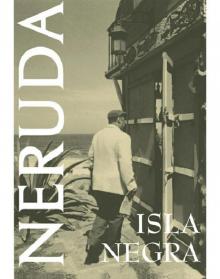
I explain a few things, p.10
I Explain a Few Things, page 10


for where I’m least expected
I turn up with my stuff
to gather the first wine
in the sombreros of autumn.
If they close the door, I’ll go in;
if they greet me, I’ll be off.
I’m not one of those sailors
who flounder about on the ice.
I’m adaptable as the wind is,
with the yellowest leaves,
with the fallen histories
in the eyes of statues,
and if I come to rest anywhere,
it’s in the nub of the fire,
the throbbing crackling part
that flies off to nowhere.
Along the margins
you’ll have come across your name;
I don’t apologize,
it had to do with nothing
except almost everything,
for you do and you don’t exist—
that happens to everybody—
nobody realizes,
and when they add up the figures,
we’re not rich at all—
now we’re the new poor.
He speaks of his enemies and divides up his possessions
I’ve been ripped apart
by a set of spitting rodents
who seemed too much for me.
In the sea I would often eat
dark sea cucumbers,
strange kinds of amber,
and storm lost cities
in my shirt and my armor
in ways that would kill you—
you would die of laughter.
So I leave to all who snarled at me
my traveler’s eyelashes,
my passion for salt,
the slant of my smile—
let them take it all away
discreetly, if that’s possible;
since they weren’t able to kill me
I can hardly stop them
from dressing in my clothes
or appearing on Sundays
convincingly disguised.
I left no one in peace
so they’ll grant me no peace.
That’s clear, but it doesn’t matter—
they’ll be publishing my socks.
He turns to other matters
I’ve left my worldly goods
to my party and my people—
we’re talking here of other things,
things both obscure and clear
which all add up to one thing.
It’s the same with the grapes
and their two powerful children,
white wine, red wine.
All life is red and white,
all clarity is cloudy.
It’s not all earth and adobe—
I inherited shadows and dreams.
He replies to some well-meaning people
Once they asked me
why my writing was so obscure.
They might ask the night that,
or minerals, or roots.
I didn’t know what to answer,
then, some time after,
two crazy men attacked me,
saying I was simple—
the answer’s in running water
and I went off, running and singing.
He parcels out his sufferings
Has anyone been granted
as much joy as I have
(it flows through my veins)
and this fruitful unfruitful mixture
that is my nature?
I’ve been a great flowing river
with hard ringing stones,
with clear night-noises,
with dark day-songs.
To whom can I leave so much,
so much and so little,
joy beyond its objects,
a lone horse by the sea,
a loom weaving the wind?
And hands on his joys
My own sorrows I leave to
all those who made me suffer
but by now I’ve forgotten them
and I don’t know where I lost them—
if they turn up in the forest
they’re like tangleweed.
They grow from the ground up
and end where you end,
at your head, at the air—
to keep them from growing,
spring has to be changed.
He comes out against hate
I’ve come within range of hate.
Terrifying, its tremors,
its dizzying obsessions.
Hate’s like a swordfish
invisible in the water,
knifing suddenly into sight
with blood on its blade—
clear water misleads you.
Why, why do we hate so much
those who hate us?
There they are underwater,
hunters lying in wait,
swords and oilcans ready,
spiderwebs and mousetraps.
It has nothing to do with being Christian,
or with prayer or with tailoring;
it’s just that hate is a loser.
Scales fell from eyes
in the poison market;
meanwhile the sun comes out
and I start to work
and to buy bread and wine.
But deals with it in his will
To hate I’ll leave
my own horseshoes,
my sailor’s shirt,
my traveler’s shoes,
my carpenter’s heart,
all things I did well,
and which helped me to suffer,
the strong clear things I had,
permanent and passing,
so that it dawns on the world
that those who have trees and water
can carve ships, set sail,
can go away and come back,
suffer and love,
have fears, do work,
be and go on being,
be fruitful and die,
be simple and complex,
not have ears,
turn misery to account,
wait for a flower’s coming—
in a word, live;
although there are always some shitheads
who will not accept our lives.
At last he turns in ecstasy to his love
Matilde Urrutia, I’m leaving you here
all I had, all I didn’t have,
all I am, all I am not.
My love is a child crying,
reluctant to leave your arms,
I leave it to you forever—
you are my chosen one.
You are my chosen one,
more tempered by winds
than thin trees in the south,
a hazel in August;
for me you are as delicious
as a great bakery.
You have an earth heart
but your hands are from heaven.
You are red and spicy,
you are white and salty
like pickled onions,
you are a laughing piano
with every human note;
and music runs over me
from your eyelashes and your hair.
I wallow in your gold shadow,
I’m enchanted by your ears
as though I had seen them before
in underwater coral.
In the sea for your nails’ sake,
I took on terrifying fish.
Your eyes widen from south to south,
your smile goes east and west;
your feet can hardly be seen,
and the sun takes pleasure
in dawning in your hair.
Your face and your body come from
hard places, as I do,
from rain-washed rituals,
ancient lands and martyrs.
The Bío-Bío still sings
in our bloodstained clay,
but you brought from the forest
every secret scent,
and the way your profile has of shining
like a lost arrow,
an old warrior’s medal.
You overcame me
with love and origins,
because your mouth brought back
ancient beginnings,
forest meetings from another time,
dark ancestral drums.
I suddenly heard myself summoned—
it was far away, vague.
I moved close to ancient foliage.
I touched my blood in your mouth,
dear love, my Araucana.
What can I leave you, Matilde,
when you have at your touch
that aura of burning leaves,
that fragrance of strawberries,
and between your sea-breasts
the half-light of Cauquenes,
and the laurel-smell of Chile?
It is high autumn at sea,
full of mists and hidden places;
the land stretches and breathes,
leaves fall by the month.
And you, bent over my work,
with both passion and patience,
deciphering the green prints,
the spiderwebs, the insects
of my fateful handwriting.
Lioness on your little feet,
what would I do without
the neat ways of your hands?
Where would I be wandering
with no heart, with no end?
On what faraway buses,
flushed with fire or snow?
I owe you marine autumn
with dankness at its roots
and fog like a grape
and the graceful sun of the country;
and the silent space
in which sorrows lose themselves
and only the bright crown
of joy comes to the surface.
I owe you it all,
my unchained dove,
my crested quail,
my mountain finch,
my peasant from Coihueco.
Sometime when we’ve stopped being,
stopped coming and going,
under seven blankets of dust
and the dry feet of death,
we’ll be close again, love,
curious and puzzled.
Our different feathers,
our bumbling eyes,
our feet which didn’t meet
and our printed kisses,
all will be back together,
but what good will it do us,
the closeness of a grave?
Let life not separate us;
and who cares about death?
Last remarks
So I’m saying goodbye, gentlemen,
after so many farewells;
and since I’m leaving nothing,
I want everyone to have something;
the stormiest thing I had,
the craziest and most seething
comes back to earth, comes back to life.
The petals of well-wishing
fell like bells
in the green mouth of the wind.
But I’ve had in abundance
the bounty of friends and strangers.
I’ve found generosity
wherever my ways took me
and I found it everywhere
like a shared-out heart.
Nor did medicinal frontiers
ever upset my exile—
they shared bread with me,
danger, shelter, wine.
The world threw open its orchards
and I went in, like Jack to his house,
between two rows of tenderness.
I have as many friends in the South
as I have in the North,
the sun could never set
on my friends in the East—
and how many in the West?
I can’t count the wheat.
I can’t number or count
my friends among the Oyarzunes.
In America, shaken by
so much night-fear,
there’s not a moon doesn’t know me,
no roads that don’t expect me,
in the poor clay villages
or the concrete cities
there’s some remote Arce
whom I don’t know yet
except we were born brothers.
Everywhere I gathered
the honey that bears devour,
the secret stirrings of spring,
the treasure of the elephants,
and that I leave to my own ones,
the clear stream of my family.
The people defined me
and I never stopped being one of them.
I held in the palm of my hand
the world with its archipelagoes
and since I can’t be denied,
I never denied my heart,
or oysters, or stars.
The poet ends his book by talking about his transformations and confirms his faith in poetry
From having been born so often
I have salty experience
like creatures of the sea
with a passion for stars
and an earthy destination.
And so I move without knowing
to which world I’ll be returning
or if I’ll go on living.
While things are settling down,
here I’ve left my testament,
my shifting extravagaria,
so whoever goes on reading it
will never take in anything
except the constant moving
of a clear and bewildered man,
a man rainy and happy,
lively and autumn-minded.
And now I’m going behind
this page, but not disappearing.
I’ll dive into clear air
like a swimmer in the sky,
and then get back to growing
till one day I’m so small
that the wind will take me away
and I won’t know my own name
and I won’t be there when I wake.
Then I will sing in the silence.
ALASTAIR REID
FROM
Navegaciones y regresos
(1957–59)
FROM
Navigations and Returns
(1957–59)
ODA AL ELEFANTE
Espesa bestia pura,
San Elefante,
animal santo
del bosque sempiterno,
todo materia fuerte,
fina
y equilibrada,
cuero
de
talabartería planetaria,
marfil
compacto, satinado,
sereno
como
la carne de la luna,
ojos mínimos
para mirar, no para ser mirados,
y trompa
tocadora,
corneta
del contacto,
manguera
del
animal
gozoso
en
su
frescura,
máquina movediza,
teléfono del bosque,
y así
pasa tranquilo
y bamboleante
con su vieja envoltura,
con su ropaje
de árbol arrugado,
su pantalón
caído
y su colita.
No nos equivoquemos.
La dulce y grande bestia de la selva
no es el clown,
sino el padre,
el padre en la luz verde,
es el antiguo
y puro
progenitor terrestre.
Total fecundación,
tantálica
codicia,
fornicación
y piel
mayoritaria,
costumbres
en la lluvia
rodearon
el reino
de los elefantes,
y fue
con sal
y sangre
la genérica guerra
en el silencio.
Las escamosas formas,
el lagarto león,
el pez montaña,
el milodonto cíclope,
cayeron,
decayeron,
fueron fermento verde en el pantano,
tesoro
de las tórridas moscas,
de escarabajos crueles.
Emergió el elefante
del miedo destronado.
Fue casi vegetal, oscura torre
del firmamento verde,
y de hojas dulces, miel
y agua de roca
se alimentó su estirpe.
Iba pues por la selva
el elefante con su paz profunda.
Iba condecorado
por
las órdenes más claras
del rocío,
sensible
a la
humedad
de su universo,
enorme, triste y tierno
hasta que lo encontraron
y lo hicieron
bestia de circo envuelta
por el olor humano,
sin aire para su intranquila trompa,
sin tierra para sus terrestres patas.
Lo vi entrar aquel día,
y lo recuerdo como a un moribundo,
lo vi entrar al Kraal, al perseguido.
Fue en Ceylán, en la selva.
Los tambores,
el fuego,
habían desviado
su ruta de rocío,
y allí fue rodeado.
Entre el aullido y el silencio entró
como un inmenso rey. No comprendía.
Su reino era una cárcel, sin embargo
era el sol como siempre, palpitaba
la luz libre, seguía verde el mundo,
con lentitud tocó la empalizada,
no las lanzas, y a mí,
a mí entre todos,
no sé, tal vez no pudo ser, no ha sido,
pero a mí me miró
con sus ojos secretos
y aún me duelen
los ojos
de aquel encarcelado,
de aquel inmenso rey preso en su selva.
Por eso hoy rememoro tu mirada,
elefante perdido
entre las duras lanzas
y las hojas
y en tu honor, bestia pura,
levanto los collares
de mi oda
para que te pasees
por el mundo
con mi infiel poesía
que entonces no podía defenderte,
pero que ahora
junta
en el recuerdo
la empalizada en donde aprisionaron
el honor animal de tu estatura
y aquellos dulces ojos de elefante
que allí perdieron todo lo que habían amado.
ODE TO THE ELEPHANT
Thick, pristine beast,
Saint Elephant,
sacred animal
of perennial forests,
sheer strength,
fine
and balanced
leather
I turn up with my stuff
to gather the first wine
in the sombreros of autumn.
If they close the door, I’ll go in;
if they greet me, I’ll be off.
I’m not one of those sailors
who flounder about on the ice.
I’m adaptable as the wind is,
with the yellowest leaves,
with the fallen histories
in the eyes of statues,
and if I come to rest anywhere,
it’s in the nub of the fire,
the throbbing crackling part
that flies off to nowhere.
Along the margins
you’ll have come across your name;
I don’t apologize,
it had to do with nothing
except almost everything,
for you do and you don’t exist—
that happens to everybody—
nobody realizes,
and when they add up the figures,
we’re not rich at all—
now we’re the new poor.
He speaks of his enemies and divides up his possessions
I’ve been ripped apart
by a set of spitting rodents
who seemed too much for me.
In the sea I would often eat
dark sea cucumbers,
strange kinds of amber,
and storm lost cities
in my shirt and my armor
in ways that would kill you—
you would die of laughter.
So I leave to all who snarled at me
my traveler’s eyelashes,
my passion for salt,
the slant of my smile—
let them take it all away
discreetly, if that’s possible;
since they weren’t able to kill me
I can hardly stop them
from dressing in my clothes
or appearing on Sundays
convincingly disguised.
I left no one in peace
so they’ll grant me no peace.
That’s clear, but it doesn’t matter—
they’ll be publishing my socks.
He turns to other matters
I’ve left my worldly goods
to my party and my people—
we’re talking here of other things,
things both obscure and clear
which all add up to one thing.
It’s the same with the grapes
and their two powerful children,
white wine, red wine.
All life is red and white,
all clarity is cloudy.
It’s not all earth and adobe—
I inherited shadows and dreams.
He replies to some well-meaning people
Once they asked me
why my writing was so obscure.
They might ask the night that,
or minerals, or roots.
I didn’t know what to answer,
then, some time after,
two crazy men attacked me,
saying I was simple—
the answer’s in running water
and I went off, running and singing.
He parcels out his sufferings
Has anyone been granted
as much joy as I have
(it flows through my veins)
and this fruitful unfruitful mixture
that is my nature?
I’ve been a great flowing river
with hard ringing stones,
with clear night-noises,
with dark day-songs.
To whom can I leave so much,
so much and so little,
joy beyond its objects,
a lone horse by the sea,
a loom weaving the wind?
And hands on his joys
My own sorrows I leave to
all those who made me suffer
but by now I’ve forgotten them
and I don’t know where I lost them—
if they turn up in the forest
they’re like tangleweed.
They grow from the ground up
and end where you end,
at your head, at the air—
to keep them from growing,
spring has to be changed.
He comes out against hate
I’ve come within range of hate.
Terrifying, its tremors,
its dizzying obsessions.
Hate’s like a swordfish
invisible in the water,
knifing suddenly into sight
with blood on its blade—
clear water misleads you.
Why, why do we hate so much
those who hate us?
There they are underwater,
hunters lying in wait,
swords and oilcans ready,
spiderwebs and mousetraps.
It has nothing to do with being Christian,
or with prayer or with tailoring;
it’s just that hate is a loser.
Scales fell from eyes
in the poison market;
meanwhile the sun comes out
and I start to work
and to buy bread and wine.
But deals with it in his will
To hate I’ll leave
my own horseshoes,
my sailor’s shirt,
my traveler’s shoes,
my carpenter’s heart,
all things I did well,
and which helped me to suffer,
the strong clear things I had,
permanent and passing,
so that it dawns on the world
that those who have trees and water
can carve ships, set sail,
can go away and come back,
suffer and love,
have fears, do work,
be and go on being,
be fruitful and die,
be simple and complex,
not have ears,
turn misery to account,
wait for a flower’s coming—
in a word, live;
although there are always some shitheads
who will not accept our lives.
At last he turns in ecstasy to his love
Matilde Urrutia, I’m leaving you here
all I had, all I didn’t have,
all I am, all I am not.
My love is a child crying,
reluctant to leave your arms,
I leave it to you forever—
you are my chosen one.
You are my chosen one,
more tempered by winds
than thin trees in the south,
a hazel in August;
for me you are as delicious
as a great bakery.
You have an earth heart
but your hands are from heaven.
You are red and spicy,
you are white and salty
like pickled onions,
you are a laughing piano
with every human note;
and music runs over me
from your eyelashes and your hair.
I wallow in your gold shadow,
I’m enchanted by your ears
as though I had seen them before
in underwater coral.
In the sea for your nails’ sake,
I took on terrifying fish.
Your eyes widen from south to south,
your smile goes east and west;
your feet can hardly be seen,
and the sun takes pleasure
in dawning in your hair.
Your face and your body come from
hard places, as I do,
from rain-washed rituals,
ancient lands and martyrs.
The Bío-Bío still sings
in our bloodstained clay,
but you brought from the forest
every secret scent,
and the way your profile has of shining
like a lost arrow,
an old warrior’s medal.
You overcame me
with love and origins,
because your mouth brought back
ancient beginnings,
forest meetings from another time,
dark ancestral drums.
I suddenly heard myself summoned—
it was far away, vague.
I moved close to ancient foliage.
I touched my blood in your mouth,
dear love, my Araucana.
What can I leave you, Matilde,
when you have at your touch
that aura of burning leaves,
that fragrance of strawberries,
and between your sea-breasts
the half-light of Cauquenes,
and the laurel-smell of Chile?
It is high autumn at sea,
full of mists and hidden places;
the land stretches and breathes,
leaves fall by the month.
And you, bent over my work,
with both passion and patience,
deciphering the green prints,
the spiderwebs, the insects
of my fateful handwriting.
Lioness on your little feet,
what would I do without
the neat ways of your hands?
Where would I be wandering
with no heart, with no end?
On what faraway buses,
flushed with fire or snow?
I owe you marine autumn
with dankness at its roots
and fog like a grape
and the graceful sun of the country;
and the silent space
in which sorrows lose themselves
and only the bright crown
of joy comes to the surface.
I owe you it all,
my unchained dove,
my crested quail,
my mountain finch,
my peasant from Coihueco.
Sometime when we’ve stopped being,
stopped coming and going,
under seven blankets of dust
and the dry feet of death,
we’ll be close again, love,
curious and puzzled.
Our different feathers,
our bumbling eyes,
our feet which didn’t meet
and our printed kisses,
all will be back together,
but what good will it do us,
the closeness of a grave?
Let life not separate us;
and who cares about death?
Last remarks
So I’m saying goodbye, gentlemen,
after so many farewells;
and since I’m leaving nothing,
I want everyone to have something;
the stormiest thing I had,
the craziest and most seething
comes back to earth, comes back to life.
The petals of well-wishing
fell like bells
in the green mouth of the wind.
But I’ve had in abundance
the bounty of friends and strangers.
I’ve found generosity
wherever my ways took me
and I found it everywhere
like a shared-out heart.
Nor did medicinal frontiers
ever upset my exile—
they shared bread with me,
danger, shelter, wine.
The world threw open its orchards
and I went in, like Jack to his house,
between two rows of tenderness.
I have as many friends in the South
as I have in the North,
the sun could never set
on my friends in the East—
and how many in the West?
I can’t count the wheat.
I can’t number or count
my friends among the Oyarzunes.
In America, shaken by
so much night-fear,
there’s not a moon doesn’t know me,
no roads that don’t expect me,
in the poor clay villages
or the concrete cities
there’s some remote Arce
whom I don’t know yet
except we were born brothers.
Everywhere I gathered
the honey that bears devour,
the secret stirrings of spring,
the treasure of the elephants,
and that I leave to my own ones,
the clear stream of my family.
The people defined me
and I never stopped being one of them.
I held in the palm of my hand
the world with its archipelagoes
and since I can’t be denied,
I never denied my heart,
or oysters, or stars.
The poet ends his book by talking about his transformations and confirms his faith in poetry
From having been born so often
I have salty experience
like creatures of the sea
with a passion for stars
and an earthy destination.
And so I move without knowing
to which world I’ll be returning
or if I’ll go on living.
While things are settling down,
here I’ve left my testament,
my shifting extravagaria,
so whoever goes on reading it
will never take in anything
except the constant moving
of a clear and bewildered man,
a man rainy and happy,
lively and autumn-minded.
And now I’m going behind
this page, but not disappearing.
I’ll dive into clear air
like a swimmer in the sky,
and then get back to growing
till one day I’m so small
that the wind will take me away
and I won’t know my own name
and I won’t be there when I wake.
Then I will sing in the silence.
ALASTAIR REID
FROM
Navegaciones y regresos
(1957–59)
FROM
Navigations and Returns
(1957–59)
ODA AL ELEFANTE
Espesa bestia pura,
San Elefante,
animal santo
del bosque sempiterno,
todo materia fuerte,
fina
y equilibrada,
cuero
de
talabartería planetaria,
marfil
compacto, satinado,
sereno
como
la carne de la luna,
ojos mínimos
para mirar, no para ser mirados,
y trompa
tocadora,
corneta
del contacto,
manguera
del
animal
gozoso
en
su
frescura,
máquina movediza,
teléfono del bosque,
y así
pasa tranquilo
y bamboleante
con su vieja envoltura,
con su ropaje
de árbol arrugado,
su pantalón
caído
y su colita.
No nos equivoquemos.
La dulce y grande bestia de la selva
no es el clown,
sino el padre,
el padre en la luz verde,
es el antiguo
y puro
progenitor terrestre.
Total fecundación,
tantálica
codicia,
fornicación
y piel
mayoritaria,
costumbres
en la lluvia
rodearon
el reino
de los elefantes,
y fue
con sal
y sangre
la genérica guerra
en el silencio.
Las escamosas formas,
el lagarto león,
el pez montaña,
el milodonto cíclope,
cayeron,
decayeron,
fueron fermento verde en el pantano,
tesoro
de las tórridas moscas,
de escarabajos crueles.
Emergió el elefante
del miedo destronado.
Fue casi vegetal, oscura torre
del firmamento verde,
y de hojas dulces, miel
y agua de roca
se alimentó su estirpe.
Iba pues por la selva
el elefante con su paz profunda.
Iba condecorado
por
las órdenes más claras
del rocío,
sensible
a la
humedad
de su universo,
enorme, triste y tierno
hasta que lo encontraron
y lo hicieron
bestia de circo envuelta
por el olor humano,
sin aire para su intranquila trompa,
sin tierra para sus terrestres patas.
Lo vi entrar aquel día,
y lo recuerdo como a un moribundo,
lo vi entrar al Kraal, al perseguido.
Fue en Ceylán, en la selva.
Los tambores,
el fuego,
habían desviado
su ruta de rocío,
y allí fue rodeado.
Entre el aullido y el silencio entró
como un inmenso rey. No comprendía.
Su reino era una cárcel, sin embargo
era el sol como siempre, palpitaba
la luz libre, seguía verde el mundo,
con lentitud tocó la empalizada,
no las lanzas, y a mí,
a mí entre todos,
no sé, tal vez no pudo ser, no ha sido,
pero a mí me miró
con sus ojos secretos
y aún me duelen
los ojos
de aquel encarcelado,
de aquel inmenso rey preso en su selva.
Por eso hoy rememoro tu mirada,
elefante perdido
entre las duras lanzas
y las hojas
y en tu honor, bestia pura,
levanto los collares
de mi oda
para que te pasees
por el mundo
con mi infiel poesía
que entonces no podía defenderte,
pero que ahora
junta
en el recuerdo
la empalizada en donde aprisionaron
el honor animal de tu estatura
y aquellos dulces ojos de elefante
que allí perdieron todo lo que habían amado.
ODE TO THE ELEPHANT
Thick, pristine beast,
Saint Elephant,
sacred animal
of perennial forests,
sheer strength,
fine
and balanced
leather