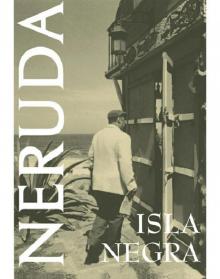
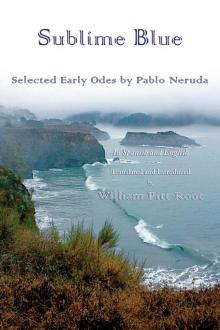
I explain a few things, p.8
I Explain a Few Things, page 8


Pasó entre los soldados
tu silueta
de bardo, de enfermero,
de cuidador nocturno
que conoce
el sonido
de la respiración en la agonía
y espera con la aurora
el silencioso
regreso
de la vida.
Buen panadero!
Primo hermano mayor
de mis raíces,
cupula
de araucaria,
hace
ya
cien
años
que sobre el pasto tuyo
y sus germinaciones,
el viento
pasa
sin gastar tus ojos.
Nuevos
y crueles años en tu patria:
persecuciones,
lágrimas,
prisiones,
armas envenenadas
y guerras iracundas,
no han aplastado
la hierba de tu libro,
el manantial vital
de su frescura.
Y, ay!
los
que asesinaron
a Lincoln
ahora
se acuestan en su cama,
derribaron
su sitial
de olorosa madera
y erigieron un trono
por desventura y sangre
salpicado.
Pero
canta en
las estaciones
suburbanas
tu voz,
en
los
desembarcaderos
vespertinos
chapotea
como
un agua oscura
tu palabra,
tu pueblo
blanco
y negro,
pueblo
de pobres,
pueblo simple
como
todos
los pueblos,
no olvida
tu campana:
se congrega cantando
bajo
la magnitud
de tu espaciosa vida:
entre los pueblos con tu amor camina
acariciando
el desarrollo puro
de la fraternidad sobre la tierra.
ODE TO WALT WHITMAN
I don’t remember
at what age,
or where,
in the great wet South
or in the fearsome
coast, under the brief
scream of seagulls,
I touched a hand and it was
Walt Whitman’s hand:
I stepped on soil
with bare feet,
I walked on grass,
on Walt Whitman’s
firm dew.
During
my whole youth,
that hand accompanied me,
its dew,
the firmness of its patriarchal pine,
its broadness of prairies,
its mission of circulatory peace.
Without
rejecting
the earth’s gifts,
the spire’s
copious curve,
or the initial
purple
wisdom,
you taught me
how to be an American.
You lifted
my eyes
to books,
toward the treasure of grain:
wide,
in the clarity
of plains,
you made me
see the soaring,
tutelary mountain.
From the subterranean
echo,
you collected
everything
for me,
everything born
you harvested
galloping in the alfalfa,
gathering poppies for me,
visiting
rivers,
appearing in kitchens
in the afternoon.
Not only did your shovel
bring earth to light;
you unearthed
man
and the
humiliated slave,
maligned like you,
balancing the black dignity
of his height,
walking in the conquest
of happiness.
To the stoker,
in the engine room
bellow,
you sent
a little basket
filled with fruit.
To all corners of your land,
your verse
traveled for a visit;
it was like a piece
of clean body,
your migrating verse,
like
your own fisherman’s beard
or the solemn road of your acacia legs.
Your bard’s silhouette
passed among the soldiers,
the nurse,
the night watchman
who knows
the sound
of agony’s dying breath
and waits with daybreak
for the quiet
return
of life.
Good baker!
My older cousin
of the same lineage,
cupola
of araucaria pine,
it’s
a hundred
years
already
since wind
blew
over your grass
without
diminishing your eyes.
New
and cruel years in your homeland:
persecutions, tears,
prisons,
poisoned weapons
and furious wars
haven’t smashed
the grass of your book,
the vital well
of your freshness.
And, ay!
those who killed
Lincoln
now
lie in his bed.
They brought down
his seat of honor,
made of fragrant wood,
instead raising a throne
sprinkled with
misbegotten
blood.
But
your voice
sings
in the suburban
stations,
your word
dabbles
in the afternoon
ports
like
dark water,
your people,
black and white,
in poverty,
your people,
like
all people,
won’t forget
your bell:
they
congregate
singing
under the magnitude
of your
spacious life:
your love walks
among them,
caressing
the clean growth
of humankind on earth.
ILAN STAVANS
FROM
Tercer libro de odas
(1955–57)
FROM
Third Book of Odes
(1955–57)
ODA A LA SAL
Esta sal
del salero
yo la vi en los salares.
Sé que
no
van a creerme,
pero
canta,
canta la sal, la piel
de los salares,
canta
con una boca ahogada
por la tierra.
Me estremecí en aquellas
soledades
cuando escuché
la voz
de
la sal
en el desierto.
Cerca de Antofagasta
toda
la pampa salitrosa
suena:
es una
voz
quebrada,
un lastimero
canto.
Luego en sus cavidades
la sal gema, montaña
de una luz enterrada,
catedral transparente,
cristal del mar, olvido
de las olas.
Y luego en cada mesa
de ese mundo,
sal,
tu substancia
ágil
espolvoreando
la luz vital
sobre
los alimentos.
Preservadora
de las antiguas
bodegas del navío,
descubridora
fuiste
en el océano,
materia
adelantada
en los desconocidos, entreabiertos
senderos de la espuma.
Polvo del mar, la lengua
de ti recibe un beso
de la noche marina:
el gusto funde en cada
sazonado manjar tu oceanía
y así la mínima,
la minúscula
ola del salero
nos enseña
no sólo su doméstica blancura,
sino el sabor central del infinito.
ODE TO SALT
In the salt mines
I saw the salt
in this shaker.
I know you won’t believe me,
but there
it sings,
the salt sings, the skin
of the salt mines
sings
with a mouth choking
on dirt.
Alone
when I heard
the voice
of salt,
I trembled
in the empty
desert.
Near Antofagasta
the whole
salted plain
shouts out
in its
cracked
voice
a pitiful
song.
Then in its caverns
jewels of rock salt, a mountain
of light buried under earth,
transparent cathedral,
crystal of the sea, oblivion
of the waves.
And now on each table
of the world
your agile
essence,
salt,
spreading
a vital luster
on
our food.
Preserver
of the ancient
stores in the holds
of ships, you were
the explorer
of the seas,
matter
foretold
in the secret, half-open
trails of foam.
Dust of water, the tongue
receives through you a kiss
from the marine night:
taste melds
your oceanity
into each rich morsel
and thus the least
wave
of the saltshaker
teaches us
not merely domestic purity
but also the essential flavor of the infinite.
PHILIP LEVINE
FROM
Estravagario
(1957–58)
FROM
Extravagaria
(1957–58)
PIDO SILENCIO
Ahora me dejen tranquilo.
Ahora se acostumbren sin mí.
Yo voy a cerrar los ojos.
Y sólo quiero cinco cosas,
cinco raíces preferidas.
Una es el amor sin fin.
Lo segundo es ver el otoño.
No puedo ser sin que las hojas
vuelen y vuelvan a la tierra.
Lo tercero es el grave invierno,
la lluvia que amé, la caricia
del fuego en el frío silvestre.
En cuarto lugar el verano
redondo como una sandía.
La quinta cosa son tus ojos.
Matilde mía, bienamada,
no quiero dormir sin tus ojos,
no quiero ser sin que me mires:
yo cambio la primavera
por que tú me sigas mirando.
Amigos, eso es cuanto quiero.
Es casi nada y casi todo.
Ahora si quieren se vayan.
He vivido tanto que un día
tendrán que olvidarme por fuerza,
borrándome de la pizarra:
mi corazón fue interminable.
Pero porque pido silencio
no crean que voy a morirme:
me pasa todo lo contrario:
sucede que voy a vivirme.
Sucede que soy y que sigo.
No será, pues, sino que adentro
de mí crecerán cereales,
primero los granos que rompen
la tierra para ver la luz,
pero la madre tierra es oscura:
y dentro de mí soy oscuro:
soy como un pozo en cuyas aguas
la noche deja sus estrellas
y sigue sola por el campo.
Se trata de que tanto he vivido
que quiero vivir otro tanto.
Nunca me sentí tan sonoro,
nunca he tenido tantos besos.
Ahora, como siempre, es temprano.
Vuela la luz con sus abejas.
Déjenme solo con el día.
Pido permiso para nacer.
I ASK FOR SILENCE
Now they can leave me in peace,
and grow used to my absence.
I am going to close my eyes.
I only want five things,
five chosen roots.
One is an endless love.
Two is to see the autumn.
I cannot exist without leaves
flying and falling to earth.
The third is the solemn winter,
the rain I loved, the caress
of fire in the rough cold.
My fourth is the summer,
plump as a watermelon.
And fifthly, your eyes.
Matilde, my dear love,
I will not sleep without your eyes,
I will not exist but in your gaze.
I adjust the spring
for you to follow me with your eyes.
That, friends, is all I want.
Next to nothing, close to everything.
Now they can go if they wish.
I have lived so much that someday
they will have to forget me forcibly,
rubbing me off the blackboard.
My heart was inexhaustible.
But because I ask for silence,
don’t think I’m going to die.
The opposite is true;
it happens I’m going to live.
To be, and to go on being.
I will not be, however, if, inside me,
the crop does not keep sprouting,
the shoots first, breaking through the earth
to reach the light;
but the mothering earth is dark,
and, deep inside me, I am dark.
I am a well in the water of which
the night leaves stars behind
and goes on alone across fields.
It’s a question of having lived so much
that I want to live that much more.
I never felt my voice so clear,
never have been so rich in kisses.
Now, as always, it is early.
The light is a swarm of bees.
Let me alone with the day.
I ask leave to be born.
ALASTAIR REID
CUÁNTO PASA EN UN DÍA
Dentro de un día nos veremos.
Pero en un día crecen cosas,
se venden uvas en la calle,
cambia la piel de los tomates,
la muchacha que te gustaba
no volvió más a la oficina.
Cambiaron de pronto el cartero.
Las cartas ya no son las mismas.
Varias hojas de oro y es otro:
este árbol es ahora un rico.
Quién nos diría que la tierra
con su vieja piel cambia tanto?
Tiene más volcanes que ayer,
el cielo tiene nuevas nubes,
los ríos van de otra manera.
Además cuánto se construye!
Yo he inaugurado centenares
de carreteras, de edificios,
de puentes puros y delgados
como navíos o violines.
Por eso cuando te saludo
y beso tu boca florida
nuestros besos son otros besos
y nuestras bocas otras bocas.
Salud, amor, salud por todo
lo que cae y lo que florece.
Salud por ayer y por hoy,
por anteayer y por mañana.
Salud por el pan y la piedra,
salud por el fuego y la lluvia.
Por lo que cambia, nace, crece,
se consume y vuelve a ser beso.
Salud por lo que tenemos de aire
y lo que tenemos de tierra.
Cuando se seca nuestra vida
nos quedan sólo las raíces
y el viento es frío como el odio.
Entonces cambiamos de piel,
de uñas, de sangre, de mirada,
y tú me besas y yo salgo
a vender luz por los caminos.
Salud por la noche y el día
y las cuatro estaciones del alma.
HOW MUCH HAPPENS IN A DAY
In the course of a day we shall meet one another.
But, in one day, things spring to life—
they sell grapes in the street,
tomatoes change their skin,
the young girl you wanted
never came back to the office.
They changed the postman suddenly.
The letters now are not the same.
A few golden leaves and it’s different;
this tree is now well off.
Who would have said that the earth
with its ancient skin would change so much?
It has more volcanoes than yesterday,
the sky has brand-new clouds,
the rivers are flowing differently.
Besides, so much has come into being!
I have inaugurated hundreds
of highways and buildings,
delicate, clean bridges
like ships or violins.
And so, when I greet you
and kiss your flowering mouth,
our kisses are other kisses,
our mouths are other mouths.
Joy, my love, joy in all things,
in what falls and what flourishes.
Joy in today and yesterday,
the day before and tomorrow.
Joy in bread and stone,
joy in fire and rain.
In what changes, is born, grows,
consumes itself, and becomes a kiss again.
Joy in the air we have,
and in what we have of earth.
When our life dries up,