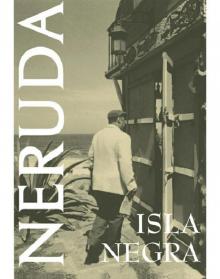
I explain a few things, p.12
I Explain a Few Things, page 12


sólo tu claridad para no seguir siendo,
sólo tu amor para cerrar la sombra.
XC
I thought I was dying, I felt the cold up close
and knew that from all my life I left only you behind:
my earthly day and night were your mouth,
your skin the republic my kisses founded.
In that instant the books stopped,
and friendship, treasures restlessly amassed,
the transparent house that you and I built:
everything dropped away, except your eyes.
Because while life harasses us, love is
only a wave taller than the other waves:
but oh, when death comes knocking at the gate,
there is only your glance against so much emptiness,
only your light against extinction,
only your love to shut out the shadows.
STEPHEN TAPSCOTT
XCVII
Hay que volar en este tiempo, a dónde?
Sin alas, sin avión, volar sin duda:
ya los pasos pasaron sin remedio,
no elevaron los pies del pasajero.
Hay que volar a cada instante como
las águilas, las moscas y los días,
hay que vencer los ojos de Saturno
y establecer allí nuevas campanas.
Ya no bastan zapatos ni caminos,
ya no sirve la tierra a los errantes,
ya cruzaron la noche las raíces,
y tú aparecerás en otra estrella
determinadamente transitoria
convertida por fin en amapola.
XCVII
These days, one must fly—but where to?
without wings, without an airplane, fly—without a doubt:
the footsteps have passed on, to no avail;
they didn’t move the feet of the traveler along.
At every instant, one must fly—like
eagles, like houseflies, like days:
must conquer the rings of Saturn
and build new carillons there.
Shoes and pathways are no longer enough,
the earth is no use anymore to the wanderer:
the roots have already crossed through the night,
and you will appear on another planet,
stubbornly transient,
transformed in the end into poppies.
STEPHEN TAPSCOTT
FROM
Plenos poderes
(1961–62)
FROM
Fully Empowered
(1961–62)
DEBER DEL POETA
A quien no escucha el mar en este viernes
por la mañana, quien adentro de algo,
casa, oficina, fábrica o mujer,
o calle o mina o seco calabozo:
a éste yo acudo y sin hablar ni ver
llego y abro la puerta del encierro
y un sin fin se oye vago en la insistencia,
un largo trueno roto se encadena
al peso del planeta y de la espuma,
surgen los ríos roncos del océno,
vibra veloz en su rosal la estrella
y el mar palpita, muere y continúa.
Así por el destino conducido
debo sin tregua oír y conservar
el lamento marino en mi conciencia,
debo sentir el golpe de agua dura
y recogerlo en una taza eterna
para que donde esté el encarcelado,
donde sufra el castigo del otoño
yo esté presente con una ola errante,
yo circule a través de las ventanas
y al oírme levante la mirada
diciendo: cómo me acercaré al océano?
Y yo transmitiré sin decir nada
los ecos estrellados de la ola,
un quebranto de espuma y arenales,
un susurro de sal que se retira,
el grito gris del ave de la costa.
Y así, por mí, la libertad y el mar
responderán al corazón oscuro.
THE POET’S OBLIGATION
To whoever is not listening to the sea
this Friday morning, to whoever is cooped up
in house or office, factory or woman
or street or mine or dry prison cell,
to him I come, and without speaking or looking
I arrive and open the door of his prison,
and a vibration starts up, vague and insistent,
a long rumble of thunder adds itself
to the weight of the planet and the foam,
the groaning rivers of the ocean rise,
the star vibrates quickly in its corona
and the sea beats, dies, and goes on beating.
So, drawn on by my destiny,
I ceaselessly must listen to and keep
the sea’s lamenting in my consciousness,
I must feel the crash of the hard water
and gather it up in a perpetual cup
so that, wherever those in prison may be,
wherever they suffer the sentence of the autumn,
I may be present with an errant wave,
I may move in and out of windows,
and hearing me, eyes may lift themselves,
asking “How can I reach the sea?”
And I will pass to them, saying nothing,
the starry echoes of the wave,
a breaking up of foam and quicksand,
a rustling of salt withdrawing itself,
the gray cry of sea birds on the coast.
So, through me, freedom and the sea
will call in answer to the shrouded heart.
ALASTAIR REID
LA PALABRA
Nació
la palabra en la sangre,
creció en el cuerpo oscuro, palpitando,
y voló con los labios y la boca.
Más lejos y más cerca
aún, aún venía
de padres muertos y de errantes razas,
de territorios que se hicieron piedra,
que se cansaron de sus pobres tribus,
porque cuando el dolor salió al camino
los pueblos anduvieron y llegaron
y nueva tierra y agua reunieron
para sembrar de nuevo su palabra.
Y así la herencia es ésta:
éste es el aire que nos comunica
con el hombre enterrado y con la aurora
de nuevos seres que aún no amanecieron.
Aún la atmósfera tiembla
con la primera palabra
elaborada
con pánico y gemido.
Salió
de las tinieblas
y hasta ahora no hay trueno
que truene aún con su ferretería
como aquella palabra,
la primera
palabra pronunciada:
tal vez sólo un susurro fue, una gota,
y cae y cae aún su catarata.
Luego el sentido llena la palabra.
Quedó preñada y se llenó de vidas.
Todo fue nacimientos y sonidos:
la afirmación, la claridad, la fuerza,
la negación, la destrucción, la muerte:
el verbo asumió todos los poderes
y se fundió existencia con esencia
en la electricidad de su hermosura.
Palabra humana, sílaba, cadera
de larga luz y dura platería,
hereditaria copa que recibe
las comunicaciones de la sangre:
he aquí que el silencio fue integrado
por el total de la palabra humana
y no hablar es morir entre los seres:
se hace lenguaje hasta la cabellera,
habla la boca sin mover los labios:
los ojos de repente son palabras.
Yo tomo la palabra y la recorro
como si fuera sólo forma humana,
me embelesan sus líneas y navego
en cada resonancia del idioma:
pronuncio y soy y sin hablar me acerca
el fin de las palabras al silencio.
Bebo por la palabra levantando
una palabra o copa cristalina,
en ella bebo
el vino del idioma
o el agua interminable,
manantial maternal de las palabras,
y copa y agua y vino
originan mi canto
porque el verbo es origen
y vierte vida: es sangre,
es la sangre que expresa su substancia
y está dispuesto así su desarrollo:
dan cristal al cristal, sangre a la sangre,
y dan vida a la vida las palabras.
THE WORD
The word
was born in the blood,
grew in the dark body, beating,
and took flight through the lips and the mouth.
Farther away and nearer
still, still it came
from dead fathers and from wandering races,
from lands which had turned to stone,
lands weary of their poor tribes,
for when grief took to the roads
the people set out and arrived
and married new land and water
to grow their words again.
And so this is the inheritance;
this is the wavelength which connects us
with dead men and the dawning
of new beings not yet come to light.
Still the atmosphere quivers
with the first word uttered
dressed up
in terror and sighing.
It emerged
from the darkness
and until now there is no thunder
that ever rumbles with the iron voice
of that word,
the first
word uttered—
perhaps it was only a ripple, a single drop,
and yet its great cataract falls and falls.
Later on, the word fills with meaning.
Always with child, it filled up with lives.
Everything was births and sounds—
affirmation, clarity, strength,
negation, destruction, death—
the verb took over all the power
and blended existence with essence
in the electricity of its grace.
Human word, syllable, flank
of extending light and solid silverwork,
hereditary goblet which receives
the communications of the blood—
here is where silence came together with
the wholeness of the human word,
and, for human beings, not to speak is to die—
language extends even to the hair,
the mouth speaks without the lips moving,
all of a sudden, the eyes are words.
I take the word and pass it through my senses
as though it were no more than a human shape;
its arrangements awe me and I find my way
through each resonance of the spoken word—
I utter and I am and, speechless, I approach
across the edge of words silence itself.
I drink to the word, raising
a word or a shining cup;
in it I drink
the pure wine of language
or inexhaustible water,
maternal source of words,
and cup and water and wine
give rise to my song
because the verb is the source
and vivid life—it is blood,
blood which expresses its substance
and so ordains its own unwinding.
Words give glass quality to glass, blood to blood,
and life to life itself.
ALASTAIR REID
ADIOSES
Oh adioses a una tierra y otra tierra,
a cada boca y a cada tristeza,
a la luna insolente, a las semanas
que enrollaron los días y desaparecieron,
adiós a esta y aquella voz teñida
de amaranto, y adiós
a la cama y al plato de costumbre,
al sitio vesperal de los adioses,
a la silla casada con el mismo crepúsculo,
al camino que hicieron mis zapatos.
Me difundí, no hay duda,
me cambié de existencias,
cambié de piel, de lámpara, de odios,
tuve que hacerlo
no por ley ni capricho,
sino que por cadena,
me encadenó cada nuevo camino,
le tomé gusto a tierra a toda tierra.
Y pronto dije adiós, recién llegado,
con la ternura aún recién partida
como si el pan se abriera y de repente
huyera todo el mundo de la mesa.
Así me fui de todos los idiomas,
repetí los adioses como una puerta vieja,
cambié de cine, de razón, de tumba,
me fui de todas partes a otra parte,
seguí siendo y siguiendo
medio desmantelado en la alegría,
nupcial en la tristeza,
sin saber nunca cómo ni cuándo,
listo para volver, mas no se vuelve.
Se sabe que el que vuelve no se fue,
y así la vida anduve y desanduve
mudándome de traje y de planeta,
acostumbrándome a la compañía,
a la gran muchedumbre del destierro,
a la gran soledad de las campanas.
GOODBYES
Goodbye, goodbye, to one place or another,
to every mouth, to every sorrow,
to the insolent moon, to weeks
which wound in the days and disappeared,
goodbye to this voice and that one stained
with amaranth, and goodbye
to the usual bed and plate,
to the twilit setting of all goodbyes,
to the chair that is part of the same twilight,
to the way made by my shoes.
I spread myself, no question;
I turned over whole lives,
changed skin, lamps, and hates,
it was something I had to do,
not by law or whim,
more of a chain reaction;
each new journey enchained me;
I took pleasure in place, in all places.
And, newly arrived, I promptly said goodbye
with still newborn tenderness
as if the bread were to open and suddenly
flee from the world of the table.
So I left behind all languages,
repeated goodbyes like an old door,
changed cinemas, reasons, and tombs,
left everywhere for somewhere else;
I went on being, and being always
half undone with joy,
a bridegroom among sadnesses,
never knowing how or when,
ready to return, never returning.
It’s well known that he who returns never left,
so I traced and retraced my life,
changing clothes and planets,
growing used to the company,
to the great whirl of exile,
to the great solitude of bells tolling.
ALASTAIR REID
PASADO
Tenemos que echar abajo el pasado
y como se construye
piso por piso, ventana a ventana,
y sube el edificio
así, bajando vamos
primero tejas rotas,
luego orgullosas puertas,
hasta que del pasado
sale polvo
como si se golpeara
contra el suelo,
sale humo
como si se quemara,
y cada nuevo día
reluce
como un plato
vacío:
no hay nada, no hubo nada:
hay que llenarlo
de nuevas nutriciones
espaciosas,
entonces, hacia abajo
cae el día de ayer
como en un pozo
al agua del pasado,
a la cisterna
de lo que ya no tiene voz ni fuego.
Es difícil
acostumbrar los huesos
a perderse,
los ojos
a cerrarse
pero
lo hacemos
sin saberlo:
todo era vivo,
vivo, vivo, vivo
como un pez escarlata
pero el tiempo
pasó con trapo y noche
y fue borrando
el pez y su latido:
al agua al agua al agua
va cayendo el pasado
aunque se agarre
a espinas
y raíces:
se fue se fue y no valen
los recuerdos:
ya el párpado sombrío
cubrió la luz del ojo
y aquello que vivía
ya no vive:
lo que fuimos no somos.
Y la palabra aunque las letras tengan
iguales transparencias y vocales
ahora es otra y es otra la boca:
la misma boca es otra boca ahora:
cambiaron labios, piel, circulaciones,
otro ser ocupó nuestro esqueleto:
aquel que fue en nosotros ya no está:
se fue, pero si llaman, respondemos
“Aquí estoy” y se sabe que no estamos,
que aquel que estaba, estuvo y se perdió:
se perdió en el pasado y ya no vuelve.
PAST
We have to discard the past
and, as one builds
floor by floor, window by window,
and the building rises,
so do we keep shedding—
first, broken tiles,
then proud doors,
until, from the past,
dust falls
as if it would crash
against the floor,
smoke rises
as if it were on fire,
and each new day
gleams
like an empty
plate.
There is nothing, there was always nothing.
It all has to be filled
with a new, expanding
fruitfulness;
then, down
falls yesterday
as in a well
falls yesterday’s water,
into the cistern
of all that is now without voice, without fire.
It is difficult
to get bones used
to disappearing,