God guns and sedition, p.1
God, Guns, and Sedition, page 1


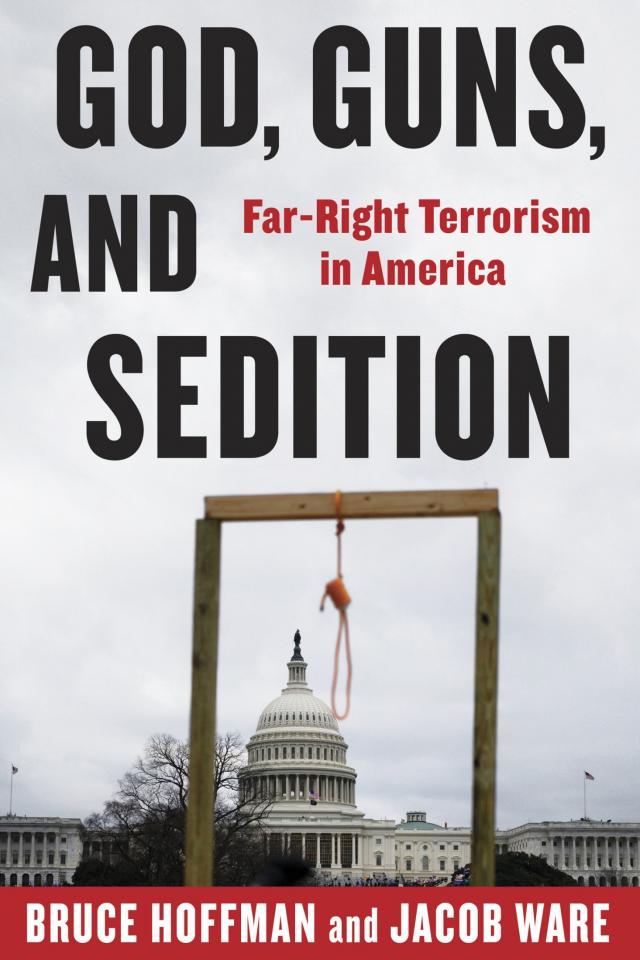
GOD, GUNS, AND SEDITION
A COUNCIL ON FOREIGN RELATIONS BOOK
A COUNCIL ON FOREIGN RELATIONS BOOK
The Council on Foreign Relations (CFR) is an independent, nonpartisan membership organization, think tank, and publisher dedicated to being a resource for its members, government officials, business executives, journalists, educators and students, civic and religious leaders, and other interested citizens in order to help them better understand the world and the foreign policy choices facing the United States and other countries. Founded in 1921, CFR carries out its mission by maintaining a diverse membership, with special programs to promote interest and develop expertise in the next generation of foreign policy leaders; convening meetings at its headquarters in New York and in Washington, DC, and other cities where senior government officials, members of Congress, global leaders, and prominent thinkers come together with CFR members to discuss and debate major international issues; supporting a Studies Program that fosters independent research, enabling CFR scholars to produce articles, reports, and books and hold roundtables that analyze foreign policy issues and make concrete policy recommendations; publishing Foreign Affairs, the preeminent journal on international affairs and U.S. foreign policy; sponsoring Independent Task Forces that produce reports with both findings and policy prescriptions on the most important foreign policy topics; and providing up-to-date information and analysis about world events and American foreign policy on its website, https://www.cfr.org.
The Council on Foreign Relations takes no institutional positions on policy issues and has no affiliation with the U.S. government. All views expressed in its publications and on its website are the sole responsibility of the author or authors.
GOD, GUNS, AND SEDITION
FAR-RIGHT TERRORISM IN AMERICA
BRUCE HOFFMAN AND JACOB WARE
Columbia University Press
New York
Columbia University Press
Publishers Since 1893
New York Chichester, West Sussex
cup.columbia.edu
Copyright © 2024 Bruce Hoffman and Jacob Ware
All rights reserved
E-ISBN 978-0-231-55880-8
Library of Congress Cataloging-in-Publication Data
Names: Hoffman, Bruce, 1954– author. | Ware, Jacob, author.
Title: God, guns, and sedition : far-right terrorism in America / Bruce Hoffman and Jacob Ware.
Description: New York : Columbia University Press, [2024] | Series: A Council on Foreign Relations book | Includes bibliographical references and index.
Identifiers: LCCN 2023024186 (print) | LCCN 2023024187 (ebook) | ISBN 9780231211222 (hardback)
Subjects: LCSH: Domestic terrorism—United States. | Terrorism—Political aspects—United States. | Right-wing extremists—United States. | Radicalism—United States.
Classification: LCC HV6432 .H635 2024 (print) | LCC HV6432 (ebook) | DDC 363.3250973—dc23/eng/20230627
LC record available at https://lccn.loc.gov/2023024186
LC ebook record available at https://lccn.loc.gov/2023024187
A Columbia University Press E-book.
CUP would be pleased to hear about your reading experience with this e-book at cup-ebook@columbia.edu.
Cover design: Noah Arlow
Cover image: Getty Images
FOR J. & M. AND FOR ALL THOSE SUFFERING FROM HATRED AND INTOLERANCE
CONTENTS
Preface
1. ACCELERATIONISM REBORN
2. BATTLE PLAN
3. RACE WAR
4. ARMED AND DANGEROUS
5. LEADERLESS RESISTANCE
6. RACISM REKINDLED
7. THE MOVEMENT GOES GLOBAL
8. AMERICAN CARNAGE
9. COUNTERING FAR-RIGHT TERRORISM
Notes
Bibliography
Index
PREFACE
We began work on this book a month into the global COVID lockdown in April 2020. It was a dark, dangerous, and uncertain time. Conspiracy theories that had already gained widespread currency throughout the preceding years were now rampant across the internet and social media. The vilification of Jews, Asians, persons of color, and immigrants, among others, was reaching unprecedented levels. And I (Bruce Hoffman) had recently been the target of a serious hate crime. It was time to return to my analytical roots.
Violent, far-right extremism was the first “account” I worked on as a young terrorism and counterterrorism analyst when I joined the RAND Corporation’s Security and Subnational Conflict Research Program in 1981. Everyone else in the program had already taken one of the more prominent left-wing and ethnonationalist and separatist terrorists active at the time, so I decided to focus on a threat that was receiving less attention. This resulted in my first professional publication and a series of additional reports and scholarly articles on the threat posed by neo-Nazi and neofascist groups in Europe.1 Shortly afterward, however, my research shifted to focus on a similar trend then unfolding in the United States.
By the middle of the 1980s, the U.S. Department of Energy had become increasingly concerned about the rise of violent, far-right extremism and violence in this country. Because many of its nuclear-weapon research, production, and storage facilities were located in states where this activity was increasing,2 the department asked RAND to conduct a detailed threat assessment. Between 1986 and 1995 I led a number of research projects and was the author or coauthor of several reports and articles addressing the danger of far-right terrorism in the United States.3 One of these reports, published in 1988 and cited in this book, identified these terrorists as the most likely to perpetrate a major, future mass-casualty attack in the United States.4 And another, published just weeks before the 1995 bombing of a federal office building in Oklahoma City that killed 168 people, again underscored the continuing threat from violent, far-right extremists in this country and offered policy recommendations on how to address it.5
The historical pattern and potential for future violence from far-right terrorism in the United States also featured prominently in the first edition of my book Inside Terrorism, published in 1998. But then the September 11, 2001, terrorist attacks occurred. And, like most other terrorism analysts, my attention was diverted to al-Qaeda and then ISIS as well as their various affiliates and branches.
Meanwhile, a succession of terrorist incidents in Oslo and Utøya, Norway, in 2011; in Charleston, South Carolina, in 2015; in Pittsburgh, Pennsylvania, in 2018; and in Christchurch, New Zealand, Poway, California, and El Paso, Texas in 2019 clearly showed that the same sanguinary ideology and hateful mindset that had fueled far-right violence during the closing decades of the twentieth century had neither disappeared nor abated.
I thus approached my friend and colleague at the Council on Foreign Relations, Jacob Ware, and proposed that we together write this book. The plot by a Michigan militia cell to kidnap and execute Democratic governor Gretchen Whitmer uncovered in October 2020 and the January 6, 2021, insurrection at the U.S. Capitol infused our work with greater urgency.
Along the way, we enjoyed the help and support of many outstanding colleagues and friends as well as institutions.
We would first and foremost like to acknowledge with deep appreciation the support and encouragement we received at the Council on Foreign Relations from Richard Haass, James Lindsay, Shannon O’Neil, and Trish Dorff. Richard and Jim carefully read and provided extensive comments on the manuscript that immeasurably sharpened and improved both our analysis and our prose. Shannon reviewed the final draft, and both Jacob and I benefited tremendously from Trish’s vast knowledge of publishers and publishing. We have also been extremely fortunate at the council to enjoy the generous support of the Shelby Cullom Davis Charitable Fund and wish to thank the Davis family for their continual support of the Shelby Cullom and Kathryn W. Davis Senior Fellowship in Counterterrorism and Homeland Security in honor of Ms. Davis’s long history with CFR.
Rita Katz, the executive director of the world-renowned SITE Intelligence Group, allowed us access to SITE’s reporting of violent, extremist messages on the internet and social media as well as SITE’s invaluable analyses. Rita’s book, Saints and Soldiers: Inside Internet-Age Terrorism, from Syria to the Capitol Siege, also published by Columbia, is an essential companion to this work.
We are also indebted to Dr. John T. Picarelli, director of counterterrorism at the National Security Council, whose comments greatly strengthened and helped shape the concluding chapter’s policy recommendations. We would be remiss, too, not to acknowledge the four, anonymous peer reviewers whose suggestions and recommendations also improved this book.
Jacob and I were able to call upon the many superb students in Georgetown University’s undergraduate Center for Jewish Civilization and graduate Security Studies Program for help. Thanks are therefore due to Adam Hilleley, Molly Jaskot, Mehvish Khan, Radhika Shah, Heloise Wiart, Yebin Won, and most especially Cleary Waldo for their research assistance and support.
This book benefited immensely from the hard work of the publishing team at Columbia University Press. Special thanks to Robert Fellman, who edited the manuscript; Michael Haskell, who oversaw its production; and Caelyn Cobb, editor of global history and politics, and her assistant, Monique Laban. We are very grateful to have Eric Lupfer representing us as he is among the most patient, supportive, and effective agents any author could want. We are also indebted to Megan Posco for her critical help in publicizing the book.
I would like to thank the many longstanding friends who contributed to this book through discussions, criticism, and just by being there for me throughout the process of writing this book. Christopher Adamczyk, Joseph Bernard, Peter Bergen, David Brannan, Daniel Byman, Colin Clarke, Mark Cochrane, Christopher Costa, Richard English, Jocelyn Flores, Brittany Fried, Joshua Geltzer, Marie Harf, Seamus Hughes, Ed Husain, Seth Jones, the late Walter Laqueur, Robert Litwak, Sean Magee, Ellen McHugh, Bethania Michael, Ami Pedahzur, Fernando Reinares, Elizabeth Stanley, Anders Stephanson, Anders Strindberg, Christopher Wall, Alison Watson, Gabriel Weimann, and Tim Wilson as well as an exceedingly generous donor who wishes to remain anonymous all helped make this book possible. For the past two decades I have had the privilege of being the George H. Gilmore Senior Fellow at the U.S. Military Academy’s Combating Terrorism Center and am honored to be a part of that remarkable institution. An entirely different category of persons also made this book possible. Profound thanks to Andrew Umhau, Bruce Kressel, Assil Saleh, Agnieska Kupiec, and Hisham Barakat.
Finally, and as always, my greatest strength and joy in life comes from my wife, children, their partners, and my grandchildren. Nothing I do would be possible—or be worth doing—without them.
Bruce Hoffman
Baton Rouge, LA, and Washington, DC
July 2023
I was sixteen years old on the day a bloodthirsty white supremacist murdered dozens of children at an island summer camp near Oslo in Norway—an incident covered in these pages. As a citizen of a neighboring country who shared both an age and idealism with those murdered, the shooting shook me to the very core. This incident—coupled with my younger sister’s brush with jihadist terrorism during a school trip to Toulouse in France and my own experiences as one of the school-shooting generation’s earliest graduates—drove my desire to join the fight to make the world a safer and happier place and to rid our nation of the cancerous hate by which it has too often been defined.
My early counterterrorism research, in graduate school at Georgetown University, focused on more youthful networks, often composed of men and boys who had grown up in the same era I had. Like Bruce, my first report, published some thirty-seven years later with the International Centre for Counter-Terrorism in The Hague, studied the far right, providing a threat assessment of the Atomwaffen Division, a neo-Nazi group whose members were responsible for several murders in the United States.6 By the time 2019 arrived and the trajectory of the violent far right covered in this book reached an urgent stage with outbursts of violence at Christchurch, Poway, El Paso, and beyond, I was offered the opportunity to work under the legendary Bruce Hoffman—with this book project beginning shortly thereafter. My time writing this book has been defined by an imposter syndrome inevitable to anyone working alongside the doyen of their academic field, but I have come to appreciate that it is precisely my inexperience that provides a valuable perspective. This book is a reflection of our differing worldviews. Our strength as a writing team comes from our mix of pragmatism and idealism, our blend of deep historical study and fluency in modern online culture.
In addition to the names already thanked by my coauthor (some of whom, inevitably, receive another deserved mentioned below), I would like to extend my appreciation to several individuals who have played key roles in this work. I have been blessed in my short career with wonderful mentors, teachers, and leaders. The cliché “they taught me everything I know” is embarrassingly accurate in my case. In chronological order, my thanks to Elizabeth Grimm, Jerome B., Seamus Hughes, Daniel Byman, Seth Jones, Rebecca Patterson, Farah Pandith, Ambassador John Campbell, Michael Horowitz, Joshua Kurlantzick, Chris Tuttle, and Colin Clarke. Thanks, too, to Bart Schuurman for giving me my first big opportunity and to Laura Ellsworth for the chance to help Eradicate Hate. I truly stand on the shoulders of giants.
I owe a tremendous debt to Georgetown University—particularly the Security Studies Program and Center for Jewish Civilization. A particular thank you to my Georgetown consiglieri—Yebin Won, Peyton Ritter, Gia Kokotakis, and Ella Busch—and to all my outstanding students. Thank you to Cleary Waldo for your care with our manuscript. And thank you to St. Andrews and your glorious university for all you have given me. Home is where the heart is, and my heart will forever be in Scotland.
I’ve also been blessed with great friends, who have tested theories, questioned assumptions, and challenged conclusions. Daniel, Emilee, Grayson, Jared, Finn, Will, Grace, Matt, Kristin, Alex, Gavin, Cam, Gibbs, Hannaka, Chris, Caspar, Lex, Millie, Tom, Liv, Gus, Nick, Will R., Jack, Emily, Hope, Ellen, and many others—thank you. Pablo Brum and Amir Asmar, I look forward to continuing to debate the topic of this book, and others, over many future meetings. Special mention to Burton Gerber; thank you for welcoming me into your life and for your service and the inspiration you provide. Thank you, too, to my family and the Pennsylvania wing for patient support over the course of this project and for decades of love.
Thank you to the wonderful team at the Council on Foreign Relations, none more than Shira Schwartz, our fearless leader and the best boss anybody could ask for. Thanks to Richard Haass, James Lindsay, and Shannon O’Neil for strengthening the manuscript and giving me the opportunity. Thanks to Radmila Jackovich for her warm and protective stewardship. Thanks to Ebenezer Obadare, Upamanyu Lahiri, and Terry Mullan for all the laughter. Thanks to Chris Brodsky, a great mentor, and to Trish Dorff, Anya Schmemann, and Jenny Mallamo and their teams for their patient shepherding of our project. Thank you to Sinet Adous, a valuable and hard-working partner-in-crime. A huge thank you, too, to Eric Lupfer, Megan Posco, and the outstanding team at Columbia University Press for believing in me, us, and the project.
I would also like to thank all the survivors, for their bravery, strength, and relentless advocacy. A special thank you to Hannah K. Your care with me on my own journey of healing and redemption will never be forgotten. Thank you, too, to Anthony Purcell, who saved my life.
But I reserve the most profound gratitude for two people. First, Bruce—my intellectual lodestar and my mentor and friend. Thank you for taking a chance on me and for many years of trust and guidance across multiple institutions and job titles. One day, you no doubt will realize I was never deserving of your faith. Until then, I hope my contributions to this work and our many other collaborations are worthy of your trust.
And finally, Sarah—my ever-present, incandescent lighthouse on sunny days and through stormy seas. Thank you for your support, love, positivity, edits, and warmth, through pandemics, illnesses, traumas, and writer’s block. You are the force behind every smile and the inspiration for every fight. You will always be the light in my life.
Jacob Ware
Washington, DC
July 2023
1
ACCELERATIONISM REBORN
We’re storming the Capitol, it’s a revolution!
—Elizabeth from Knoxville, Tennessee
In the summer of 2020, the messaging across far-right American internet forums was jubilant.1 The one-two punch of the novel coronavirus pandemic, coupled with widespread protests and nationwide unrest triggered by the murder of another unarmed African American by police, had laid the country low. Yet in this moment of collective despair, America’s racists, bigots, antisemites, white supremacists, and antigovernment extremists reveled in the newfound opportunities that had emerged throughout that year. Now was the time, their hateful posts on Telegram channels and seditious summons on Facebook proclaimed, to act decisively and bring the United States to its knees.
On Facebook that April, President Donald Trump’s tweets to “liberate” various states from their governors’ COVID stay-at-home orders and defend Second Amendment rights had galvanized exponents of the “boogaloo”—the mass insurrection-initiated civil war meant to overthrow the U.S. government.2 “Yo the president is boog posting,” exclaimed one typical message.3 Until Facebook removed these friend groups and their posts from the platform at the end of June 2020, its author was among over 72,000 members of such Facebook groups devoted to “boogaloo.”4 Using other colloquialisms, such as “big igloo” and “big luau,” or referring to themselves as “boojahideen,” they explained how “We the people need to stand up to what’s right and revolt. We CAN NOT allow our freedoms to be stopped or silenced. Organize and get off our ASSES and let’s take back AMERICA!!” Another announced, “This Has Been A Long Time Coming: Stand-By For Instruction,” while a third showed a photograph of a loaded assault rifle with the message “I heard there was gonna be a Big Luau. Thought I’d dress appropriately.”5