

The french masters, p.441
The French Masters, page 441
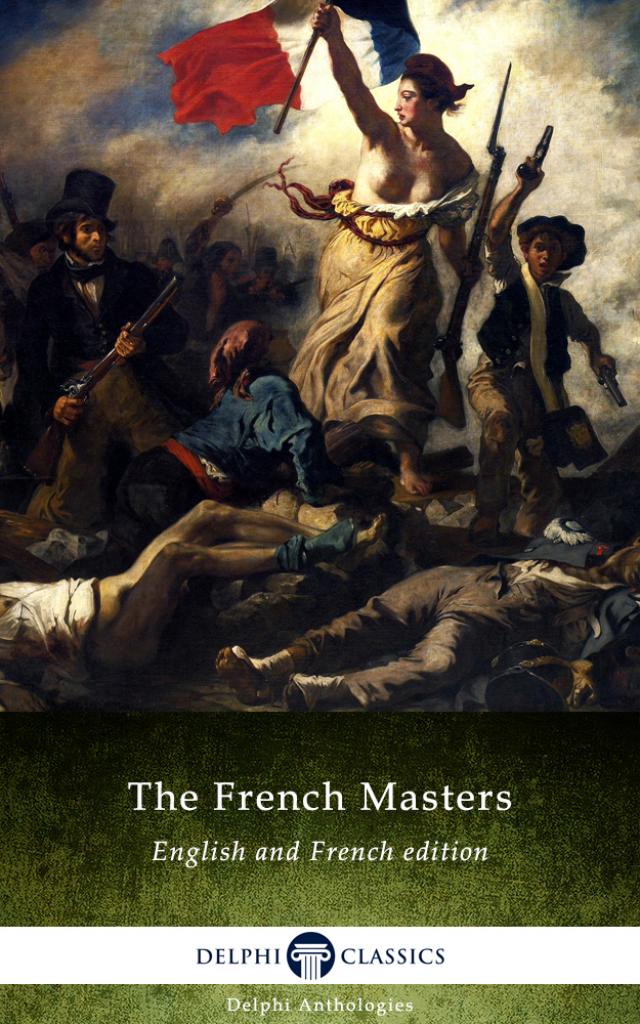


The facts which we are about to relate belong to that dramatic and living reality, which the historian sometimes neglects for lack of time and space. There, nevertheless, we insist upon it, is life, palpitation, human tremor. Petty details, as we think we have already said, are, so to speak, the foliage of great events, and are lost in the distance of history. The epoch, surnamed “of the riots,” abounds in details of this nature. Judicial inquiries have not revealed, and perhaps have not sounded the depths, for another reason than history. We shall therefore bring to light, among the known and published peculiarities, things which have not heretofore been known, about facts over which have passed the forgetfulness of some, and the death of others. The majority of the actors in these gigantic scenes have disappeared; beginning with the very next day they held their peace; but of what we shall relate, we shall be able to say: “We have seen this.” We alter a few names, for history relates and does not inform against, but the deed which we shall paint will be genuine. In accordance with the conditions of the book which we are now writing, we shall show only one side and one episode, and certainly, the least known at that, of the two days, the 5th and the 6th of June, 1832, but we shall do it in such wise that the reader may catch a glimpse, beneath the gloomy veil which we are about to lift, of the real form of this frightful public adventure.
CHAPTER III — A BURIAL; AN OCCASION TO BE BORN AGAIN
In the spring of 1832, although the cholera had been chilling all minds for the last three months and had cast over their agitation an indescribable and gloomy pacification, Paris had already long been ripe for commotion. As we have said, the great city resembles a piece of artillery; when it is loaded, it suffices for a spark to fall, and the shot is discharged. In June, 1832, the spark was the death of General Lamarque.
Lamarque was a man of renown and of action. He had had in succession, under the Empire and under the Restoration, the sorts of bravery requisite for the two epochs, the bravery of the battle-field and the bravery of the tribune. He was as eloquent as he had been valiant; a sword was discernible in his speech. Like Foy, his predecessor, after upholding the command, he upheld liberty; he sat between the left and the extreme left, beloved of the people because he accepted the chances of the future, beloved of the populace because he had served the Emperor well; he was, in company with Comtes Gerard and Drouet, one of Napoleon’s marshals in petto. The treaties of 1815 removed him as a personal offence. He hated Wellington with a downright hatred which pleased the multitude; and, for seventeen years, he majestically preserved the sadness of Waterloo, paying hardly any attention to intervening events. In his death agony, at his last hour, he clasped to his breast a sword which had been presented to him by the officers of the Hundred Days. Napoleon had died uttering the word army, Lamarque uttering the word country.
His death, which was expected, was dreaded by the people as a loss, and by the government as an occasion. This death was an affliction. Like everything that is bitter, affliction may turn to revolt. This is what took place.
On the preceding evening, and on the morning of the 5th of June, the day appointed for Lamarque’s burial, the Faubourg Saint-Antoine, which the procession was to touch at, assumed a formidable aspect. This tumultuous network of streets was filled with rumors. They armed themselves as best they might. Joiners carried off door-weights of their establishment “to break down doors.” One of them had made himself a dagger of a stocking-weaver’s hook by breaking off the hook and sharpening the stump. Another, who was in a fever “to attack,” slept wholly dressed for three days. A carpenter named Lombier met a comrade, who asked him: “Whither are you going?” “Eh! well, I have no weapons.” “What then?” “I’m going to my timber-yard to get my compasses.” “What for?” “I don’t know,” said Lombier. A certain Jacqueline, an expeditious man, accosted some passing artisans: “Come here, you!” He treated them to ten sous’ worth of wine and said: “Have you work?” “No.” “Go to Filspierre, between the Barriere Charonne and the Barriere Montreuil, and you will find work.” At Filspierre’s they found cartridges and arms. Certain well-known leaders were going the rounds, that is to say, running from one house to another, to collect their men. At Barthelemy’s, near the Barriere du Trone, at Capel’s, near the Petit-Chapeau, the drinkers accosted each other with a grave air. They were heard to say: “Have you your pistol?” “Under my blouse.” “And you?” “Under my shirt.” In the Rue Traversiere, in front of the Bland workshop, and in the yard of the Maison-Brulee, in front of tool-maker Bernier’s, groups whispèred together. Among them was observed a certain Mavot, who never remained more than a week in one shop, as the masters always discharged him “because they were obliged to dispute with him every day.” Mavot was killed on the following day at the barricade of the Rue Menilmontant. Pretot, who was destined to perish also in the struggle, seconded Mavot, and to the question: “What is your object?” he replied: “Insurrection.” Workmen assembled at the corner of the Rue de Bercy, waited for a certain Lemarin, the revolutionary agent for the Faubourg Saint-Marceau. Watchwords were exchanged almost publicly.
On the 5th of June, accordingly, a day of mingled rain and sun, General Lamarque’s funeral procession traversed Paris with official military pomp, somewhat augmented through precaution. Two battalions, with draped drums and reversed arms, ten thousand National Guards, with their swords at their sides, escorted the coffin. The hearse was drawn by young men. The officers of the Invalides came immediately behind it, bearing laurel branches. Then came an innumerable, strange, agitated multitude, the sectionaries of the Friends of the People, the Law School, the Medical School, refugees of all nationalities, and Spanish, Italian, German, and Polish flags, tricolored horizontal banners, every possible sort of banner, children waving green boughs, stone-cutters and carpenters who were on strike at the moment, printers who were recognizable by their paper caps, marching two by two, three by three, uttering cries, nearly all of them brandishing sticks, some brandishing sabres, without order and yet with a single soul, now a tumultuous rout, again a column. Squads chose themselves leaders; a man armed with a pair of pistols in full view, seemed to pass the host in review, and the files separated before him. On the side alleys of the boulevards, in the branches of the trees, on balconies, in windows, on the roofs, swarmed the heads of men, women, and children; all eyes were filled with anxiety. An armed throng was passing, and a terrified throng looked on.
The Government, on its side, was taking observations. It observed with its hand on its sword. Four squadrons of carabineers could be seen in the Place Louis XV. in their saddles, with their trumpets at their head, cartridge-boxes filled and muskets loaded, all in readiness to march; in the Latin country and at the Jardin des Plantes, the Municipal Guard echelonned from street to street; at the Halle-aux-Vins, a squadron of dragoons; at the Greve half of the 12th Light Infantry, the other half being at the Bastille; the 6th Dragoons at the Celestins; and the courtyard of the Louvre full of artillery. The remainder of the troops were confined to their barracks, without reckoning the regiments of the environs of Paris. Power being uneasy, held suspended over the menacing multitude twenty-four thousand soldiers in the city and thirty thousand in the banlieue.
Divers reports were in circulation in the cortege. Legitimist tricks were hinted at; they spoke of the Duc de Reichstadt, whom God had marked out for death at that very moment when the populace were designating him for the Empire. One personage, whose name has remained unknown, announced that at a given hour two overseers who had been won over, would throw open the doors of a factory of arms to the people. That which predominated on the uncovered brows of the majority of those present was enthusiasm mingled with dejection. Here and there, also, in that multitude given over to such violent but noble emotions, there were visible genuine visages of criminals and ignoble mouths which said: “Let us plunder!” There are certain agitations which stir up the bottoms of marshes and make clouds of mud rise through the water. A phenomenon to which “well drilled” policemen are no strangers.
The procession proceeded, with feverish slowness, from the house of the deceased, by way of the boulevards as far as the Bastille. It rained from time to time; the rain mattered nothing to that throng. Many incidents, the coffin borne round the Vendome column, stones thrown at the Duc de Fitz-James, who was seen on a balcony with his hat on his head, the Gallic cock torn from a popular flag and dragged in the mire, a policeman wounded with a blow from a sword at the Porte Saint-Martin, an officer of the 12th Light Infantry saying aloud: “I am a Republican,” the Polytechnic School coming up unexpectedly against orders to remain at home, the shouts of: “Long live the Polytechnique! Long live the Republic!” marked the passage of the funeral train. At the Bastille, long files of curious and formidable people who descended from the Faubourg Saint-Antoine, effected a junction with the procession, and a certain terrible seething began to agitate the throng.
One man was heard to say to another: “Do you see that fellow with a red beard, he’s the one who will give the word when we are to fire.” It appears that this red beard was present, at another riot, the Quenisset affair, entrusted with this same function.
The hearse passed the Bastille, traversed the small bridge, and reached the esplanade of the bridge of Austerlitz. There it halted. The crowd, surveyed at that moment with a bird’seye view, would have presented the aspect of a comet whose head was on the esplanade and whose tail spread out over the Quai Bourdon, covered the Bastille, and was prolonged on the boulevard as far as the Porte Saint-Martin. A circle was traced around the hearse. The vast rout held their peace. Lafayette spoke and bade Lamarque farewell. This was a touching and august instant, all heads uncovered, all hearts beat high.
All at once, a man on horseback, clad in black, made his appearance in the middle of the group with a red flag, others say, with a pike surmounted with a red liberty-cap. Lafayette turned aside his head. Exelmans quitted the procession.
This red flag raised a storm, and disappeared in the midst of it. From the Boulevard Bourdon to the bridge of Austerlitz one of those clamors which resemble billows stirred the multitude. Two prodigious shouts went up: “Lamarque to the Pantheon! — Lafayette to the Town-hall!” Some young men, amid the declamations of the throng, harnessed themselves and began to drag Lamarque in the hearse across the bridge of Austerlitz and Lafayette in a hackney-coach along the Quai Morland.
In the crowd which surrounded and cheered Lafayette, it was noticed that a German showed himself named Ludwig Snyder, who died a centenarian afterwards, who had also been in the war of 1776, and who had fought at Trenton under Washington, and at Brandywine under Lafayette.
In the meantime, the municipal cavalry on the left bank had been set in motion, and came to bar the bridge, on the right bank the dragoons emerged from the Celestins and deployed along the Quai Morland. The men who were dragging Lafayette suddenly caught sight of them at the corner of the quay and shouted: “The dragoons!” The dragoons advanced at a walk, in silence, with their pistols in their holsters, their swords in their scabbards, their guns slung in their leather sockets, with an air of gloomy expectation.
They halted two hundred paces from the little bridge. The carriage in which sat Lafayette advanced to them, their ranks opened and allowed it to pass, and then closed behind it. At that moment the dragoons and the crowd touched. The women fled in terror. What took place during that fatal minute? No one can say. It is the dark moment when two clouds come together. Some declare that a blast of trumpets sounding the charge was heard in the direction of the Arsenal others that a blow from a dagger was given by a child to a dragoon. The fact is, that three shots were suddenly discharged: the first killed Cholet, chief of the squadron, the second killed an old deaf woman who was in the act of closing her window, the third singed the shoulder of an officer; a woman screamed: “They are beginning too soon!” and all at once, a squadron of dragoons which had remained in the barracks up to this time, was seen to debouch at a gallop with bared swords, through the Rue Bassompierre and the Boulevard Bourdon, sweeping all before them.
Then all is said, the tempest is loosed, stones rain down, a fusillade breaks forth, many precipitate themselves to the bottom of the bank, and pass the small arm of the Seine, now filled in, the timber-yards of the Isle Louviers, that vast citadel ready to hand, bristle with combatants, stakes are torn up, pistol-shots fired, a barricade begun, the young men who are thrust back pass the Austerlitz bridge with the hearse at a run, and the municipal guard, the carabineers rush up, the dragoons ply their swords, the crowd disperses in all directions, a rumor of war flies to all four quarters of Paris, men shout: “To arms!” they run, tumble down, flee, resist. Wrath spreads abroad the riot as wind spreads a fire.
CHAPTER IV — THE EBULLITIONS OF FORMER DAYS
Nothing is more extraordinary than the first breaking out of a riot. Everything bursts forth everywhere at once. Was it foreseen? Yes. Was it prepared? No. Whence comes it? From the pavements. Whence falls it? From the clouds. Here insurrection assumes the character of a plot; there of an improvisation. The first comer seizes a current of the throng and leads it whither he wills. A beginning full of terror, in which is mingled a sort of formidable gayety. First come clamors, the shops are closed, the displays of the merchants disappear; then come isolated shots; people flee; blows from gun-stocks beat against portes cocheres, servants can be heard laughing in the courtyards of houses and saying: “There’s going to be a row!”
A quarter of an hour had not elapsed when this is what was taking place at twenty different spots in Paris at once.
In the Rue Sainte-Croix-de-la-Bretonnerie, twenty young men, bearded and with long hair, entered a dram-shop and emerged a moment later, carrying a horizontal tricolored flag covered with crape, and having at their head three men armed, one with a sword, one with a gun, and the third with a pike.
In the Rue des Nonaindieres, a very well-dressed bourgeois, who had a prominent belly, a sonorous voice, a bald head, a lofty brow, a black beard, and one of these stiff mustaches which will not lie flat, offered cartridges publicly to passers-by.
In the Rue Saint-Pierre-Montmartre, men with bare arms carried about a black flag, on which could be read in white letters this inscription: “Republic or Death!” In the Rue des Jeuneurs, Rue du Cadran, Rue Montorgueil, Rue Mandar, groups appeared waving flags on which could be distinguished in gold letters, the word section with a number. One of these flags was red and blue with an almost imperceptible stripe of white between.
They pillaged a factory of small-arms on the Boulevard Saint-Martin, and three armorers’ shops, the first in the Rue Beaubourg, the second in the Rue Michel-le-Comte, the other in the Rue du Temple. In a few minutes, the thousand hands of the crowd had seized and carried off two hundred and thirty guns, nearly all double-barrelled, sixty-four swords, and eighty-three pistols. In order to provide more arms, one man took the gun, the other the bayonet.
Opposite the Quai de la Grève, young men armed with muskets installed themselves in the houses of some women for the purpose of firing. One of them had a flint-lock. They rang, entered, and set about making cartridges. One of these women relates: “I did not know what cartridges were; it was my husband who told me.”
One cluster broke into a curiosity shop in the Rue des Vielles Haudriettes, and seized yataghans and Turkish arms.
The body of a mason who had been killed by a gun-shot lay in the Rue de la Perle.
And then on the right bank, the left bank, on the quays, on the boulevards, in the Latin country, in the quarter of the Halles, panting men, artisans, students, members of sections read proclamations and shouted: “To arms!” broke street lanterns, unharnessed carriages, unpaved the streets, broke in the doors of houses, uprooted trees, rummaged cellars, rolled out hogsheads, heaped up paving-stones, rough slabs, furniture and planks, and made barricades.
They forced the bourgeois to assist them in this. They entered the dwellings of women, they forced them to hand over the swords and guns of their absent husbands, and they wrote on the door, with whiting: “The arms have been delivered”; some signed “their names” to receipts for the guns and swords and said: “Send for them to-morrow at the Mayor’s office.” They disarmed isolated sentinels and National Guardsmen in the streets on their way to the Townhall. They tore the epaulets from officers. In the Rue du Cimitiere-Saint-Nicholas, an officer of the National Guard, on being pursued by a crowd armed with clubs and foils, took refuge with difficulty in a house, whence he was only able to emerge at nightfall and in disguise.
In the Quartier Saint-Jacques, the students swarmed out of their hotels and ascended the Rue Saint-Hyacinthe to the Cafe du Progress, or descended to the Cafe des Sept-Billards, in the Rue des Mathurins. There, in front of the door, young men mounted on the stone corner-posts, distributed arms. They plundered the timber-yard in the Rue Transnonain in order to obtain material for barricades. On a single point the inhabitants resisted, at the corner of the Rue Sainte-Avoye and the Rue Simon-Le-Franc, where they destroyed the barricade with their own hands. At a single point the insurgents yielded; they abandoned a barricade begun in the Rue de Temple after having fired on a detachment of the National Guard, and fled through the Rue de la Corderie. The detachment picked up in the barricade a red flag, a package of cartridges, and three hundred pistol-balls. The National Guardsmen tore up the flag, and carried off its tattered remains on the points of their bayonets.
All that we are here relating slowly and successively took place simultaneously at all points of the city in the midst of a vast tumult, like a mass of tongues of lightning in one clap of thunder. In less than an hour, twenty-seven barricades sprang out of the earth in the quarter of the Halles alone. In the centre was that famous house No. 50, which was the fortress of Jeanne and her six hundred companions, and which, flanked on the one hand by a barricade at Saint-Merry, and on the other by a barricade of the Rue Maubuee, commanded three streets, the Rue des Arcis, the Rue Saint-Martin, and the Rue Aubry-le-Boucher, which it faced. The barricades at right angles fell back, the one of the Rue Montorgueil on the Grande-Truanderie, the other of the Rue Geoffroy-Langevin on the Rue Sainte-Avoye. Without reckoning innumerable barricades in twenty other quarters of Paris, in the Marais, at Mont-Sainte-Genevieve; one in the Rue Menilmontant, where was visible a porte cochere torn from its hinges; another near the little bridge of the Hotel-Dieu made with an “ecossais,” which had been unharnessed and overthrown, three hundred paces from the Prefecture of Police.


